
Vandaag of morgen in huis

Kwaliteit gegarandeerd

Welkomstaanbiedingen ontgrendelen: GRATIS bezorging | Tot 80% korting | Gratis 30 dagen JoyPlus-proefperiode
Download de app
A Bluetooth speaker may seem simple to choose: connect your smartphone, press play and you’re ready to go. Yet many buyers later find that the battery life is too short, the volume is insufficient or the casing is less suitable for the beach, pool or camping than expected. Marketing terms such as “powerful bass”, “waterproof” and “long playtime” do not always tell the full story either.
This buying guide helps you focus on the specifications that make a real difference in everyday use. You’ll then find recommendations for different situations, from a compact portable Bluetooth speaker to a party speaker with karaoke features.
A higher wattage may indicate greater volume, but it does not automatically say anything about the balance between bass, mid-range and treble. The room, listening distance and type of music also affect your experience. A compact 5W speaker may be sufficient for a hotel room or picnic, while a garden party calls for more power and larger drivers.
As well as the power output, look at:
The IP rating indicates the level of protection against dust and water. With an IP67 speaker, the first digit, 6, means complete protection against dust. The 7 generally refers to temporary immersion under specified conditions, often up to 1 metre for a maximum of 30 minutes according to the product specification.
An IPX7 speaker has no stated dust-protection rating. IPX6 is mainly designed to withstand powerful water jets and is not the same as protection against immersion. Salt water, chlorine, high pressure and prolonged exposure may fall outside the specified conditions. Always check the manual before using a speaker in the pool or on a wet boat.
“Up to 20 hours” or “up to 26 hours” usually depends on volume, Bluetooth connection, audio content and lighting. A Bluetooth speaker with lighting uses more energy. For example, the Tronsmart T7 is stated to offer up to 12 hours with the LEDs switched off and up to 4 hours with the lighting on. The Tronsmart Bang 2 is listed as offering up to 26 hours at 50% volume without LEDs, compared with up to 7 hours with the LEDs on.
So don’t just look at the highest figure. Also consider the conditions under which it was measured.
When cycling, walking or travelling, every gram counts. A model with a handle, carrying loop or strap is easier to attach to a bag or bicycle. According to the product specification, the Soundcore Select 4 Go weighs approximately 264 grams. The Sony SRS-XB100 weighs 274 grams and has an adjustable carrying strap.
A larger outdoor speaker may produce fuller sound, but it takes up more space. The Tronsmart Bang 2 weighs approximately 2.6 kg, making it particularly suitable for garden parties, group use and transport by car.
Bluetooth 5.3 or 5.4 provides a current wireless connection, but the actual range depends on walls, obstacles and the source device. Also check whether you need any additional connections:
If you want to use two speakers, check that the same brand and model support TWS. A function for pairing multiple speakers is not always interchangeable between brands.
A small speaker is practical for background music, podcasts and use on the go. For a Bluetooth speaker with powerful bass, a larger woofer, passive radiators and a lower frequency range are useful indicators. However, these remain product specifications, not a guarantee that every listener will experience the sound in the same way.
A speaker with 360-degree sound can be useful when people are sitting around the device. Positioning remains important: a corner often reinforces low frequencies, while an open space can distribute the sound more evenly.
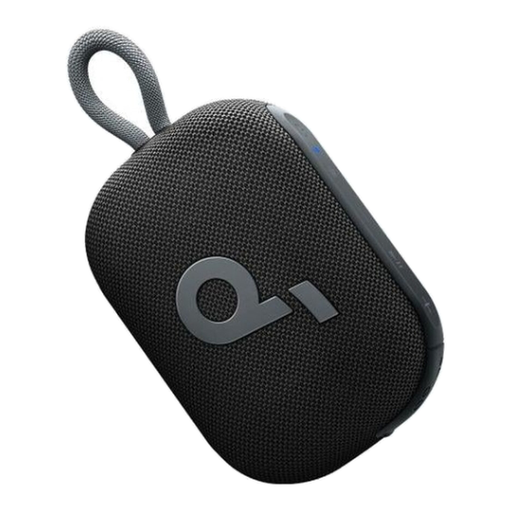
Why it suits this profile: This compact portable speaker is designed for simple everyday use, such as at home, in the park or on a short walk.
The stated 20-hour battery life and weight of approximately 264 grams make it clear what this model is designed for. However, check that the IP67 conditions are suitable for the way you intend to use it.
5W output, IP67 protection, carrying loop and TWS pairing for two speakers.
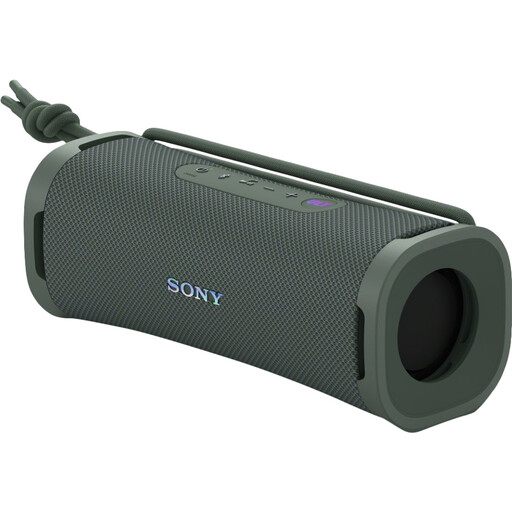
Why it suits this profile: If you’re looking for a portable model that focuses on bass control, durability and familiar controls, this model is worth considering.
The specifications state 30W RMS, IP67 and battery life of up to 12 hours. The ULT button is designed to adjust bass reproduction, not to replace a larger party speaker.
Bluetooth 5.3, 30W RMS, IP67 and support for TWS pairing.

Why it suits this profile: This is a practical choice for families, home performances and party organisers who need a karaoke speaker with a microphone and instrument connections.
This choice is based on specific connections and usage time, rather than volume claims alone. The weight of approximately 3.75 kg makes it clear that portability is less important here than functionality.
Wireless microphone, karaoke and instrument modes, USB, AUX and Bluetooth playback, plus a stated playtime of 10 to 13 hours at average volume.
Different situations call for different features. According to the product specification, the Tronsmart T7 is a 30W wireless speaker with IPX7 protection, LEDs, a microphone and a microSD card reader. The Mifa WildRod combines a stated power output of 30W with IPX7 water protection, IP67 dust protection, RGB lighting and microSD playback. If you’re looking for a Bluetooth speaker with lighting, the Soundcore Glow Mini and Edifier ES20 are also options; the Edifier ES20 additionally lists IP67 protection, up to 15 hours of battery life and pairing for two speakers.
We’ve put together a complete, up-to-date list of products that fully meet these strict selection criteria and the applicable European safety regulations.
Switch the speaker on and activate pairing mode. Then open the Bluetooth settings on your smartphone, tablet or laptop and select the speaker’s name. If the device has been paired previously, the connection will often be re-established automatically. If that does not work, remove the old pairing and try again.
It varies by model and usage. The stated times in product specifications range from approximately 10 to 26 hours. Volume, bass level, lighting, phone calls and the Bluetooth codec all affect power consumption. Treat an “up to” figure as an indication measured under specific conditions.
Only if both speakers support a compatible pairing function, such as TWS or a brand-specific system. Check whether they are the same model or part of a compatible product range. Two random speakers from different brands will not automatically form a stereo pair.
