
Vandaag of morgen in huis

Kwaliteit gegarandeerd

Welkomstaanbiedingen ontgrendelen: GRATIS bezorging | Tot 80% korting | Gratis 30 dagen JoyPlus-proefperiode
Download de app
Choosing a Bluetooth speaker may seem simple: check the power output, battery and price. In practice, details such as the IP rating, size and battery life in real-world use are what determine whether you’ll be happy with your choice. A compact speaker for cycling also needs to offer something different from a powerful model for a garden party.
Use this buying guide to compare the key features and spot common pitfalls before you place your order.
Manufacturers usually quote maximum playback time at a specific volume and with extra features switched off. Turn the music up or use the lights, and the battery may run down faster. The Tronsmart T7, for example, is listed as offering up to 12 hours of playback with the lights off, and up to 4 hours with them on.
So check:
A waterproof speaker should have an IP rating. IP67 means the product is dust-tight and can withstand temporary immersion in water under test conditions. Make sure the protective cover over the ports is properly closed. Salt water, chlorinated water, strong jets of water and charging the speaker while it’s wet can still cause problems.
A model with IPX7 offers water protection according to its product specifications, but the X means no dust protection rating is stated. For the beach, camping and cycling, an IP67 speaker is often more practical than a model without a dust rating.
The stated power output helps you compare models, but it doesn’t tell you everything about sound quality, bass or distortion. A compact 5- or 6-watt speaker is mainly designed for personal use. For a larger room or an outdoor party, a 27- or 30-watt model may offer more headroom.
Also look out for:
A compact speaker weighing around 250 to 700 grams is easy to carry in a bag, attach to a belt or mount on a bike handlebar. According to its product specifications, the Sony SRS-XB100 weighs 274 grams and has an adjustable carrying strap. That makes it practical for walks, picnics and everyday use.
Larger models often deliver more volume, but take up more space too. The Sony ULT FIELD 3 weighs around 1.2 kilograms, while the ULT FIELD 5 comes in at about 3.3 kilograms. So consider whether you’ll be moving the speaker around or using it mainly in one place.
For short trips, 6 to 12 hours may be enough. If you spend a full day outdoors, look for a portable speaker with long battery life. The Soundcore Select 4 Go is listed as offering up to 20 hours of playback. The Sony ULT FIELD 3 and ULT FIELD 5 are listed as offering up to 24 and 25 hours respectively.
Treat these figures as maximums. Volume, music type, Bluetooth connection and lighting can all affect how long the battery actually lasts.
Bluetooth 5.3 or 5.4 is a recent connection technology, but the main thing is to check that your phone, tablet or laptop is compatible. Other useful features include:
Extra features are only worthwhile if you’ll actually use them. Lighting, for example, can reduce battery life.
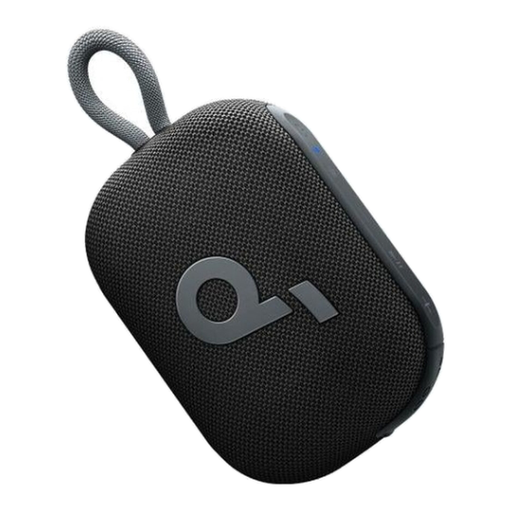
Why it suits this user: This lightweight model is designed for everyday use, walks, cycling and small gatherings. According to the product specifications, the speaker delivers 5 watts of power and up to 20 hours of battery life.
The IP67 rating is more informative than a general claim such as “water-resistant”. The stated playback time and weight are clearly specified.
Up to 20 hours of battery life, IP67 protection, a floating design and TWS pairing for two speakers.
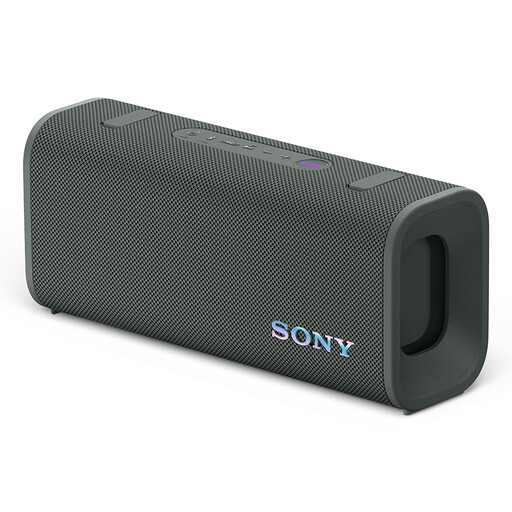
Why it suits this user: The combination of 27 watts RMS, a 7-band equaliser, IP67 and up to 24 hours of battery life makes this a good fit for anyone looking for more control over sound and playback time.
The product specifications cover more than just a powerful sound mode: they also list RMS power, dimensions, weight and battery life.
27 watts RMS, up to 24 hours of battery life, IP67 and a power bank function for charging a mobile device.
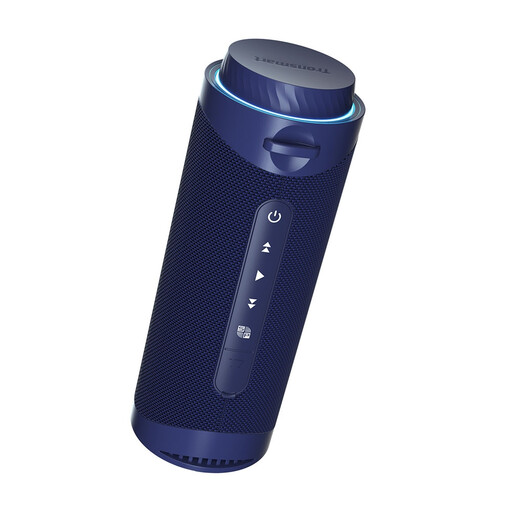
Why it suits this user: This model is designed for parties and outdoor use, with 30 watts of output power, rhythm-synced LED lighting, IPX7 and TWS pairing.
The specifications distinguish between up to 12 hours without lighting and around 4 hours with it switched on. This gives you a more realistic idea of what to expect from the extra feature.
30 watts of output power, Bluetooth 5.3, IPX7, a built-in microphone and app control.
We’ve put together a complete, up-to-date list of products that meet these strict selection criteria and current European safety regulations.
Switch on the speaker and activate pairing mode. Then open the Bluetooth settings on your phone and select the speaker’s name. It will often connect automatically next time. Keep your phone within the stated Bluetooth range and check that the speaker isn’t already connected to another device.
Its lifespan depends on how you use it, how you charge it, the temperature and how well it’s protected from moisture and knocks. A built-in lithium-ion battery loses capacity over time. Keep the speaker dry, use a suitable charger and don’t leave it in direct sunlight or extreme cold for long periods.
A wireless speaker uses relatively little power while playing music. The biggest differences come down to volume, battery capacity and extra features such as lighting. USB-C charging is handy, as you can often use the same adapter or power bank as you do for other devices.
