
Vandaag of morgen in huis

Kwaliteit gegarandeerd

Welkomstaanbiedingen ontgrendelen: GRATIS bezorging | Tot 80% korting | Gratis 30 dagen JoyPlus-proefperiode
Download de app
Choosing a Bluetooth speaker might seem straightforward: pick a model you like, check the wattage and add it to your basket. In practice, disappointment often comes down to details that only become apparent after you’ve bought it. A speaker might be portable, for example, but still too heavy for everyday travel. Or a product might claim a long battery life when that only applies at low volume with the lights switched off.
This buying guide helps you turn marketing claims into specifications you can check. That way, you can find a portable Bluetooth speaker, wireless speaker or outdoor speaker that suits the way you’ll use it.
A higher wattage doesn’t automatically mean a speaker sounds better. It mainly tells you something about its output power under certain test conditions. The size of the casing, the drivers used and the sound tuning also affect the audio. So, as well as checking the power, look at the number of drivers, speaker channels and any equaliser settings.
The stated play time usually depends on the volume, type of music and extra features in use. On a Bluetooth speaker with long battery life, lighting can increase power consumption. The Tronsmart T7, for example, is listed as offering up to 12 hours of play time with the LED lighting off, but up to 4 hours with it on. That difference matters if you’re planning a party or a long day outdoors.
Water-resistant doesn’t mean that every speaker can be submerged indefinitely. Check the IP rating and any conditions relating to sealed ports. An IP67 model is dust-tight and, according to its rating, can withstand temporary immersion in fresh water. That doesn’t automatically make it suitable for use in the sea, a swimming pool or under a powerful jet of water.
Bluetooth 5.3 or 5.4 can provide an up-to-date connection, but also check the supported profiles and audio codecs if that information is available. Extra connections can be useful for a computer, television or older media player:
USB power is handy for fixed PC speakers. The Edifier G1500 supports Bluetooth 5.3, USB and 3.5mm AUX, so it can also work with a computer without a wireless connection.
When you’re travelling, play time isn’t the only thing that matters: consider the weight and how you’ll carry the speaker, too. A compact mobile speaker weighing a few hundred grams is suitable for a bag or a bike ride. A more powerful Bluetooth speaker can offer greater volume and more bass, but is often heavier.
Check the product information for:
The first digits in an IP code indicate protection against dust; the second digit relates to water. A waterproof Bluetooth speaker with an IP67 rating is certified differently from an IPX7 model: with IPX7, dust protection isn’t specified. Make sure any covers are closed before exposing the speaker to rain, and only charge a wet device once it’s completely dry.

Why it suits this profile: A compact 274-gram model with a carrying strap, ideal for everyday use, travel and the garden.
The product information gives specific figures: IP67, Bluetooth 5.3 and up to 16 hours of battery life. So you don’t have to rely on vague terms such as “portable”.
Weighs 274 grams, offers up to 16 hours according to the product information and has an IP67 rating. The speaker also supports hands-free calls and pairing with a second unit.
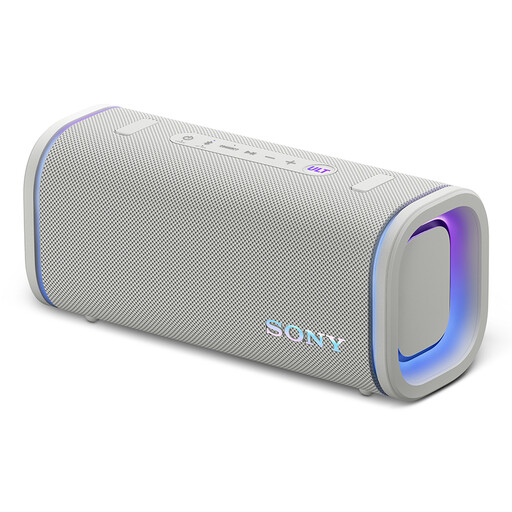
Why it suits this profile: For anyone looking for a larger model to use at home and outdoors, with adjustable sound, long play time and a robust casing.
The specifications state a 25-hour battery life, IP67 rating and weight of 3.3 kg. That makes it clear from the outset that this isn’t an ultra-light travel model.
27 W RMS, a 10-band equaliser via the app, USB-C and IP67 protection according to the product information. Sony says the model can be paired with other Sony speakers.
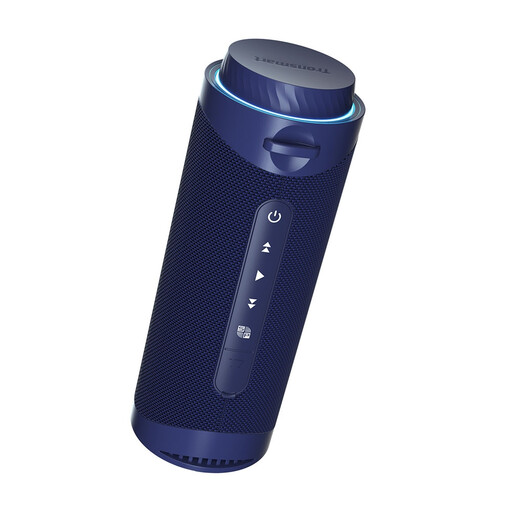
Why it suits this profile: An option for parties, camping and outdoor use, with lighting, the option to pair two speakers and water resistance.
The IPX7 rating is more specific than simply saying “waterproof”. The stated play time also distinguishes between the lighting being on and off.
30 W output power according to the product specifications, Bluetooth 5.3, TWS pairing and LED lighting. The speaker weighs 0.88 kg.
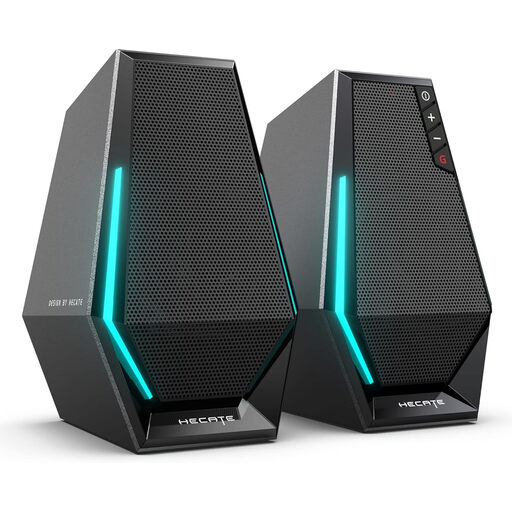
Why it suits this profile: For a desk, PC or gaming set-up that brings together USB, AUX, Bluetooth and ambient lighting.
The connections are clearly specified, so you don’t have to rely on Bluetooth. According to the product information, the three modes are designed for games, music and films.
Two 2.5-inch drivers, 10 W peak power, Bluetooth 5.3, USB and 3.5mm AUX. The product description lists five adjustable RGB lighting effects.
We’ve put together a complete, up-to-date list of products that meet these strict selection criteria and the applicable European safety regulations.
For a television, a soundbar may be a better choice than a mobile speaker. PC speakers with USB or AUX are often more practical for a desk. A fixed active speaker also doesn’t need a built-in battery.
Its lifespan depends on battery use, charging habits, moisture, heat and physical damage. Battery life per charge is different from the speaker’s overall lifespan. Store it somewhere dry, avoid prolonged exposure to heat and use a suitable charger. Check the product’s statutory and manufacturer’s warranty, too.
Power consumption during charging is usually limited, but total usage depends on battery capacity, how often you charge it and the volume. LED lighting and higher volume can drain the battery faster. A mains-powered model, such as some PC speakers, doesn’t have battery charge cycles, but it does use power continuously while in use.
First, check the IP rating and the manufacturer’s instructions. An IP67 or IPX7 model can withstand temporary exposure to water according to its rating, but salt, chlorine, high water pressure and open port covers can cause damage. Water resistance isn’t an invitation to leave your speaker submerged for a long time.
