
Vandaag of morgen in huis

Kwaliteit gegarandeerd

Welkomstaanbiedingen ontgrendelen: GRATIS bezorging | Tot 80% korting | Gratis 30 dagen JoyPlus-proefperiode
Download de app
A Bluetooth speaker may seem simple at first glance: connect, start playing music and you’re ready to go. However, models vary considerably in battery life, volume, water protection and connectivity options. A small wireless speaker for a bike ride has different requirements from a powerful Bluetooth speaker for a living room or a TV soundbar for films.
If you only look at wattage or eye-catching design, you could end up spending money on features that add little value. Below, you’ll find the key points to check, common pitfalls and some popular choices for different usage scenarios.
Manufacturers often state a playback time of, for example, 12 or 20 hours. This is generally a maximum figure. Actual performance can vary depending on the volume, Bluetooth connection, equaliser settings and lighting. For example, the Tronsmart T7 is listed as offering up to 12 hours of playback without lighting and up to 7 hours with lighting.
So pay attention to:
A waterproof speaker is not automatically suitable for every type of water exposure. The IP code consists of two digits: the first refers to protection against dust, while the second indicates protection against water. IP67, according to the usual classification, means complete protection against dust and protection against temporary immersion under specified conditions. IP66 provides dust protection and protection against powerful water jets, but it is not the same as IP67.
The seal also does not protect against everything. Salt water, chlorine, mud, a damaged rubber cover or prolonged immersion can all pose risks. Also check that the charging port is completely dry before connecting the speaker.
Higher wattage says something about output power, but not, on its own, about clarity, bass reproduction or distortion. The enclosure, driver size, passive radiators and tuning also play a part. A compact 5W Bluetooth speaker is mainly intended for personal use or a small room; a 30W or 34W model can produce greater sound pressure, but it will often use more energy as well.
Positioning is also important when playing music in the garden. A speaker that distributes sound in all directions, such as a model with 360-degree sound, can be more practical when people are sitting around it. For a desk, stereo speakers positioned to the left and right of the screen are often a more logical choice.
Bluetooth 5.3 or 5.4 can offer a stable connection and more efficient energy use, but the overall experience also depends on your smartphone, laptop or television. Check whether the model supports:
A Wi-Fi speaker can offer more options for multi-room use and streaming over your home network. Bluetooth, on the other hand, is usually simpler for temporary use and travel.
A portable Bluetooth speaker should not only be compact, but also easy to carry. An integrated carry loop, sturdy buttons and a weight suited to the way you use it can make a real difference in practice. According to the product specifications, the Soundcore Select 4 Go weighs approximately 264 grams and has a carry loop.
For a living room, the main consideration is whether it will fit on a cabinet or shelf. With a soundbar, check that its length fits beneath or in front of the television. A surround sound system with separate rear speakers also requires additional space and power sockets.
A standard Bluetooth speaker is not always suitable as a TV sound system. When choosing a TV soundbar, look for HDMI ARC or eARC, an optical connection and support for the audio formats used by your television. For gaming, low latency and sufficient connectivity options are important.
PC users can choose gaming speakers with USB, 3.5mm aux and Bluetooth. According to the product information, the Edifier G1500 uses two full-range drivers, has a stated peak power of 10W and offers Game, Music and Movie modes. This makes it suited to a desk setup rather than filling a large living room.
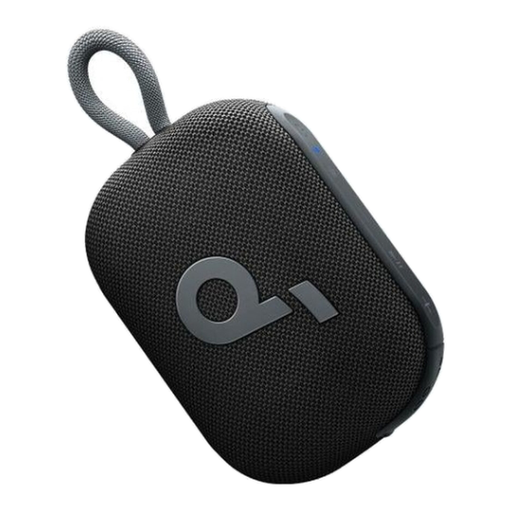
Why it suits this profile: A compact choice for walking, cycling, travelling or small gatherings. According to the product specifications, the speaker weighs approximately 264 grams.
The clear product specifications state up to 20 hours of battery life, 5W output power and IP67 protection. Bear in mind that playback time can vary depending on the volume.
IP67, floating design, carry loop and TWS pairing for two units.
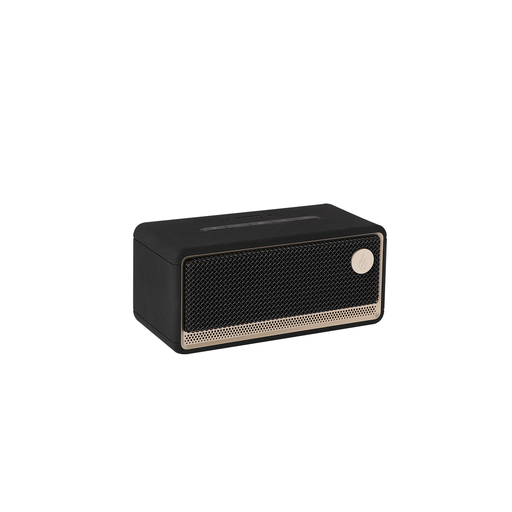
Why it suits this profile: Designed for home use, music streaming, gaming and multi-room listening. The combination of Wi-Fi, Bluetooth, USB and aux provides more flexibility than a basic portable speaker.
As well as the stated 60W power output, the drivers, connections and networking functions are also specified. This allows you to assess the model on more than just wattage.
Bluetooth 5.3, Wi-Fi on 2.4 and 5 GHz, AirPlay 2, LDAC, multi-room functionality and up to 12 hours of battery life according to the product information.
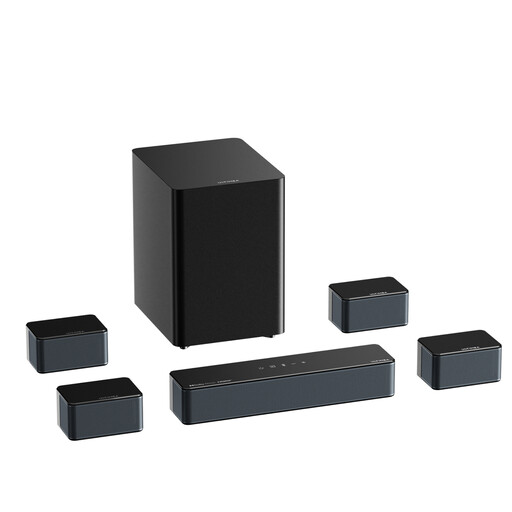
Why it suits this profile: For television, films, consoles and home cinema setups where a standalone Bluetooth speaker does not offer enough connections or an immersive sound experience.
The set lists separate channels, a subwoofer and connections such as HDMI eARC, HDMI-in, optical, aux and USB. However, check the available space and cable routing in advance.
Stated peak power of 500W, 7.1-channel setup, Dolby Atmos support and app control.

Why it suits this profile: A wireless speaker for home use, parties and outdoor settings when a compact basic speaker does not offer enough power.
The product specifications state 34W RMS, IP66 and up to 9 hours of playback. This means power, protection and battery life can be assessed separately.
Bluetooth 5.4, stereo pairing, IP66, USB-C, three lighting effects and two simultaneous Bluetooth connections according to the product description.
We’ve put together a complete, up-to-date list of products that fully meet these strict selection criteria and the applicable European safety regulations.
Switch on the speaker, activate pairing mode and open the Bluetooth settings on your phone. Select the speaker’s name and confirm the pairing. If the device has been connected before, this will often happen automatically. If it does not work, remove the old pairing and try again.
Lifespan depends on battery use, charging habits, moisture, drops and storage. Use the supplied or recommended charging cable, do not store the device empty for extended periods and only connect a wet speaker once the port is completely dry. An IP rating reduces risks, but does not make the product immune to wear and tear.
During playback, a portable speaker mainly uses its built-in battery. Power consumption while charging depends on the battery capacity and adapter. A Wi-Fi speaker that remains connected continuously also uses energy in standby mode. For regular home use, a mains-powered model may be more practical; for travelling, a battery-powered model offers greater flexibility.
