
Vandaag of morgen in huis

Kwaliteit gegarandeerd

Welkomstaanbiedingen ontgrendelen: GRATIS bezorging | Tot 80% korting | Gratis 30 dagen JoyPlus-proefperiode
Download de app
Choosing a Bluetooth speaker might seem simple: connect your smartphone, press play and you’re ready to go. But many people end up disappointed with their purchase. A compact speaker, for example, may not be loud enough outdoors, while a model with a long battery life may run out sooner than expected when you turn up the volume or switch on the lights.
This buying guide helps you focus on the specifications that really matter. That way, you can choose a wireless speaker to suit your needs without being swayed by vague marketing claims.
Higher output power may mean more volume, but it doesn’t tell you everything about how a speaker sounds. The enclosure, drivers, passive radiators and tuning all play a part too. Check whether the power is listed as RMS, and look at the number of speakers and the channel configuration.
A small 5 W speaker may be suitable for a desk or hotel room, but less so for a garden party. For larger spaces or outdoor use, a 27 or 30 W model may be more practical.
A waterproof Bluetooth speaker won’t necessarily withstand every situation. The IP rating consists of two numbers, or the letter X if dust resistance hasn’t been tested.
After using the speaker at the beach or by the pool, always check the connections and let it dry before charging it.
A speaker advertised as having “20 hours of battery life” will usually reach that figure only under specific conditions. Volume, bass boost, the Bluetooth connection and LED lighting all affect playback time. For example, the Tronsmart T7 is rated for up to 12 hours without lighting and up to 4 hours with lighting.
So don’t just look at the highest number of hours. Consider the charging port, charging time, fast-charging function and whether you can charge your smartphone through the speaker.
For travelling, cycling or a picnic, a compact speaker is more convenient than a heavy party model. According to the product specifications, the Sony SRS-XB100 weighs 274 grams and has a carrying strap. The Soundcore Select 4 Go weighs around 264 grams and also has an integrated strap.
A more powerful Bluetooth speaker will usually deliver more volume and bass, but it also takes up more space. The Sony ULT FIELD 5 weighs 3.3 kg. That may be fine for the garden or a permanent spot at a campsite, but less convenient to carry around every day.
A speaker with bass often uses a passive radiator or a dedicated bass mode to emphasise low frequencies. That doesn’t automatically mean it will sound better with every music genre. Check whether an equaliser is available if you want to adjust the sound yourself.
A single compact speaker usually delivers mono or combined sound. With TWS pairing, you can connect two compatible speakers wirelessly for stereo playback. Check in advance that both speakers support exactly the same feature.
For an outdoor Bluetooth speaker, IP protection matters, as do its construction and ease of use. An IP67 speaker is worth considering for the beach, camping and rainy conditions, as long as you respect the limits of the rating.
Also look for:

Why it suits this profile: This compact speaker is designed for everyday use at home, on the go or while out for a walk. According to the product specifications, it has Bluetooth 5.3, 16 hours of battery life and weighs 274 grams.
The IP67 rating makes its level of protection clearer than simply calling it “waterproof”. The stated battery life and weight are specifications you can check.
16 hours of stated battery life, IP67 protection, USB-C and TWS pairing with a compatible second speaker.
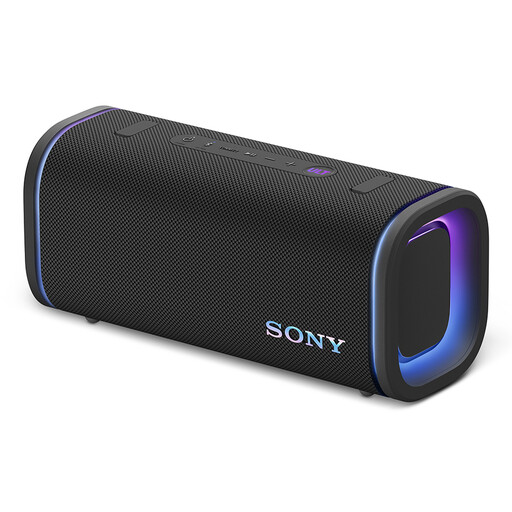
Why it suits this profile: This larger model is designed for people who want more volume, bass and features for home, garden parties or outdoor use.
Alongside the marketing terms, the specifications include 27 W RMS power, two speaker channels, 25 hours of stated battery life and an IP67 rating.
27 W RMS, 25 hours of stated playback time, 360° lighting, ULT sound modes and the option to charge a smartphone.
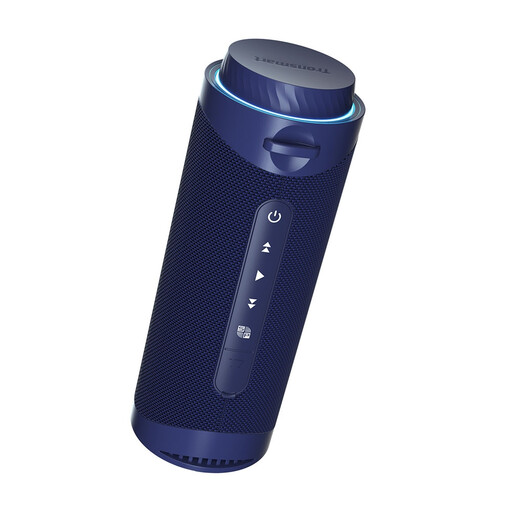
Why it suits this profile: The T7 is designed for parties, outdoor activities and people who value bass, lighting and stereo pairing.
The product specifications make the difference between battery life with and without lighting clear. The IPX7 rating is also listed, so you know that dust resistance isn’t specified.
30 W output power, Bluetooth 5.3, LED lighting, microSD card reader, TWS and up to 12 hours of stated playback time without lighting.
We’ve put together a complete, up-to-date list of products that meet these strict selection criteria and the applicable European safety requirements.
Switch on the speaker and activate pairing mode. Then open the Bluetooth settings on your smartphone, tablet or laptop and select the speaker’s name. You may need to confirm the connection or enter a PIN the first time you connect. Disconnect any old connections if the device doesn’t appear.
Battery life varies by model and how you use it. The stated playback time for the models discussed ranges from around 12 to 25 hours, according to their product specifications. Volume, bass settings, temperature and lighting all have an effect. A lithium-ion battery loses capacity over time, so charge the speaker with a suitable cable and avoid leaving it exposed to heat for long periods.
That depends on its IP rating. According to the stated specifications, an IP67 or IPX7 model is designed to withstand certain levels of exposure to water, but the rating has its limits. Close any covers securely, don’t charge a wet speaker, and avoid prolonged contact with salt water or high-pressure water.
