
Vandaag of morgen in huis

Kwaliteit gegarandeerd

Welkomstaanbiedingen ontgrendelen: GRATIS bezorging | Tot 80% korting | Gratis 30 dagen JoyPlus-proefperiode
Download de app
A Bluetooth speaker might seem easy to choose: connect your phone, press play and you’re ready to go. But many buyers fall for the same marketing tricks. A high wattage, for example, doesn’t automatically mean a speaker will sound good. And “water-resistant” doesn’t tell you much about what a device can really handle unless it comes with an IP rating.
Use this buying guide to compare a portable Bluetooth speaker, wireless speaker or outdoor speaker based on the features that matter. That way, you won’t pay for features you’ll hardly ever use.
The power rating in watts tells you something about electrical output, but it doesn’t give you the full picture of sound quality. The enclosure, drivers, tuning and placement all play a part too. A compact 5 W speaker might be suitable for background music, while a larger 27 or 30 W model could be a better fit for a garden party or larger room.
So look at the following together:
An IP rating consists of two numbers or letters. The first part indicates protection against dust, while the second relates to water. An IP67 speaker is rated as fully dust-tight and suitable for temporary immersion under certain conditions. That doesn’t mean you can leave it in a swimming pool for a long time.
Also check that the port covers are properly closed. Salt water, chlorine, high-pressure jets and prolonged exposure may fall outside the stated conditions. An IPX7 model, such as the Tronsmart T7, has a water rating but no stated dust-protection rating.
A stated battery life usually depends on volume, audio content, connection and extra features. Lighting can increase power consumption. The Tronsmart T7, for example, is rated for up to 12 hours without lighting and around 4 hours with the lights on. So if you’re looking for a Bluetooth speaker with long battery life, it’s worth checking the conditions behind the figures too.
For cycling, walking or travelling, sound volume isn’t the only thing that matters. A lightweight portable speaker with a carry strap is easier to take with you than a model weighing several kilos. The Sony SRS-XB100 weighs 274 grams and has an adjustable carry strap. The Sony ULT FIELD 5 weighs 3.3 kg, making it better suited to moving between rooms, the garden or the patio than taking on a long walk.
Check whether the speaker charges via USB-C and whether its stated play time suits the way you’ll use it. Some models also have a microphone for hands-free calls, TWS pairing for two speakers or a USB port for charging your phone. An AUX input or microSD card slot can come in handy when Bluetooth isn’t available.
Bluetooth 5.3 or 5.4 can help provide a modern, stable connection, but range also depends on walls, obstacles and the connected device. Check whether the speaker works with iOS and Android, and whether an app offers extra settings. A speaker for your phone doesn’t need to be complicated: usually, all you need to do is switch on Bluetooth on your phone, put the speaker into pairing mode and select the right model.
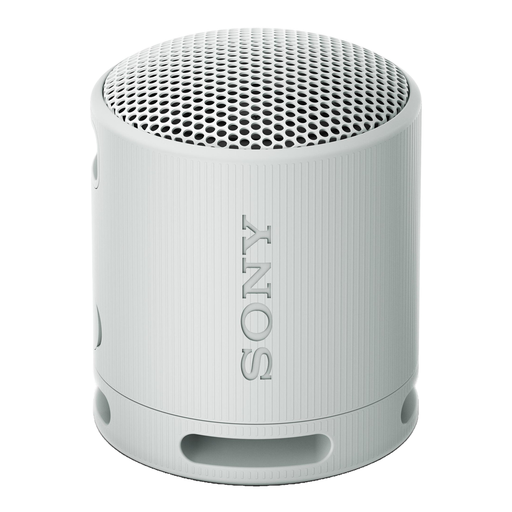
Why it suits this profile: This compact model is designed for easy use with a phone or tablet. Weighing 274 grams and with a carry strap, it’s practical for home, holidays and short trips.
The product information gives specific figures for 16 hours of battery life, Bluetooth 5.3 and IP67. So you don’t have to rely on vague terms such as “portable” or “waterproof” alone.
274 grams, USB-C, microphone for hands-free calls, TWS pairing and a stated battery life of 16 hours.
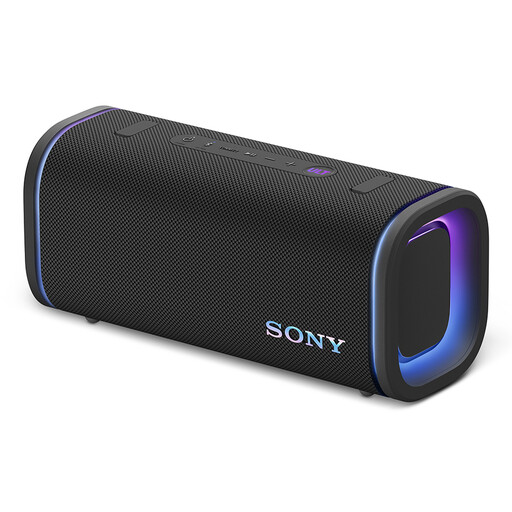
Why it suits this profile: This larger model is designed for people who want higher volume, adjustable settings and lighting for the living room, garden or parties.
It’s about more than just wattage: the speaker has two ULT sound modes, a 10-band equaliser in the app and a stated IP67 rating.
27 W RMS, up to 25 hours of battery life, 3.3 kg, USB-C and 360° multi-coloured lighting, according to the product specifications.
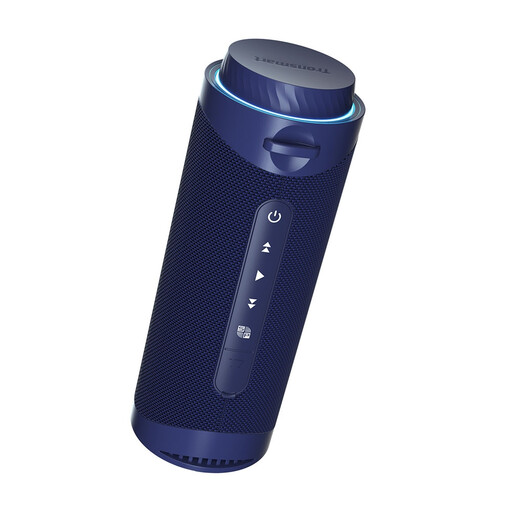
Why it suits this profile: This 30 W speaker is well suited to parties, the garden, a boat or other settings where volume, lighting and flexible placement matter.
The product specifications distinguish between battery life with and without the lights on. They also state an IPX7 rating, giving you a clearer idea of its water protection than a general marketing claim would.
30 W output, Bluetooth 5.3, TWS pairing, built-in microphone, LED lighting and a rotating enclosure.
We’ve put together a complete, up-to-date list of products that meet these strict selection criteria and the applicable European safety regulations.
Switch on the speaker and activate pairing mode. Then open the Bluetooth settings on your phone and select the speaker’s name. The next time you connect, pairing often happens automatically, as long as Bluetooth is switched on and the speaker is in range.
It depends on the volume, battery capacity, audio content and features such as lighting. So check the stated play time and the conditions under which it was measured. A model rated for 20 or 25 hours may last less time with heavy use.
You can, as long as its rating and the conditions suit how you plan to use it. A waterproof Bluetooth speaker with an IP67 rating or a model with IPX7 is better suited to rain or temporary contact with water than a speaker without an IP rating. Close the covers properly, and only charge a wet speaker once it has dried completely.
