
Vandaag of morgen in huis

Kwaliteit gegarandeerd

Welkomstaanbiedingen ontgrendelen: GRATIS bezorging | Tot 80% korting | Gratis 30 dagen JoyPlus-proefperiode
Download de app
A Bluetooth speaker may seem simple to choose: connect your phone, press play and you’re ready to go. Yet many buyers run into problems. A compact speaker may not deliver enough volume in a living room, long battery life often applies only at moderate volume, and a waterproof enclosure does not automatically mean that every component can withstand water.
As a Joybuy Product Recommendation Officer, I filter product information based on practical considerations. Below, you’ll find what to look for in a wireless speaker for home, on the go, gaming, watching television or outdoor activities.
Higher wattage does not tell you everything about the listening experience. The enclosure, speaker configuration, passive bass radiators and tuning also affect the sound. A small Bluetooth speaker with a high stated peak power may sound different from a larger model with a lower RMS power rating.
So pay attention to the difference between RMS power and peak power. RMS gives you a more useful indication of the continuous output power. Also check whether the speaker has one channel, stereo or a 2.1 configuration.
An IP rating consists of two digits. The first indicates protection against dust, while the second refers to water. IP67, for example, means dust-tight and, according to the product information, resistant to temporary immersion under specified conditions. IPX6 indicates protection against powerful water jets, but says nothing about dust resistance.
Salt water, chlorine, mud and pressure washers can still cause damage. Always check the manual and make sure covers for USB connections are properly closed.
“Up to 15 or 26 hours” is a maximum figure. The actual result depends on volume, bass level, lighting, the Bluetooth connection and the type of audio. A Bluetooth speaker with long battery life is therefore most suitable when the conditions match those used for the stated test results.
Bluetooth 5.3 and 5.4 are recent versions that, according to the product information, can support a stable connection. The final connection is also affected by your smartphone, tablet or laptop. A range of 10 to 15 metres is common in an open space, but walls and other wireless devices can reduce the range.
Also check the additional connections. A USB-C port is convenient for charging. A 3.5mm AUX input is useful when you want to connect a device without Bluetooth. Some models also support USB sticks, microSD or TF cards.
For cycling, camping or a day at the beach, weight, a carry loop and size are more important than maximum volume alone. An ultra-compact speaker weighing around 80 grams is easy to take with you, but will generally have less power than a party speaker weighing several kilos.
Check:
A single portable Bluetooth speaker often plays mono or sound that is spread spatially. With stereo pairing, also known as TWS, you can connect two compatible speakers to create left and right channels. Check beforehand that both speakers use the same pairing system; TWS is not always interchangeable between brands.
For a television, a soundbar is usually a more logical choice than a small wireless speaker. In that case, look for HDMI ARC or eARC, an optical connection and compatibility with your television. Bluetooth can be useful for music, but does not always provide the lowest latency for films or gaming.
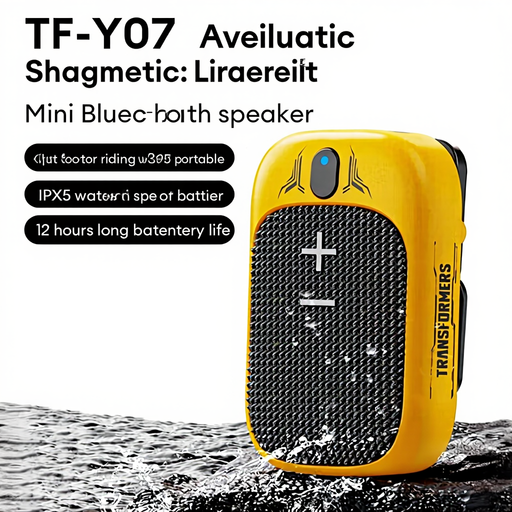
Why it suits this profile: This model is designed for users looking for a very small speaker for cycling, sport or carrying in a bag. The stated battery life is up to 6 hours and the weight is approximately 80 grams.
Its limited dimensions make it clear that portability is the priority, rather than high volume for large spaces.
Approximately 80 grams, Bluetooth connectivity, built-in controls and a stated playtime of up to 6 hours.
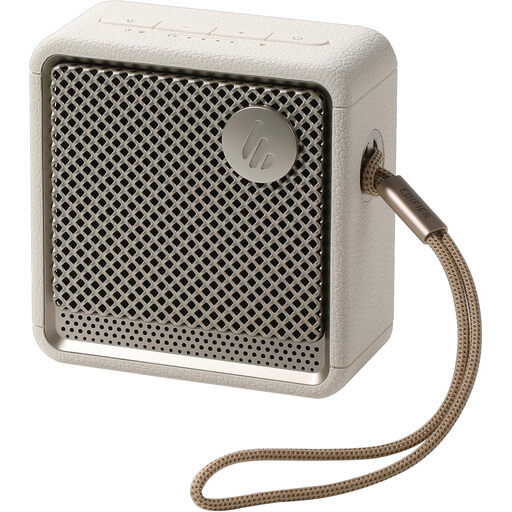
Why it suits this profile: The ES20 combines a compact design with 360° sound, app control and a stated battery life of up to 15 hours.
The IP67 rating and stated battery life are more specific than a general claim about outdoor use.
Bluetooth 5.4, stereo pairing, IP67 and up to 15 hours of playback according to the product information.
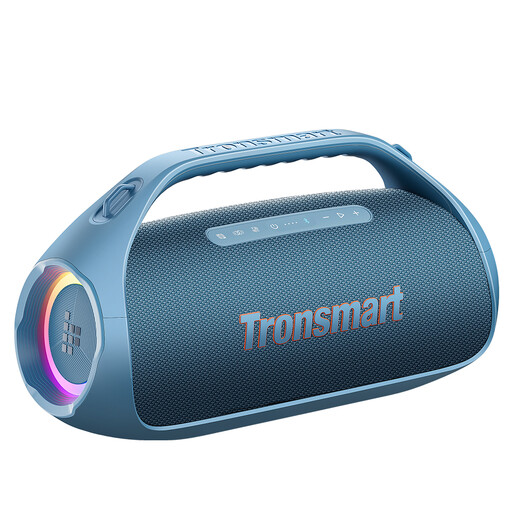
Why it suits this profile: This party speaker is designed for larger gatherings and outdoor use. The product information states 90 W output power, IPX6 and up to 26 hours of playback without lighting at 50% volume.
Battery life is stated both with and without LED lighting, allowing you to take the difference between usage scenarios into account.
Bluetooth 5.3, TWS pairing, carry strap, IPX6 and a stated playtime of up to 26 hours under specific conditions.
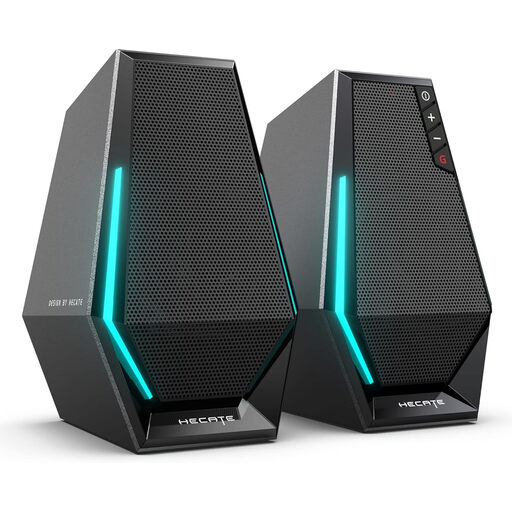
Why it suits this profile: This 2.0 system is designed for a desk with a computer or laptop. It offers Bluetooth 5.3, USB and AUX, plus different modes for gaming, music and films.
The USB and AUX connections provide an alternative to Bluetooth when you need low latency or plug-and-play use on a PC.
Two full-range drivers, 10 W peak power, three input options and adjustable RGB lighting.
We’ve put together a complete, up-to-date list of products that fully meet these strict selection criteria and the applicable European safety regulations.
Switch on the speaker and activate pairing mode. Then open the Bluetooth settings on your phone and select the speaker’s name. If the device has been paired before, this often happens automatically. Bear the range in mind and disconnect old connections if the speaker is not visible.
The lifespan of the built-in battery depends on charging cycles, temperature, volume and storage. Playback time per charge varies by model and usage. Charge the speaker with the supplied or a suitable USB-C charger, and do not store it completely flat for an extended period.
For clear dialogue and connection to a television, a soundbar is usually more practical. A model such as the TCL S45H has, according to the product information, HDMI ARC/eARC, an optical connection and 2.0 channels. For music on the go or in the garden, a portable Bluetooth speaker remains the more flexible choice.
