
Vandaag of morgen in huis

Kwaliteit gegarandeerd

Welkomstaanbiedingen ontgrendelen: GRATIS bezorging | Tot 80% korting | Gratis 30 dagen JoyPlus-proefperiode
Download de app
Choosing a Bluetooth speaker seems simple: connect your smartphone, press play and you’re ready to go. In practice, models vary considerably in battery life, water resistance, sound quality and connections. A small mistake when choosing could mean your speaker is too quiet outdoors, needs recharging after a few hours or isn’t a good match for your television.
This guide will help you distinguish marketing claims from specifications you can check. That way, you can find a wireless speaker that suits the way you’ll use it, without paying for features you don’t need.
Manufacturers usually state the maximum play time under specific conditions. Higher volume, lighting, connected devices and phone calls can all increase power consumption. So treat “up to 20 hours” as a guide, not a guaranteed run time.
Check the charging time and connection type, too. USB-C is handy if you already use a suitable cable for your phone or laptop.
An IP67 rating generally means complete protection against dust and protection against temporary immersion under the relevant test conditions. This makes a speaker suitable for situations such as a day at the beach or a rain shower, but not automatically safe to use while charging or under a constant stream of water.
So check:
A waterproof speaker isn’t necessarily a device you can leave in the bathroom or shower without restrictions.
A higher wattage doesn’t automatically mean fuller or clearer sound. The casing, speaker configuration, placement and software settings all play a part. A compact speaker is handy on the go, but it has physically less room for deep bass than a larger model with a separate woofer.
Also look out for features you’ll actually use, such as:
A compact speaker should suit the way you travel. For cycling, walking or commuting, weight, a carrying loop and dimensions are often more important than a high maximum volume. A speaker with long battery life is handy for day trips, but check whether that play time is quoted at an average volume.
For home use, a heavier model may be more suitable. It’s more stable and often has more room for a larger driver. On the other hand, it’s less easy to carry in a bag.
For outdoor activities, IP67 is a useful objective specification. Placement still matters, though: don’t leave a speaker in standing water for long periods, and close the charging port before using it outdoors. A model without an IP rating, such as some office and conference speakers, should be kept indoors.
Bluetooth works with smartphones, tablets and laptops, but range varies by model and surroundings. Walls, other wireless devices and the position of your phone can affect the connection. Also check that your television has a suitable connection.
For TV sound, a soundbar with Dolby Atmos is a different type of product from a portable Bluetooth speaker. A soundbar usually connects via HDMI eARC/ARC, an optical cable or Bluetooth, and plugs into mains power. According to the product description, Dolby Atmos can support a more immersive soundstage, but the experience also depends on the room, source and placement.
The recommendations below are based on the stated product specifications, such as IP rating, battery life, connections, dimensions and weight. Brand descriptions of the listening experience are not presented as independently verified results.
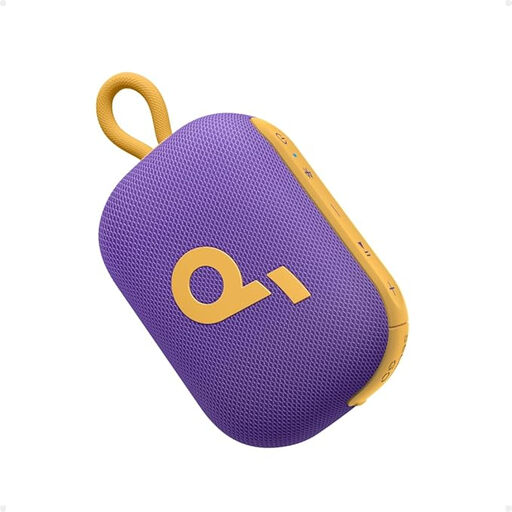
Why it suits this user: According to the product information, this compact Bluetooth speaker weighs around 264 grams and has a built-in carrying loop. That makes it practical for walks, trips and everyday use.
The stated IP67 rating and buoyancy offer clear information for outdoor use. Make sure the speaker is completely dry before charging it.
Up to 20 hours of stated play time, 5 W output power, IP67 rating and support for TWS pairing.
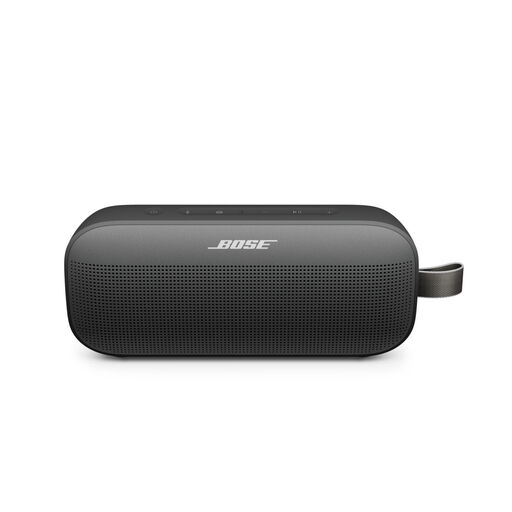
Why it suits this user: This Bose model is designed for users who want a portable speaker with an app, microphone and customisable settings.
The IP67 rating makes the level of protection easy to check. Battery life is stated as up to 12 hours, so you don’t have to rely on a vague “all-day” label alone.
Bluetooth 5.3 according to the product information, a built-in microphone, USB-C and the Bose app with equaliser features.
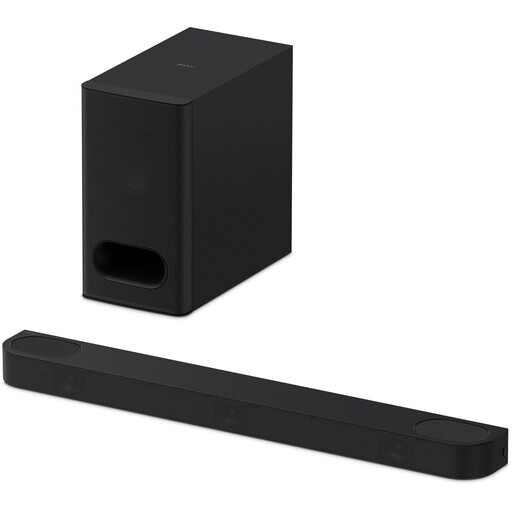
Why it suits this user: For films, TV series and music at home, this is an alternative to a portable speaker. The system includes a soundbar, wireless subwoofer and connections for use with a television.
This choice is based on specific connections and configuration, not just a power claim. Check in advance whether your TV supports HDMI eARC/ARC or optical audio.
3.1.2-channel configuration, Dolby Atmos, DTS:X, HDMI eARC/ARC and a separate wireless subwoofer.
Choose a portable Bluetooth speaker if you mainly stream music from a phone, tablet or laptop. Look at weight, carrying loop, battery life and IP rating. For a garden party or larger space, a model with a higher stated capacity or the option to pair two speakers may be more suitable.
For TV, films and gaming, a soundbar makes more sense. A system with HDMI eARC, a subwoofer and Dolby Atmos needs more space and a mains socket, but offers different connection options from a small outdoor speaker.
We’ve put together a complete, up-to-date list of products that fully meet these strict selection criteria and the applicable European safety regulations.
Switch on the speaker, activate pairing mode and open the Bluetooth settings on your smartphone. Select the speaker’s name and confirm the connection. You may be asked to enter a PIN or confirm the connection on screen the first time you pair. Keep your phone within the stated range for a stable connection.
Battery life varies by model, volume and usage. Products in this selection, for example, state a maximum of 12 or 20 hours, while a very small speaker may have a shorter play time. Battery capacity decreases over time. Keep the speaker dry, use a suitable charger and follow the manufacturer’s charging advice.
When playing music, a portable speaker mainly uses energy from its built-in battery. Most of its power consumption comes from charging. A soundbar and subwoofer usually stay plugged into the mains, so they have a different usage profile. Switch devices off or use energy-saving mode when you’re not going to use them for a while.
