
Vandaag of morgen in huis

Kwaliteit gegarandeerd

Welkomstaanbiedingen ontgrendelen: GRATIS bezorging | Tot 80% korting | Gratis 30 dagen JoyPlus-proefperiode
Download de app
A Bluetooth speaker seems simple: pair it, play your music and you’re done. Yet many people buy a wireless speaker that disappoints in practice. The sound is too quiet for the living room, the battery life only applies at low volume, or the water-resistance rating is misunderstood.
In this buying guide, the Joybuy Product Recommendation Officer filters out the most important specifications and common marketing pitfalls. This helps you choose a portable Bluetooth speaker, outdoor speaker or Bluetooth speaker for home with greater confidence.
A high wattage sounds appealing, but it doesn’t tell you everything about the listening experience. It’s important to check whether the figure refers to RMS power or peak power. RMS gives a more useful indication of continuous output power. The number of drivers, cabinet construction and the presence of a bass radiator also affect the result.
A powerful Bluetooth speaker with a high output can also be less suitable for a small room if its enclosure takes up a lot of space or the bass isn’t properly tuned.
An IP rating consists of numbers and sometimes a letter. With IP67, the first number, 6, means that the enclosure is dust-tight. The number 7 refers to temporary immersion under specific conditions. This doesn’t mean you can use the speaker in a swimming pool for extended periods.
With IPX6, the focus is on protection against powerful water jets, while dust protection isn’t indicated by a number. Always check the complete rating and user manual. Salt water, chlorine, high pressure and prolonged immersion may fall outside the warranty conditions.
The quoted battery life is usually a maximum measured under specific conditions. High volume, RGB lighting, Bluetooth range, Wi-Fi and heavy bass can reduce playback time. Also check the charging time, charging port and whether the speaker can continue playing while it charges.
For a Bluetooth speaker for home, the frequency range, driver configuration and connection options are all relevant. A model with AUX or USB is useful if you also want to connect a laptop, television or another device with a cable.
When you’re out and about, weight, dimensions and a carrying loop are particularly important. A compact speaker weighing a few hundred grams is easier to fit in a bag than a model weighing several kilograms. A larger enclosure can offer more volume and fuller bass, but is less practical on a bike or during a walk.
Bluetooth 5.3 or 5.4 provides a modern wireless connection, but overall stability also depends on your smartphone, tablet or laptop. Check whether the speaker supports multiple devices at the same time, offers TWS stereo pairing or works with an app.
For a multi-room speaker, Wi-Fi, AirPlay 2 or a brand-specific platform is more important than Bluetooth alone. Check in advance that your phone and streaming service are compatible.
For the beach, campsite, garden or swimming pool, a waterproof Bluetooth speaker with a clear IP rating is more practical. As well as water protection, consider dust, knocks and how the speaker will be transported.
A Bluetooth speaker with long battery life is particularly useful when travelling or hosting parties. Compare the quoted playback time under like-for-like conditions. With some models, the maximum time is measured with the lighting switched off and the volume set to around 50 per cent.

Why it suits this profile: Weighing 274 grams, this compact model is easy to take with you thanks to its adjustable carrying strap. The speaker offers Bluetooth 5.3, USB-C and a quoted battery life of up to 16 hours.
The IP67 rating clearly indicates the level of protection. Sony also states that the speaker isn’t intended for unlimited contact with liquids other than fresh water.
274 grams, IP67, Bluetooth 5.3, microphone for hands-free calls and up to 16 hours of quoted playback time.
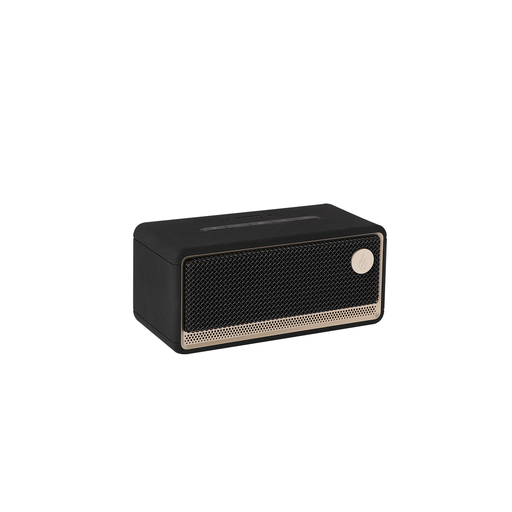
Why it suits this profile: The ES300 combines a 4-inch mid-low driver with two 1.25-inch tweeters and offers multiple connections for music, films and gaming.
The product information lists both 60 watts of RMS power and the individual drivers. This means you can look beyond a single wattage figure.
Bluetooth 5.3, Wi-Fi, USB, AUX, LDAC, AirPlay 2, multipoint and up to 12 hours of quoted battery life.
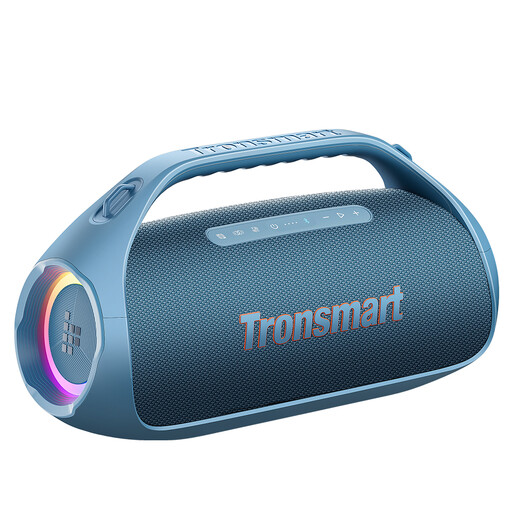
Why it suits this profile: This large model is designed for parties and outdoor use. The handle and detachable carrying strap make it easier to transport, while the app lets you adjust the equaliser and lighting.
The playback time is specified clearly: up to 26 hours at 50 per cent volume with the LEDs switched off, but up to 7 hours with the LEDs on at the same stated volume. This makes the limitations of the battery claim clear.
90 watts of quoted output power, IPX6, Bluetooth 5.3, TWS pairing and USB-C charging.
We’ve put together a complete, up-to-date list of products that fully meet these strict selection criteria and the applicable European safety regulations.
Switch on the speaker and activate pairing mode. Then open the Bluetooth settings on your smartphone, select the speaker’s name and confirm the connection. If pairing doesn’t work, remove a previous connection or press and hold the pairing button again. For specific models, refer to the user manual supplied.
Its lifespan depends on battery use, charging habits, moisture, heat and physical strain. A lithium-ion battery may provide less capacity over time. Don’t store a speaker empty for long periods, avoid extreme temperatures and use only a suitable charging cable and adapter. The quoted playback time isn’t a guarantee of the battery’s overall lifespan.
While playing, a portable speaker mainly uses power from its built-in battery. Consumption generally increases at higher volume, with heavy bass, active RGB lighting and Wi-Fi. A model with USB-C is practical because many Dutch households already have a suitable adapter, but always check the required charging power.
