
Vandaag of morgen in huis

Kwaliteit gegarandeerd

Welkomstaanbiedingen ontgrendelen: GRATIS bezorging | Tot 80% korting | Gratis 30 dagen JoyPlus-proefperiode
Download de app
A Bluetooth headset might seem simple to choose: pick a colour, check the battery life and place your order. In reality, wireless headphones and wireless earbuds differ greatly in comfort, controls and suitability for everyday use. A model that feels great on a train journey won't necessarily be right for exercise or long online meetings.
So don't just focus on marketing terms like "hi-fi", "AI" or "noise cancelling". Instead, check the specifications that actually affect how you'll use them.
The quoted playback time can refer to the earbuds alone, the combination with the charging case, or use at a certain volume. Noise cancelling can also reduce the battery life. For example, the Baseus EH10 NC lists a playback time of up to 80 hours without ANC and 55 hours with ANC in the product information.
With the Sony WH-CH520, the product description states a battery life of up to 50 hours, while the technical specifications also show a value of 40 hours. So always check which battery figure applies in the current product specifications and manual.
An ANC headset uses microphones and electronics to reduce background noise. How well it works depends on the fit, the type of sound and your surroundings. Low, constant noises from a train or plane are a different scenario from voices in an office.
Claims like "-45 dB" or "-50 dB" come from the brand's product information and shouldn't be taken as a universal guarantee. For the Baseus EH10 NC, Baseus states adjustable noise reduction of up to -45 dB. According to its own product information, the MINISO MS106 offers adaptive noise cancellation of up to -50 dB. Your experience may vary depending on the user and situation.
An over-ear headset wraps around your ear, making it comfortable for travel and working from home, but it takes up more space. An on-ear headset rests on your ear and is often lighter, but can feel different after extended wear.
TWS earbuds and Bluetooth earbuds are compact, but the fit varies from ear to ear. For sports, ear hooks or a secure fastening can be more practical. Also check whether a product is water-resistant. An IPX5 rating, as stated for the MINISO MS106, is not the same as being fully waterproof.
Bluetooth 5.0, 5.2, 5.4 and 6.0 refer to the connection standard used. A higher version number doesn't automatically mean better sound quality. Also check the compatibility of your smartphone, laptop or tablet.
For a computer without Bluetooth, you may need an adapter. The TP-Link Bluetooth 5.0 Nano USB Adapter is designed for compatible Windows computers and uses a USB-A port. So pay attention to the type of USB port and the supported operating system.
A codec determines how audio is transmitted via Bluetooth. The Sony WH-CH520 supports AAC and SBC according to the product specifications. The Baseus EH10 NC lists LDAC, AAC and SBC. LDAC can transmit more audio data than standard codecs, but both the source device and the headset need to support this codec.
If you often switch between your laptop and smartphone, multipoint is a real benefit. This allows two devices to be connected at the same time, depending on the design and software. On laptops, also check the quality of the built-in microphone. For meetings, good voice clarity can be more important than a long list of sound features.
Look out for three values:
A USB-C port is practical these days, as the same cable is often used for other devices. Touch controls are compact, but physical buttons can feel more reliable when you're wearing gloves or on the move.
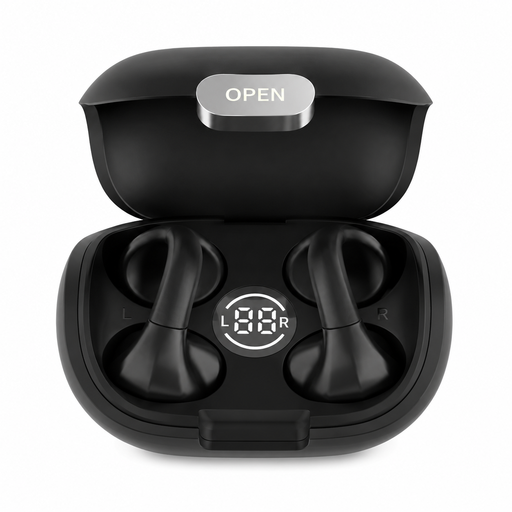
Why this fits the profile: These compact sports earbuds use Bluetooth 5.4, have ear hooks and offer around 5 to 7 hours of playback time per charge according to the product specifications.
The ear hook helps during activities where standard earbuds might shift. The product information mentions sound isolation rather than an unsubstantiated ANC claim.
Bluetooth 5.4, touch controls, 300 mAh charging case and a stated range of up to 15 metres.
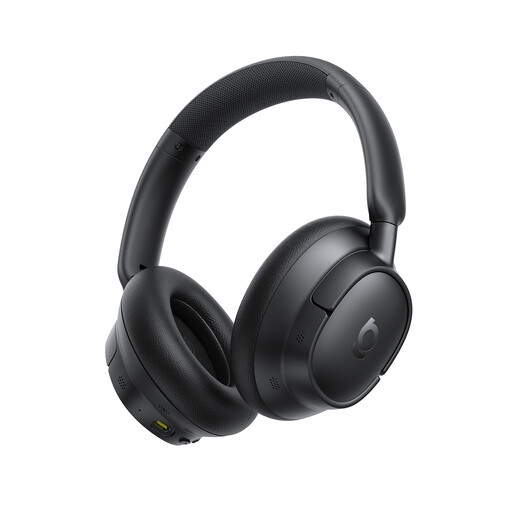
Why this fits the profile: This over-ear headset combines ANC, multipoint, LDAC and a long stated playback time for travel, work and daily listening.
The product information lists separate battery figures for ANC on and off. This lets you estimate the battery life more realistically.
According to Baseus: up to 80 hours without ANC, 55 hours with ANC, LDAC support and five microphones for calls.
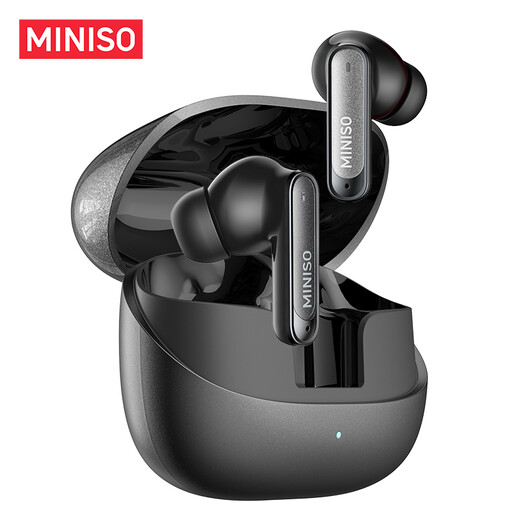
Why this fits the profile: These Bluetooth earbuds are designed for sport, commuting and calls, with a compact design, touch controls and a charging case.
The IPX5 rating gives a concrete reference point for rain and sweat. This makes it clear that the model shouldn't be considered fully waterproof.
According to MINISO: up to 55 hours total battery life, 10 minutes of fast charging for up to 3 hours of playback and a weight of 3.9 grams per earbud.
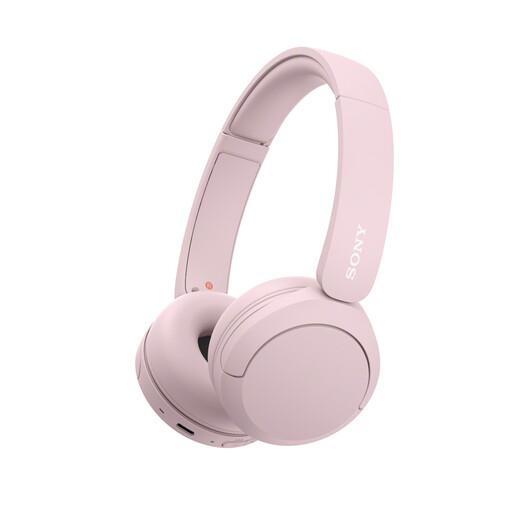
Why this fits the profile: The lightweight on-ear headset at 147 grams features multipoint, a microphone and an adjustable headband for laptop and smartphone use.
The on-ear design and adjustable headband make the fit easy to check. However, note that this model is not water-resistant according to the product information.
147 grams, multipoint connection, USB-C, AAC and SBC codecs and up to 50 hours of battery life according to the product description.
We've put together a full, up-to-date list of products that fully meet these strict selection criteria and comply with current European safety regulations.
Put the headset into pairing mode, open Bluetooth in your smartphone's settings and select the product name. Some models have an app available for settings or firmware. Remove an old pairing if the device doesn't appear and check that the headset is sufficiently charged.
The battery life per charge ranges from a few hours for compact earbuds to tens of hours for an over-ear model. The lifespan of the device depends on factors such as charging cycles, heat, moisture and careful use. Store earbuds in the case and charge them with the supplied or suitable USB-C accessories.
It can be, but check the microphone specifications and user reviews. ANC is mainly designed to reduce background noise for the listener. For calls, microphone placement, wind noise and software-based voice suppression play a separate role. So use the product information as a starting point and choose a model that suits your meeting and travel environment.
