
Vandaag of morgen in huis

Kwaliteit gegarandeerd

Welkomstaanbiedingen ontgrendelen: GRATIS bezorging | Tot 80% korting | Gratis 30 dagen JoyPlus-proefperiode
Download de app
Searching for the perfect blue PLA filament for your next 3D printing project? The selection is vast, but not all filaments are created equal. Many makers fall into the same traps: disappointing colours, prints failing due to moisture, or the unfulfilled promise of high speeds. This leads to frustration and wasted material.
As a Joybuy Product Recommendation Officer, I'm here to help you cut through the marketing jargon. We'll look at the specifications that truly matter, so you can make an informed choice that suits your printer and project.
Before you add a spool to your shopping cart, it's wise to be aware of these common issues. They can mean the difference between a successful print and a failure.
Don't get distracted by marketing terms. These three technical specifications are crucial for a good result.
The standard for most hobbyist printers is 1.75mm PLA blue. More important than the diameter itself is its consistency. Look for filament with a specified tolerance of +/- 0.02mm. A larger deviation can lead to irregular extrusion (too much or too little plastic), resulting in ugly layer lines or even a clogged nozzle. A stable diameter is the key to a reliable and predictable printing experience.
The filament's finish determines the final look of your print.
Standard PLA is an excellent starting point. It's made from renewable resources like corn starch, which makes it a popular biodegradable filament (under industrial composting conditions). You'll also often see PLA+ on the market. According to manufacturers, PLA+ is an improved formula that is typically stronger and less brittle than standard PLA. For functional parts, this can be a worthwhile upgrade.
Below is a selection of blue PLA filaments, matched with specific user profiles. These aren't "winners," but practical choices for different purposes.
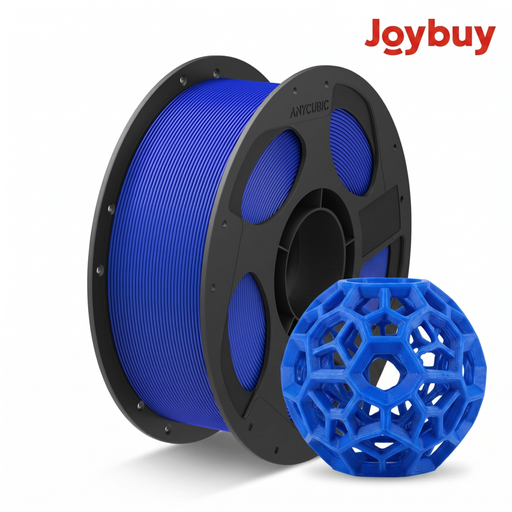
Why This Fits Their Persona: This is a no-nonsense filament that delivers on its promises. Ideal for those just starting with 3D printing who want reliable, predictable results without having to experiment with complex settings.
This standard PLA avoids the complexity of special effects (pitfall 1) and focuses on ease of use. It's a solid foundation for mastering the basics of 3D printing.
Good value for money and a high dimensional accuracy of ±0.02mm for consistent prints. Works well with a wide range of FDM printers.
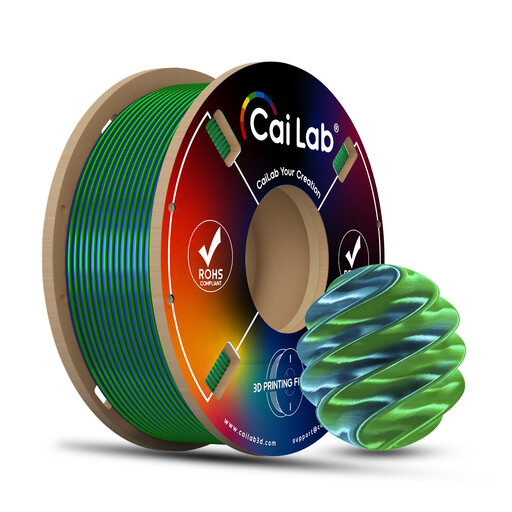
Why This Fits Their Persona: For makers who want their creations to stand out. This filament creates a dynamic dual-color effect, giving decorative objects, toys, and artistic models a unique appearance.
By knowing that print orientation is crucial (pitfall 1), the user can consciously design for the dual-color effect. It's not a surprise, but a creative tool.
Creates a striking dual-color filament effect without changing spools. The silk sheen provides a luxurious finish.
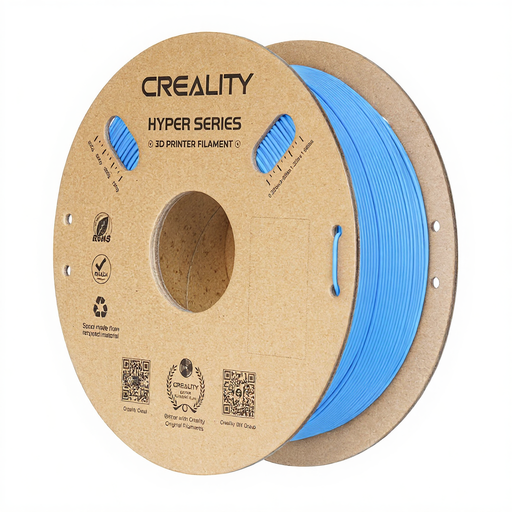
Why This Fits Their Persona: For professionals and hobbyists who need to print functional prototypes or large objects quickly. Time is money, and this filament is designed to drastically reduce print time.
This is a deliberate choice for speed. The user understands the speed myth (pitfall 3) and has a printer (like a Creality K1 or Bambu Lab) built for high speeds.
According to Creality, this filament is suitable for print speeds up to 600mm/s. The formula ensures high fluidity and rapid cooling, essential for high-speed printing.
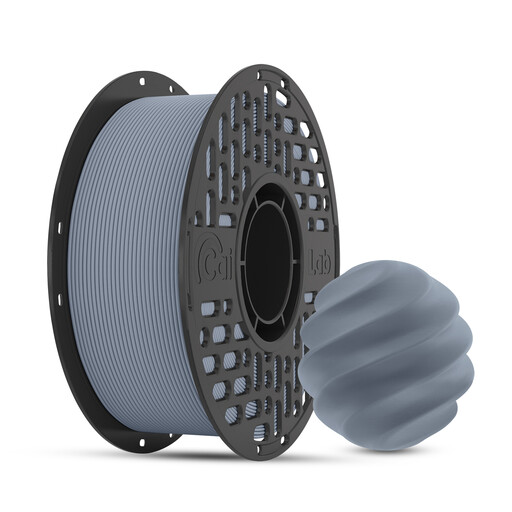
Why This Fits Their Persona: Perfect for architectural models, miniatures, and design objects where the finish is crucial. The matte texture provides a premium, non-plastic look and hides imperfections.
This filament directly addresses the disappointment of a cheap, shiny plastic appearance. It delivers a refined finish that minimises the visibility of layer lines.
Delivers a professional, non-reflective matte PLA filament finish. According to the manufacturer Cailab, the formula ensures a smooth, tangle-free printing experience.
We have compiled a complete, up-to-date list of products that meet these strict selection criteria and current regulations.
The best method is to store the spool in a resealable vacuum bag or an airtight plastic container, along with one or more packets of silica gel (desiccants). If your filament has become damp, you can dry it in a dedicated filament dryer or, very carefully, in a convection oven at a low temperature (around 40-45°C) for several hours.
Yes, PLA is a biodegradable filament, but this requires specific conditions. It breaks down in an industrial composting facility where high temperatures and the right microorganisms are present. It will not decompose in your backyard compost heap or in nature. Therefore, dispose of failed prints and scrap material with your general waste, unless your municipality has a special collection program.
The effect of dual-color filament or multi-color filament is highly dependent on your model's geometry. The two (or three) colours are extruded side-by-side into the strand. On a round, rotating object, you'll see a beautiful colour gradient. On a flat, square object, you might only see one colour on one side and the other colour on the other. Experiment with your model's orientation on the print bed to achieve the desired effect.
