
Vandaag of morgen in huis

Kwaliteit gegarandeerd

Welkomstaanbiedingen ontgrendelen: GRATIS bezorging | Tot 80% korting | Gratis 30 dagen JoyPlus-proefperiode
Download de app
As a Joybuy Product Recommendation Officer, I see the vast number of choices available every day. Especially when you're looking for something as specific as blue PLA filament, the selection can be overwhelming. One spool promises a silk sheen, another a matte finish, and yet another claims to be extra strong. But how do you know what you're really getting?
Many 3D printing hobbyists fall into the same traps. A print that fails after hours due to brittle filament, or a model that looks cheap because of ugly layer lines. Let's look at a few common problems so you can avoid them.
To avoid these issues, it's wise to check a few specifications. These aren't marketing terms, but objective characteristics that directly impact the quality of your print.
The finish of your filament is more than just an aesthetic choice; it affects how visible the layer lines are.
Not all PLA is the same. The base formula can be modified for different properties.
One of the most critical technical specifications is the tolerance on the filament's diameter. Look for a tolerance of ±0.02mm. A filament sold as 1.75mm that actually varies between 1.70mm and 1.80mm will inevitably lead to clogs or under-extrusion. A consistent diameter is crucial for a reliable and smooth printing experience, especially for long prints.
Below are a few highlighted choices, linked to specific user profiles. These aren't "winners," but practical suggestions based on their specifications.
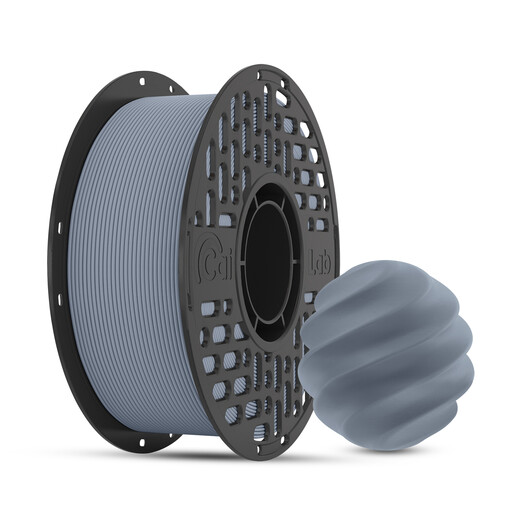
Why This Fits Their Persona: Perfect for those who print prototypes, miniatures, or artistic objects and want a clean, professional finish. The matte texture hides layer lines and gives the model a high-quality look, without the plastic-like sheen.
This filament tackles the "Color & Finish" trap. The matte finish is consistent and delivers what it promises: a non-glossy surface that minimizes imperfections.
The main advantages are its excellent layer line concealment and the consistent, tangle-free feeding described by the manufacturer.
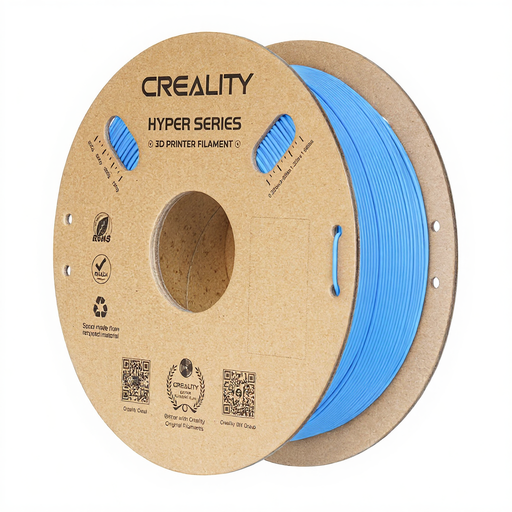
Why This Fits Their Persona: For users with a high-speed printer who want fast results without compromising on quality. Ideal for rapid prototyping iterations or printing large objects under time pressure.
This filament is designed to bypass the "inconsistent diameter" trap. According to Creality, its high dimensional accuracy ensures smooth feeding, which is essential to prevent clogging at high speeds.
The key advantage is its suitability for print speeds up to 600 mm/s, as claimed by the manufacturer. The spool contains 1kg of filament.
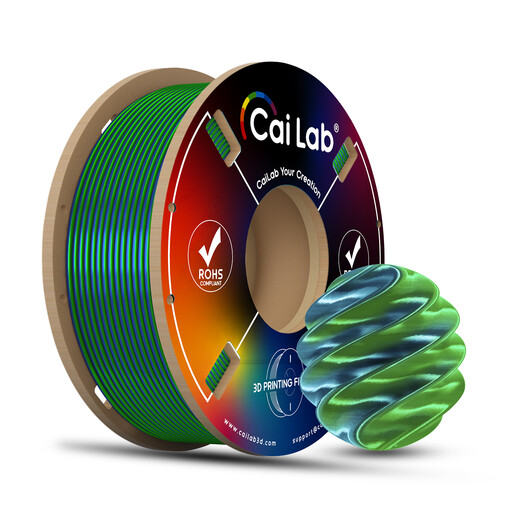
Why This Fits Their Persona: For hobbyists who want to print unique, eye-catching objects. This dual-color filament creates a color gradient that changes depending on the viewing angle, giving any model a distinctive look right away.
Although Silk PLA can sometimes be brittle, this Cailab filament is neatly wound to reduce the risk of tangles and breakage. Proper storage (in a dry place) is important to avoid the "brittle filament" trap.
The unique dual-color effect is its biggest advantage. It delivers a dynamic visual result without needing to switch filaments.
We have compiled a complete, up-to-date list of products that meet these selection criteria and comply with current regulations.
PLA is hygroscopic, meaning it absorbs moisture from the air. This makes the filament brittle and can lead to poor print quality and clogs. Store your opened spools in an airtight bag or container, preferably with a silica gel packet (desiccant) to absorb moisture.
The main difference is how they interact with light. Matte PLA diffuses light, which hides layer lines and provides a soft, non-reflective finish. Silk PLA, on the other hand, reflects light strongly, creating an intense shine and a silky effect. The choice depends on the desired look for your model.
For visual models where strength is not the highest priority, standard PLA is often sufficient. However, if you are printing functional parts that need to withstand more stress, PLA+ filament can be a great choice. According to manufacturer claims, the additives in PLA+ offer better toughness and impact resistance, making the parts less likely to break.
