
Vandaag of morgen in huis

Kwaliteit gegarandeerd

Welkomstaanbiedingen ontgrendelen: GRATIS bezorging | Tot 80% korting | Gratis 30 dagen JoyPlus-proefperiode
Download de app
A blood pressure monitor for home can be useful if you want to keep track of your readings regularly, or help an older parent, family member or someone you care for. However, many models look alike. A low price doesn’t tell you much about how easy a device is to use, and a long list of features doesn’t automatically mean it’s right for you.
Here are three common pitfalls to look out for:
An upper-arm blood pressure monitor uses a cuff that wraps around your upper arm. Check the size range, for example 22 to 42 cm or 22 to 45 cm. Measure your arm circumference with a tape measure beforehand. Choosing a cuff that’s too small or too large is a common purchasing mistake.
A wrist model may be more compact, but you’ll generally need to take extra care with your wrist position. For regular use at home, an automatic upper-arm monitor is often easier to use.
For older people, a blood pressure monitor with a large display and clear figures is practical. A one-button control keeps things simple. Also check whether the device runs on batteries, USB power or both. A USB cable is handy if you’ll keep the monitor in one place; batteries are useful if you want to move it around.
Also look for:
A blood pressure monitor with memory is useful if you want to review readings over several days. If two people will be using it at home, separate user profiles are handy. Some models store 90, 99 or 120 readings per user.
An average of the last three readings can help you avoid treating a single outlier as a trend. It also makes it easier to take your readings with you to an appointment with a healthcare professional. A memory function is no substitute for professional advice.
Almost all the models mentioned here show your pulse rate as well as your blood pressure. A blood pressure monitor with heart rate monitoring can therefore display both types of reading at once. Some models also offer irregular heartbeat detection or an IHB alert.
This kind of alert isn’t a diagnosis. Follow the instructions and discuss recurring or unusual readings with a doctor. Don’t stop taking medication or change your dose based on a single reading.
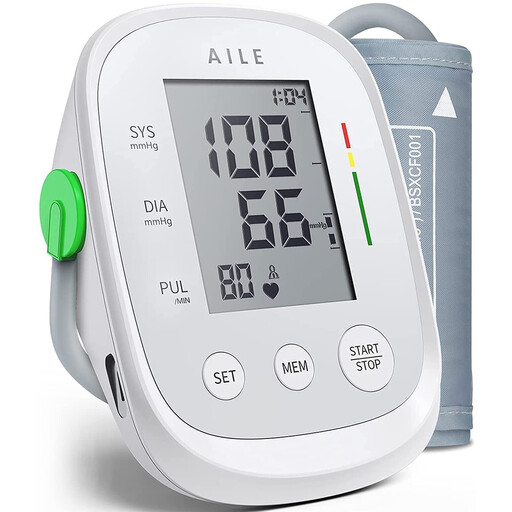
Why it suits this user: This automatic model has an upper-arm cuff measuring 22 to 42 cm, a large digital display and simple controls for everyday use.
The wide cuff included makes it easy to check the size. The product description also lists two users and 99 memory slots per person, helping to keep readings separate.
Large display, average of the last three readings, USB power and support for four AAA batteries.
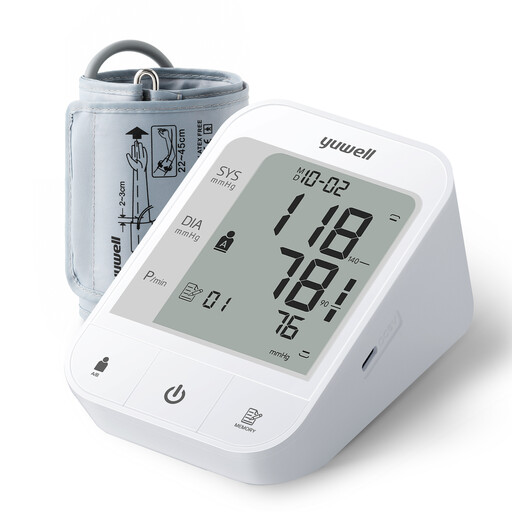
Why it suits this user: This model combines a 3.8-inch HD display with one-button control and a cuff for arm circumferences of 22 to 45 cm.
The product description mentions an incorrect-use alert and a self-check function. These provide extra guidance on posture and cuff placement while you take a reading.
Two users with 99 memory slots each, average of three readings, irregular heartbeat alert, plus a USB cable and four AA batteries included.
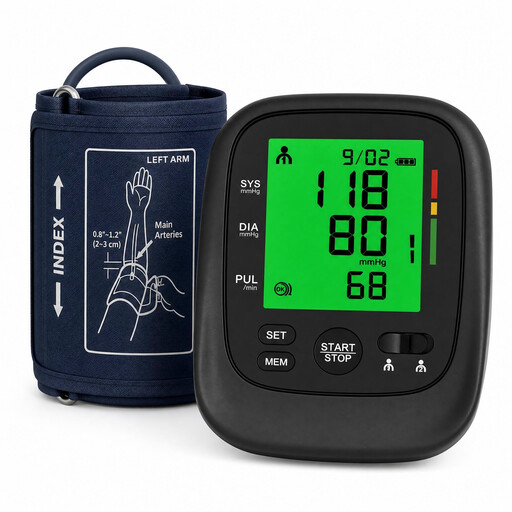
Why it suits this user: If you take readings often or keep records for several family members, this model offers two memory profiles with 120 slots each.
The 63 × 81 mm display uses large figures. The product description also mentions cuff detection and a movement alert to help flag common usage errors.
22–42 cm cuff, average of three readings, USB-C or battery power, and optional Bluetooth data syncing according to the product description.
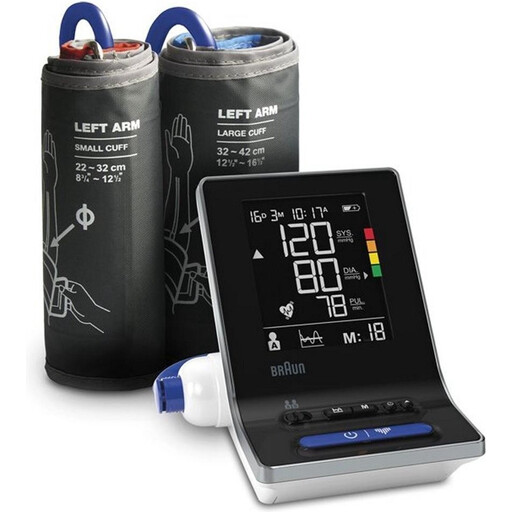
Why it suits this user: The XL backlit display, two cuff sizes and controls for two users are practical when several people share the monitor.
The two cuffs included reduce the risk of a single fixed size not fitting properly. Check in advance which arm circumferences fall within the stated size ranges.
Average of three readings, 40 memory slots per user and an irregular heartbeat alert according to the product information.
We’ve put together a complete, up-to-date list of products that meet these strict selection criteria and current European safety regulations.
Try to follow the same routine each time you take a reading:
A smartwatch with blood pressure monitoring may be useful for general trend information, but the method and specifications vary by model. For a regular routine at home, an automatic upper-arm monitor is usually easier to compare by cuff size, memory, display and controls.
It depends on how it’s used and stored, the batteries and the lifespan of the cuff. Keep the device somewhere dry, avoid sharply bending the tube and check the cuff regularly for signs of wear. Refer to the instruction manual for maintenance and any calibration information.
The main ongoing cost, besides the purchase price, is usually batteries. Models with USB power can be handy if you use the monitor regularly in one place. Check whether batteries or an adapter are included; some models don’t come with batteries.
No. An irregular heartbeat alert is an indication during a reading, not a medical diagnosis. Take another reading according to the instructions, and contact a healthcare professional if unusual readings keep recurring. Don’t use the readings to change your medication yourself.
