
Vandaag of morgen in huis

Kwaliteit gegarandeerd

Welkomstaanbiedingen ontgrendelen: GRATIS bezorging | Tot 80% korting | Gratis 30 dagen JoyPlus-proefperiode
Download de app
A blood glucose meter with test strips might seem easy to choose at first. But many people end up buying a kit that proves less convenient than expected: the strips don’t fit the meter, the wrong unit of measurement is selected, or the strips pass their use-by date before the pack is empty.
For people with diabetes, pregnant women who monitor their blood sugar on the advice of their healthcare professional, carers and other home users, three things matter most: compatibility, ease of use and a consistent testing routine. Read on to find out what to check before ordering a blood glucose meter or diabetes test kit.
Blood glucose test strips are rarely universal. For example, a strip for the Safe-Accu2 won’t necessarily fit a Safe AQ Smart meter. Even different models from the same brand may require their own specific strips.
Always check:
A low price per pack means little if the strips don’t work with your meter.
A five-second reading sounds appealing, but it isn’t the only practical factor to consider. Check how much blood is needed, how to apply it and whether the meter stores your results.
A home glucose meter may give quick readings but still be awkward to use if the screen is small or you have to enter a code each time. Simple controls, automatic activation and a clear display can make more of a difference when you test regularly.
Test strips are affected by moisture, heat and prolonged exposure to air. Close the vial as soon as you’ve taken out a strip. Store strips as instructed by the manufacturer, and don’t use them after their expiry date.
Some products also have a shorter use-by period once opened. For example, the product information for certain kits says that the strips should be used within three or six months of opening. Check the instructions for each product.
In the Netherlands, mmol/L is the usual unit of measurement. Check that the meter displays this unit and hasn’t accidentally been set to mg/dL. Don’t mix up units when interpreting a reading or adjusting medication. Discuss your results and treatment choices with a doctor or diabetes nurse.
The amount of blood needed is given in microlitres, for example 0,6 µL or 0,8 µL. A smaller sample may make it easier to apply blood to the strip, but it’s still important to use the right lancing technique and follow the instructions carefully.
According to the product descriptions, the models in this selection give results in around 5 to 10 seconds. Treat these times as product specifications, not a guarantee that every reading will take the same amount of time in all conditions.
If you test regularly, a memory function that records the date and time may be useful. Storage capacity varies by meter: some models store 200 readings, while others hold up to 500 or 999 results.
Also look for:
Don’t reuse lancets or share a lancing device or meter with anyone else. Follow local guidance or your healthcare professional’s advice on disposing of used lancets.
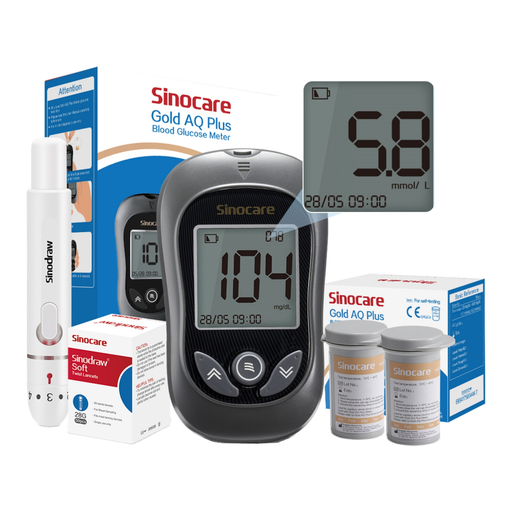
Why it suits this profile: According to the product information, this complete kit includes a meter, lancing device, 50 test strips and 50 lancets. That makes it straightforward to get started without having to look for separate components.
The description says that no coding is required and that the blood sample volume is 0,8 µL. Still, check beforehand that your meter is compatible with these strips.
According to the product details: a five-second reading time, storage for up to 999 results and an mmol/L model.
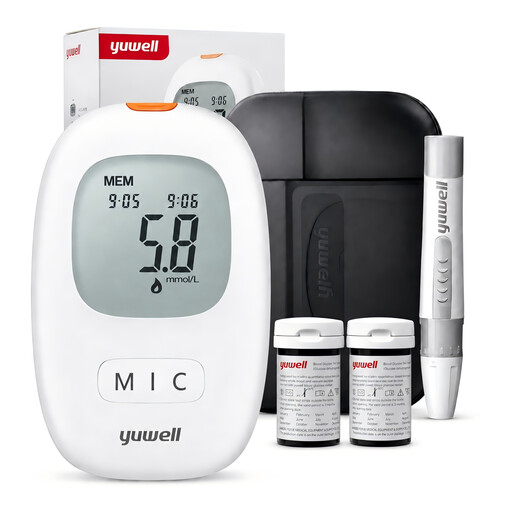
Why it suits this profile: This kit is designed for people who want to look back at their readings as well as take measurements. According to the product description, the meter stores 250 results with the date and time.
The packaging explicitly states that only strips for the same Yuwell model are suitable. This makes it clear how to check compatibility, but you’ll still need to order replacement strips.
According to the product information: five lancing depth settings, automatic strip batch recognition and averages over 7, 14, 30, 60 and 90 days.
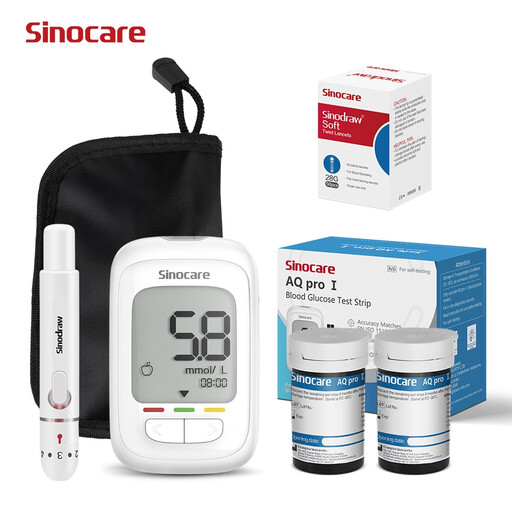
Why it suits this profile: This kit is for people who use a specific Safe AQ Pro I meter and value quick readings and a larger memory capacity.
The strips are specifically designed for the Safe AQ Pro I. This avoids confusion, as long as you check the model of your existing meter before ordering.
According to the product description: a five-second reading time, storage for 500 results and a stated haematocrit range of 10%–70%.
We’ve put together a complete, up-to-date list of products that meet these strict selection criteria and the applicable European safety regulations.
Read the instructions before taking your first reading. Wash and dry your hands, insert a suitable strip and use a new lancet. Apply a drop of blood to the indicated area and wait for the meter to display the result.
Keep a record of your readings if your healthcare professional asks you to. A blood glucose monitor is intended for self-monitoring and doesn’t replace a medical assessment. Contact a healthcare professional if you get unexpected readings or the same unusual readings repeatedly.
Check the expiry date on the packaging. There may be a separate time limit after opening, such as three or six months, depending on the brand and model. Close the vial as soon as you’ve used a strip and store it in a dry place, following the instructions.
Usually not. Test strips are designed for a specific type of glucose meter. Always check both the brand and model number. A strip that looks as though it will fit isn’t necessarily suitable for your meter.
As well as the purchase price, you’ll need to pay for replacement strips and lancets. So compare not just what’s included in the starter kit, but also the price and availability of compatible refill packs. A complete kit with 50 strips and 50 lancets can be a handy way to get started, but remember to plan for future purchases too.
