
For blending in the pan
You want to blend roasted tomatoes and their liquid directly in the pan, rather than transferring the soup to a blender jug first.


If you want to blend roasted tomatoes that are already in the pan, a hand blender is ideal for blending them in place without transferring them. For larger quantities of liquid soup, a jug blender may be more suitable. A soup maker makes most sense if you also want to automate the preparation of future soups. For any model, check the instructions for hot ingredients and the safety information.
You want to blend roasted tomatoes and their liquid directly in the pan, rather than transferring the soup to a blender jug first.
You’re making a larger quantity of liquid soup and want to consider jug capacity, your preferred texture and the permitted temperature of the ingredients.
You’re looking for an appliance that can automatically prepare soup as well as blend it, and want to decide whether this extra function is worth making room for a separate appliance.
Choose this when: you want to blend the roasted tomatoes and their liquid directly in the pan, for example when making a smaller portion.
The trade-off: a hand blender may not give as smooth a result as a jug blender, although the Dutch Consumers’ Association describes it as handy for blending in the pan.
Choose this when: you want to blend larger quantities of liquid soup and have room for a jug.
The trade-off: transferring the soup, worktop space and washing up all need to be considered. Check the instructions for hot ingredients for the exact model.
Choose this when: you also want to prepare soups automatically for future recipes, rather than just blending roasted tomatoes that are already cooked.
The trade-off: if you only need it for this blending task, you may not use the extra cooking function very often. Check the capacity and cleaning instructions for the exact model.
| What to consider | What to look for | Who is this important for? |
|---|---|---|
| Blending in the pan | Check whether you can use the blender foot directly in the pan; place it below the surface before switching it on. | If the tomatoes are already in the pan, I don’t want to transfer them unnecessarily; around 37% of consumers prioritise blending directly, without transferring the food. |
| Portions and texture | Compare the jug capacity with the amount of soup you’re making, and check the instructions for using hot ingredients. | When I’m making several portions of liquid soup, I want a suitably sized jug and the texture I’m after; around 27% of consumers prioritise larger portions. |
| Automatic preparation | Check which soup and blending programmes the model has, and whether it can blend on its own. | Automatic soup preparation can be useful for future recipes, but it isn’t essential if you only need to blend; around 18% of consumers prioritise cooking programmes. |
| Cleaning | Check which parts can be removed and the cleaning instructions for each one. | If I want to tidy up quickly after cooking, I look for removable parts and easy cleaning; around 18% of consumers put cleaning at the top of their list. |
A programme doesn’t automatically tell you what temperature the jug can withstand. Philips gives different instructions for hot ingredients across its blender range.
Read the manual for the exact model and let the soup cool as directed.
If the tomatoes are already roasted, you may not use the automatic cooking function, while the appliance still takes up space.
Choose a soup maker if you also plan to use its cooking programmes for future soups. Check the capacity and cleaning instructions too.
Remember to allow for the space a separate appliance will take up.
A manufacturer’s warranty is an extra benefit; it doesn’t replace your statutory protection if a product is faulty.
Read the additional warranty terms and keep your proof of purchase. The Dutch Government explains that the Netherlands has no fixed statutory warranty period.
Quickchef hand blenders are an option if you want to blend directly in the pan.
The Blender Power 4 is designed for anyone looking for a jug blender for larger quantities of liquid soup.
The SoupMaker HR2203/80 is a soup maker, not a standard jug blender.
According to Braun, the MultiQuick 5 Pro MQ55254M is a hand blender with a metal blending foot and chopping attachments.
These product picks focus on hand blenders for blending soup in the pan. Check the safety information and instructions for hot ingredients for the model you choose.
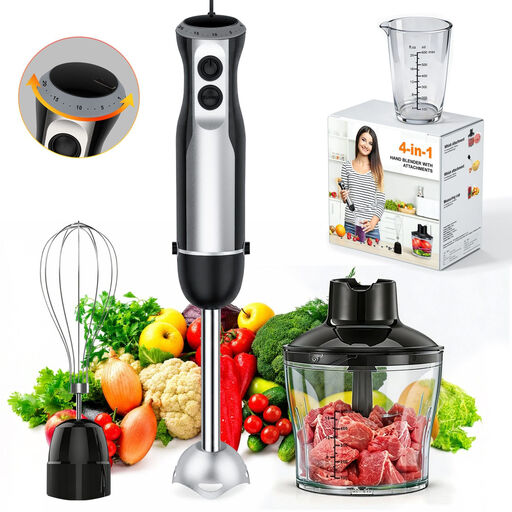 No image available
A hand blender for soup is ideal for blending directly in the pan.
The product name lists 1000 W, 20 speeds and a turbo function.
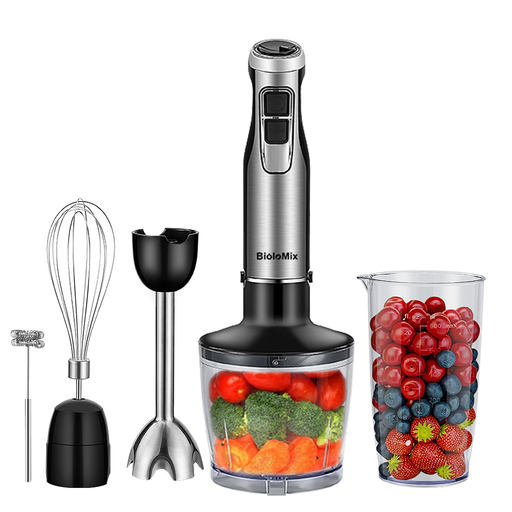 No image available
A hand blender is a good choice if you want to blend soup without transferring it to a blender jug first.
The product name lists 6 speeds and 1200 W.
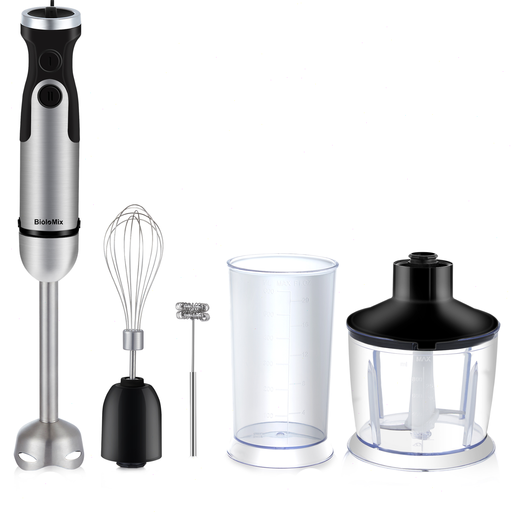 No image available
A hand blender is a good choice if you want to blend soup directly in the pan.
The product name lists 1200 W, 6 adjustable speeds and a turbo mode.
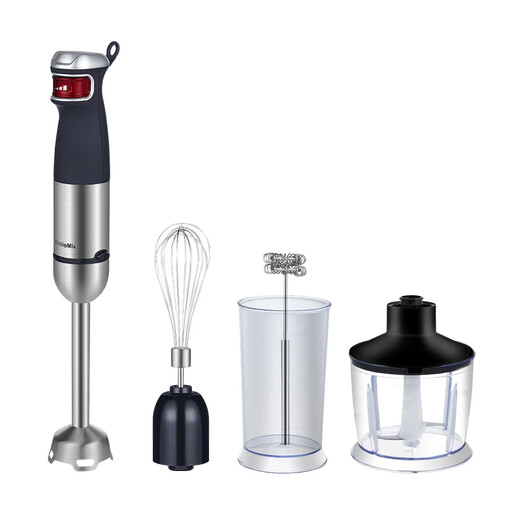 No image available
A hand blender is ideal for blending directly in the pan, without transferring the soup first.
The product name lists 1200 W, stepless speed control and a stainless steel blade.
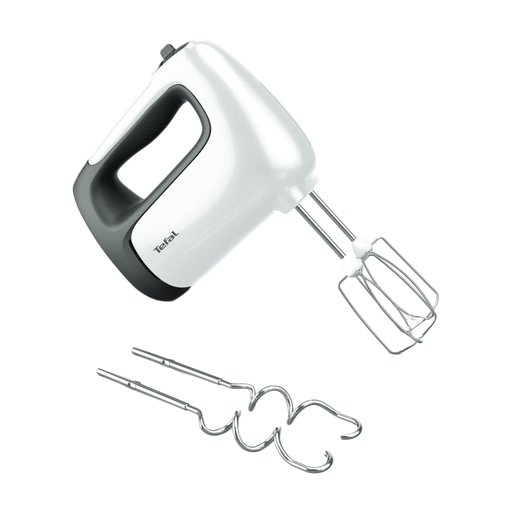 No image available
The product name mentions a stainless steel blending foot for soup, making it suitable for blending in the pan.
The product name lists 450 W and 5 speeds.
No, don’t assume that you can. The Dutch Consumers’ Association recommends letting hot ingredients cool slightly first. For some specific blender models, Philips says to let ingredients cool to below 60 °C; for other models, it says to use only cold or room-temperature liquids. Follow the instructions for your exact model.
Place the blending foot in the pan before switching the hand blender on. Unplug it after use and remove the attachments. Check the manual before putting any parts in the dishwasher.
Cool leftovers promptly and put them in the fridge or freezer in a covered container within 2 hours of cooking. The Netherlands Nutrition Centre recommends keeping leftovers in the fridge for no more than 2 days.
No. According to the Dutch Government, there is no fixed statutory warranty period in the Netherlands. You’re entitled to a product that works properly, and if there’s a fault, you should contact the seller. A manufacturer’s warranty is an extra benefit.
Electrical kitchen appliances must meet the relevant product safety requirements. For appliances covered by the Dutch Commodities Act Decree on Electrical Equipment, the manufacturer must apply a CE mark if the appliance meets the requirements.