
Vandaag of morgen in huis

Kwaliteit gegarandeerd

Welkomstaanbiedingen ontgrendelen: GRATIS bezorging | Tot 80% korting | Gratis 30 dagen JoyPlus-proefperiode
Download de app
A blender seems simple: add the ingredients, press a button and you’re done. But many buyers are disappointed when they find that an appliance is too small, difficult to clean or struggles with frozen fruit and ice. Marketing terms such as “powerful” or “professional” don’t tell you much on their own. The question that matters is: which blender suits your recipes, portion sizes and daily routine?
A high wattage sounds appealing, but the results also depend on the blade design, jug shape, speed and how the ingredients circulate. A powerful 1,200-watt blender isn’t automatically more convenient for making a single smoothie than a compact 350- or 600-watt smoothie blender.
So always check:
A 1.5-litre jug is suitable for several glasses, but takes up more space and is less practical for one person. A 400–700 ml mini blender is more convenient for an on-the-go smoothie, but less suitable for soup, dips for several people or family-sized portions.
Also check the difference between the total capacity and the maximum fill level. Don’t exceed that level: the ingredients need room to move around properly.
A blender with several hard-to-reach parts to clean after every use can quickly end up at the back of the cupboard. Check whether the jug, lid and removable blade parts are dishwasher-safe. The motor base should never go in water or the dishwasher.
A blender with a glass jug feels sturdy, and some models are suitable for hot preparations. Always check the manual before blending hot liquids. If you choose a plastic jug, it’s worth checking which material it’s made from, such as BPA-free Tritan.
Lower power is often enough for soft fruit and liquid smoothies. For ice, nuts, frozen fruit and thick mixtures, a powerful blender with a suitable blade and drive system is more practical. Don’t look at wattage alone: check the features too.
A blender with a pulse function gives short, powerful bursts. This helps you achieve chunkier textures, loosen ingredients and crush ice with more control. Models with several speeds offer more control than appliances with just one fixed setting.
A blender with a glass jug is an option if you value a sturdy jug and clear capacity markings. Glass is heavier, though, and can break if dropped onto a hard surface. Plastic or Tritan is often lighter, which can be useful for everyday use or a portable blender.
As a guide:
Check whether the parts can be removed and whether the product information says they’re dishwasher-safe. An automatic cleaning setting can be handy, but it won’t always replace cleaning by hand around the blade unit.
Also look for:
A cordless blender runs on a battery, so its performance depends on the charge level and operating time. Check whether it charges via USB-C or another connection, and whether the motor base needs to stay dry during cleaning.

Why it suits this profile: With a 0.6-litre capacity and compact design, it’s well suited to one or two daily smoothies, sauces and small preparations.
The specifications list 350 watts, two speeds and a pulse function. That makes it clear what the model is designed for, without relying solely on a marketing claim about power.
Compact design, 0.6-litre capacity and removable parts that are dishwasher-safe according to the product information.

Why it suits this profile: This countertop model is designed for households that want to prepare larger quantities, including cold and, according to the product information, suitable hot preparations.
The product information specifies a 2-litre glass jug with a usable capacity of 1.5 litres. This clearly shows the difference between total and practical capacity.
1200 watts, three automatic programmes, a pulse function and a glass jug that’s dishwasher-safe according to the product description.
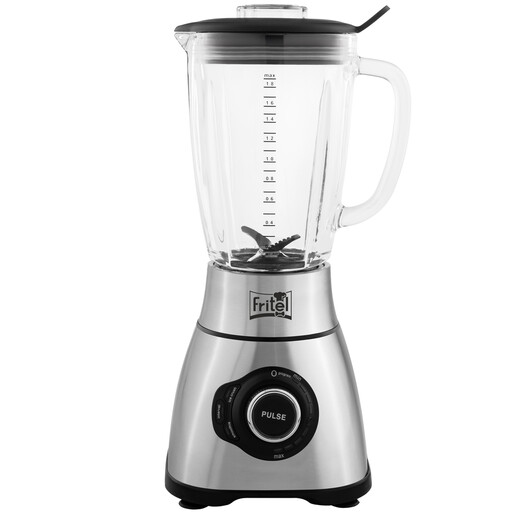
Why it suits this profile: The 1.8-litre capacity, glass jug and programmes for smoothies, interval blending and crushing ice make it a good fit for frequent use.
Rather than simply quoting a high speed, the product information also lists specific programmes, a pulse function and a jug and lid that are dishwasher-safe.
1.8-litre glass jug, nine speeds according to the product specifications and automatic shut-off after ten minutes.
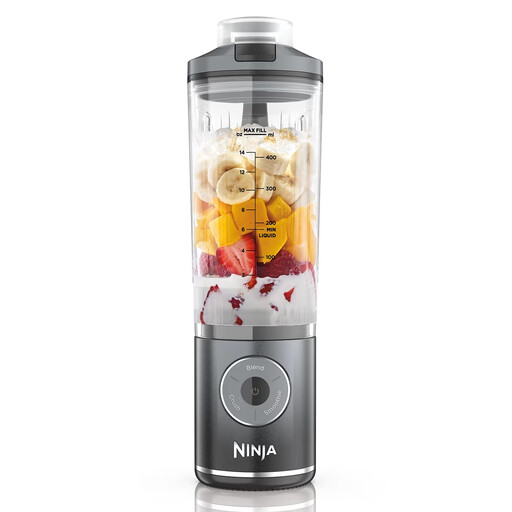
Why it suits this profile: If you don’t have a socket nearby, this compact cordless blender comes with a rechargeable battery and two 530 ml cups.
Portability is more than just a label: the specifications list USB charging, a battery, a leakproof lid design and BPA-free Tritan cups.
Cordless use, one-button operation, two 530 ml cups and parts that are dishwasher-safe according to the product information.
We’ve put together a complete, up-to-date list of products that meet these strict selection criteria and the applicable European safety regulations.
Lower power is often enough for smoothies made with soft fruit. If you regularly want to blend ice, nuts or frozen ingredients, you could look at models from around 800 watts. However, wattage doesn’t guarantee a smooth result. Blade shape, jug design, speed and the amount of liquid all play a part too.
It depends on the model. Some glass jugs are described as suitable for hot preparations, while many personal blenders aren’t designed for hot liquids. Always check the manual. Steam can build up pressure and push the lid off. If necessary, let the mixture cool first.
Its lifespan depends on how often you use it, how hard you push it and how well you maintain it. Don’t overfill the jug, let the motor cool down when the manual says to and rinse the parts straight after use. Before buying, also check the guarantee terms and whether replacement blade parts are available.
