
Vandaag of morgen in huis

Kwaliteit gegarandeerd

Welkomstaanbiedingen ontgrendelen: GRATIS bezorging | Tot 80% korting | Gratis 30 dagen JoyPlus-proefperiode
Download de app
Buying a blender seems simple: choose a power rating, check the capacity and consider the price. In practice, blenders vary considerably in ease of use, ease of cleaning and suitability for hard ingredients. A cheap blender may be perfectly suitable for soft bananas and yoghurt, but less so for ice, nuts or large quantities of soup.
The Joybuy Product Recommendation Officer helps you look beyond marketing claims. Pay particular attention to these three common pitfalls:
A jug blender or blender with a jug is suitable for making several portions of smoothies, sauces, cold drinks and some soups. A smoothie blender with a compact cup is better suited to one person or a small household. If you want to drink straight from the cup, you can choose a mini blender or portable blender.
A stick blender, also known as a hand blender, works directly in a saucepan, bowl or measuring jug. This is practical for soup, baby food, purée and sauces. With a whisk or chopper attachment, a multifunctional blender can also help with whipped cream, herbs or small quantities of ingredients.
The wattage indicates the power consumed, but it is not a complete measure of performance. Lower power is often sufficient for soft vegetables and fruit. For frozen fruit, ice and hard ingredients, a powerful blender with a suitable blade design is more useful.
Also check the recommended operating time. Some compact models may only run for a short period at a time and then need to cool down. This is important if you want to make several portions one after another.
A pulse function provides short bursts of power. It is useful for larger pieces, loosening ingredients and crushing ice. If you are considering a blender with an ice crusher, always check the manual: not every model is designed for large or hard ice cubes.
For a family, a blender with a jug of around 1.25 to 2 litres is a sensible choice. Look at the working capacity and the dimensions as well. A large jug can be convenient, but it takes up more space and is heavier to clean.
A mini blender of around 400 to 600 ml is suitable for one smoothie or shake. A portable model with USB-C charging is handy for the office, studying or travelling, but usually has less capacity than a blender with a jug. Also check whether the cup is designed for drinking from and whether the lid closes securely.
A blender should stand firmly. Non-slip feet, a securely closing lid and a locking mechanism help reduce the risk of movement or spillage. The blades are sharp; always unplug the appliance before removing any parts.
Pay attention to the following points:
Claims about, for example, even or extra-smooth blending come from the brand’s product information. Treat them as product claims and compare them with verifiable specifications such as power, capacity, speeds and accessories.

Why it suits this profile: This compact model has a capacity of 0.6 litres and a power rating of 350 W, making it suitable for everyday smoothies and sauces for one or two people.
The product information lists two speeds, a pulse function and removable dishwasher-safe parts. This means you do not have to pay for features you will not use.
0.6 litres, 350 W, two speeds and removable parts that, according to the product description, can go in the dishwasher.

Why it suits this profile: The spacious jug and multiple automatic programs are ideal for households that regularly prepare a variety of recipes.
The specifications list 14 manual speeds, four programs, a pulse function and a separate 700 ml cup. This means you are not limited to a single automatic setting.
1200 W, a 2.1-litre jug, ice crusher and automatic programs for chopping, grinding and pulsing.

Why it suits this profile: The 1.5-litre jug and four blades are designed for larger portions, smoothies and processing ice.
The product description specifically lists a maximum power rating of 1300 W, two speeds, a pulse function and an ice-crushing function. Check the fill limit and manual before use.
1.5-litre capacity, four titanium blades, two speeds and pulse control.
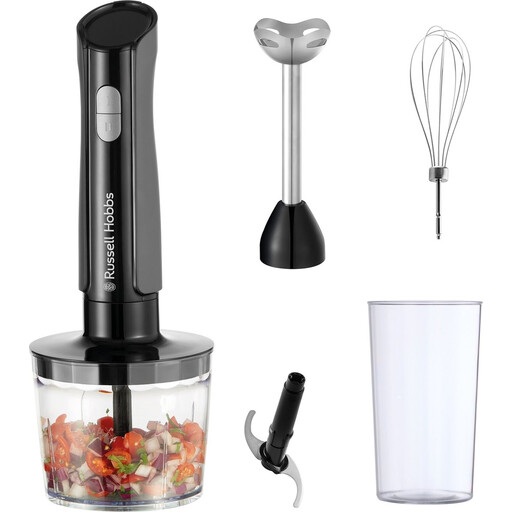
Why it suits this profile: A stick blender is easy to store and works directly in a saucepan or bowl. This model combines blending, chopping and whisking.
The set includes two speeds, a 600 ml blending beaker, a 500 ml chopping bowl and removable parts. According to the product description, these parts are dishwasher-safe.
500 W, two speeds, whisk and chopping attachments, and a compact design.
We have put together a complete, up-to-date list of products that fully meet these strict selection criteria and the applicable European safety regulations.
A stick blender is practical when you want to purée soup directly in the pan. A blender with a jug can process larger quantities, but always check whether hot liquids are permitted and, if necessary, allow the food to cool according to the manual.
For soft smoothies, a compact model with 250 to 350 W may be sufficient. For frozen fruit, ice or hard ingredients, models from around 800 W offer more scope, provided the blade and instructions are suitable for this purpose. So do not look at wattage alone.
Its lifespan depends on how frequently it is used, maintenance, overloading and following the maximum operating time. Allow the motor to cool when instructed to do so in the manual, use the maximum fill line and clean the blades carefully. In the Netherlands, consumers also have statutory rights regarding conformity; the precise rights depend on the product and the circumstances of the defect.
