
Vandaag of morgen in huis

Kwaliteit gegarandeerd

Welkomstaanbiedingen ontgrendelen: GRATIS bezorging | Tot 80% korting | Gratis 30 dagen JoyPlus-proefperiode
Download de app
A blender seems simple: add the ingredients, press a button and you’re done. Yet many people buy a model that does not really suit the way they use it. A small smoothie maker may struggle with frozen fruit, while a powerful blender can take up unnecessary space if you only make a shake occasionally.
The main pitfalls usually have less to do with appearance and more with power, capacity, materials and cleaning. Below, you’ll find what to look out for and which blender is best suited to different households.
A 1200W blender or 1300W blender sounds powerful, but wattage does not tell you everything about the result. The shape of the jug, blade design, available speeds and amount of liquid also make a difference. A compact 600W blender may be sufficient for soft vegetables and fruit, while ice, nuts and frozen ingredients demand more from the appliance.
So don’t just check the power. Also look for an explicit pulse function or ice-crushing function in the product description.
A 1.5-litre jug is not always suitable for blending 1.5 litres at once. The maximum fill line and the type of recipe determine how much you can actually prepare. For one person, a 400 to 700 ml cup is often practical. For a family, an electric blender with a jug of around 1.2 to 2 litres is more convenient.
Also consider the dimensions. A large glass jug may be sturdy, but it takes up more space in a kitchen cupboard.
Blender residue can easily remain around the blades or underneath the seal. A dishwasher-safe blender with removable parts saves time, but always check which components can actually go in the dishwasher. The motor base should never be submerged.
Whatever the model, unplug it before removing the jug or blades. The blades are sharp and should be handled with care.
Use this guide as a practical reference:
This does not guarantee a particular texture. According to manufacturers’ own information, blade shape, rotational speed and programmes can also affect the blending result.
A blender with a glass jug is less prone to discolouration and generally absorbs fewer odours. Glass is heavier, however, and can break. A plastic or Tritan cup is lighter and suitable for a blender to go, but check that the material is stated to be BPA-free.
For hot preparations such as soup, always follow the instructions. Some models are suitable for this, while others may only be used with cold ingredients. Never use hot liquids in a cup if the manufacturer prohibits this; pressure can build up during blending.
A blender with a pulse function delivers short, powerful bursts. This is useful for coarser pieces, ice or ingredients that need to be pushed down towards the blades. Two speeds may be enough for everyday use. More speeds or automatic programmes offer extra control, but they do not automatically make the appliance more suitable for your recipes.
Also look for:

Why it suits this profile: The 1.5-litre jug is suitable for households that want to prepare smoothies, sauces, juice and baby food in several portions.
The specifications mention 600W, several speeds and ice crushing. Check the maximum operating time and fill line before processing hard ingredients.
1.5-litre capacity, 600W motor and multifunctional use. According to the product information, the parts are easy to dismantle.

Why it suits this profile: This model combines a glass jug, 1200W of power, automatic programmes and a pulse function for a wide range of preparations.
The product information specifies 1.5 litres of usable capacity and a heat-resistant glass jug. Still, check the maximum fill line for hot recipes.
1200W, 1.5 litres of usable capacity, glass jug, touchscreen controls and a dishwasher-safe jug according to the product specifications.
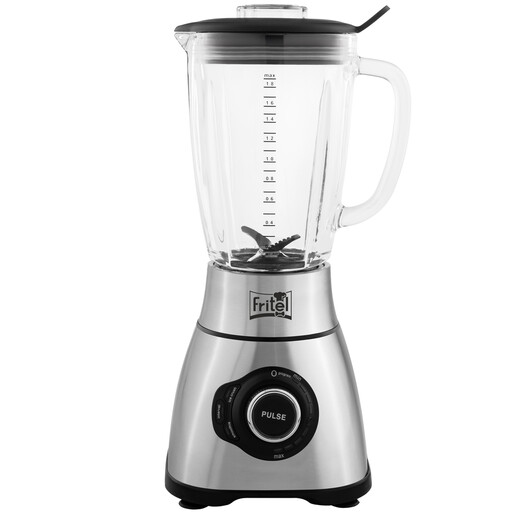
Why it suits this profile: The large 1.8-litre glass jug and programmes for smoothies, interval blending and ice crushing are well suited to frequent use and larger portions.
The product information mentions a removable blade set and dishwasher-safe parts. This reduces cleaning work after intensive use.
1.8-litre capacity, three preset programmes, pulse function and a stated noise level of 75 dB.
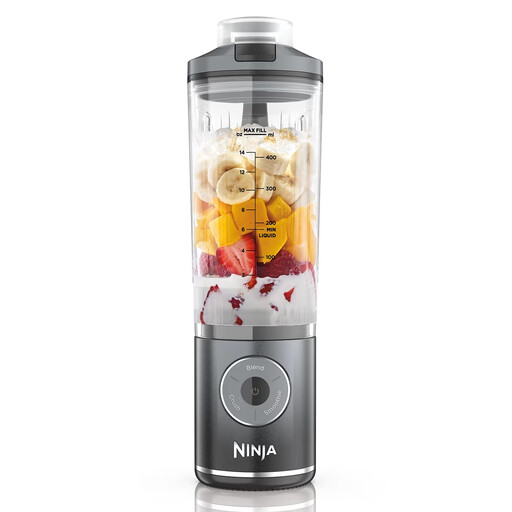
Why it suits this profile: This portable blender runs on a rechargeable battery and comes with two 530 ml cups for the office, gym or travelling.
The leak-proof lids and cordless operation help prevent spills and remove the need for a power socket. However, the capacity is still smaller than that of a blender designed for home use.
150W motor, USB charging, one-button operation and two BPA-free Tritan cups which, according to the product information, are dishwasher-safe.
We’ve put together a complete, up-to-date list of products that fully meet these strict selection criteria and the applicable European safety regulations.
Cut large ingredients into smaller pieces first and add enough liquid. Do not fill the jug above the marked line. For heavy mixtures, work in short cycles and let the motor cool down when instructed in the manual. This helps prevent unnecessary strain on the motor.
A mains-powered model mainly uses energy while blending; the operating time is usually short. A cordless blender does need to be recharged regularly. With a portable blender, it is best not to store the battery flat for an extended period.
For soft smoothies, a 350 to 600W blender is often sufficient. If you regularly use frozen fruit, ice or nuts, look for a model from around 800W with a pulse function or an explicitly stated ice-crushing function. The final choice also depends on portion size and preparation method.
The lifespan depends on use, maintenance and following the instructions. Overloading, blending for too long and cleaning incorrectly can accelerate wear. Before buying, check whether blades, cups or seals are available as replacement parts. In the European Union, consumers generally have a legal guarantee of conformity; the exact rights depend on the circumstances and national regulations.
A portable blender is practical for making one smoothie at the office, on the go or after exercising. The smaller cup and lower power make it less suitable for large family portions, thick sauces or regularly crushing ice. For home use with several portions, it is better to choose an electric blender with a larger jug.
