
Hosting lunch for several guests
If you’re pouring drinks for several guests, compare the usable capacity of jug blenders. Philips and Tefal distinguish between the total and usable capacities of the models they list.


When you’re serving several guests, a jug blender with enough usable capacity is a practical choice. For a single glass, a personal blender with a cup may be a better fit. If you want to blend ice, check that the specific model is designed for it. A larger jug or extra programmes alone don’t prove that a blender will work better for watermelon drinks.
If you’re pouring drinks for several guests, compare the usable capacity of jug blenders. Philips and Tefal distinguish between the total and usable capacities of the models they list.
If you usually make a small portion, consider a compact blender with a blending cup. Nutribullet describes the Original 600 NB603DG as a personal blender with a 700 ml cup.
If you want to blend ice cubes, it’s worth checking the features of the exact model. Philips and Tefal specify ice-crushing functions for certain blenders.
Best for: pouring several glasses and mainly blending soft fruit.
Consider: a jug takes up more space, so check its usable capacity rather than just its total size.
Best for: usually making one portion and wanting a compact cup.
Consider: you may need to blend again for each glass or portion when serving several guests. Check which accessories are included with the model.
Best for: blending ice cubes as well as watermelon.
Consider: an ice function doesn’t prove that the model will make a better watermelon drink than a simpler blender.
| What to consider | What to look for | Who is it important for? |
|---|---|---|
| Capacity per blend | Compare the usable or effective capacity, not just the total jug size. | If I want to make drinks for several guests at once, I need to know whether the jug has enough usable capacity. Around 40% of consumers prioritise having enough capacity per blend. |
| Size for a single portion | Check the cup capacity and which cup, lid and blade assembly are included with the model. | If I usually make one glass, a compact blending cup may be more convenient than a large jug. Around 20% of consumers prioritise a size that suits a single portion. |
| Crushing ice | Check the exact model’s stated ice function and instructions. Don’t assume it’s suitable based on wattage alone. | If I want to add ice cubes, I’ll check whether the appliance is designed for this. Around 20% of consumers make the ability to blend ice their main priority. |
| Cleaning | Check the cleaning instructions for each part and whether the blades are removable. | After lunch, I want to know how to clean the cup or jug and the blades. Around 20% of consumers base their choice mainly on how easy it is to clean. |
The stated maximum capacity may differ from the effective or usable capacity. For example, Philips gives the HR2041/00 a maximum capacity of 1.9 litres and an effective capacity of 1 litre; Tefal lists the BL871D31 as having a 2-litre jug capacity and a usable capacity of 1.5 litres.
Compare the usable capacity with the amount of drink you want to make for lunch.
Cleaning instructions may differ for the cup or jug, blades and motor base.
Check the instructions for every part of the specific model before cleaning it.
A blending cup designed for a smaller portion may mean you have to blend several separate batches for a group.
Decide how many glasses you want to make per blend before choosing between a personal cup and a jug.
The 3000 Series HR2041/00 is a jug blender with an effective capacity of 1 litre.
Nutribullet describes the Original 600 NB603DG as a personal blender with a 700 ml cup.
Tefal lists the PerfectMix+ BL871D31 as having a usable capacity of 1.5 litres and programmes for smoothies, ice and cleaning, among other things.
Braun describes the PowerBlend 9 JB901AN-JB9040BK as a jug blender with a working capacity of 2 litres and an adjustable texture setting.
This Joybuy selection includes jug blenders for multiple portions, including models whose product descriptions mention ice crushing. Check that the specific listing has the required CE marking: the Dutch government states that this is required for electrical appliances placed on the EU market.
 No image available
The product description mentions ice crushing and a 1.5-litre jug, which may suit you if you’re making several portions with ice.
The product name lists 1300 W, two speeds and four Black Titanium blades.
 No image available
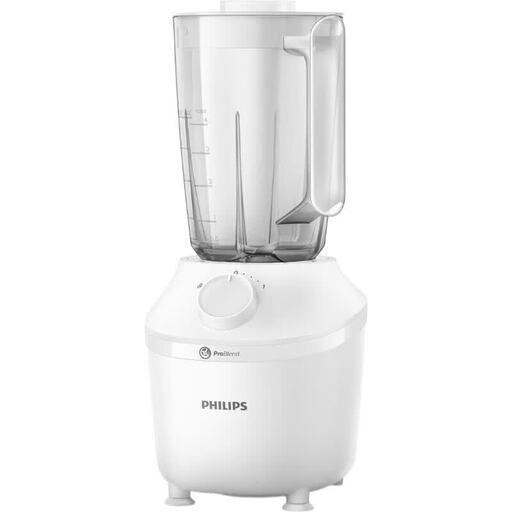
Philips lists an effective capacity of 1 litre and an ice-crushing function. Compare this capacity with the amount you want to make at a time.
Philips lists a maximum capacity of 1.9 litres, 450 W, one speed and a pulse setting.
 No image available
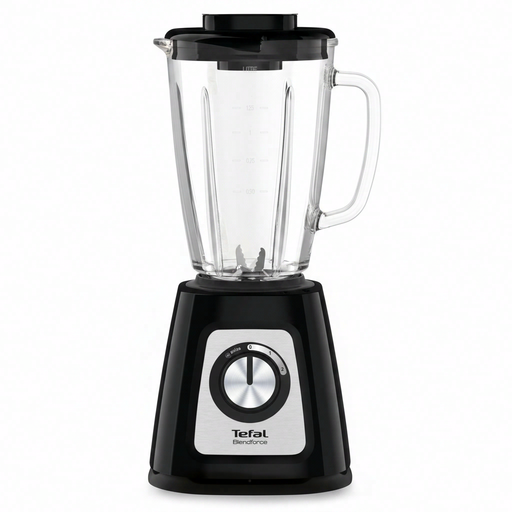
The product description lists a usable capacity of 1.5 litres and an ice programme, making it worth comparing if you’re preparing several glasses with ice.
The product name lists 1200 W; the description also mentions an Auto-Clean programme.
 No image available
The product description lists a working capacity of 1.5 litres, which may be useful if you want to make several portions.
The product name lists 1000 W; the description mentions three speeds, a pulse setting, removable blades and a manual cleaning programme.
 No image available
The product description mentions an ice-crushing mode and a 1.25-litre jug. Check whether this capacity suits the number of glasses you want to make.
The description lists two speeds and a pulse function.
Not necessarily. According to the Consumentenbond, you can make smoothies and purées with a standard blender. Choose extra features based on what you want to add, such as ice cubes, and check the capacity of the specific model.
Compare the usable or effective capacity with the amount you want to prepare per blend. The total jug capacity may be greater than the usable capacity, as Philips and Tefal specify for certain models.
This varies by model and component. Follow the cleaning instructions for the cup or jug and the blades separately. For example, Tefal lists a dishwasher-safe glass jug for the PerfectMix+ BL871D31.
The Netherlands Nutrition Centre (Voedingscentrum) recommends storing cut watermelon covered in the fridge. The Bewaarwijzer recommends keeping an opened fruit smoothie in the fridge for 1–2 days. Follow the appropriate storage advice for any other ingredients.
The Dutch government states that electrical appliances placed on the EU market must carry the required CE marking. Check this on the specific listing; general information doesn’t automatically confirm that an individual product is compliant.