
For blending drinks for everyone at the table
You want to make watermelon drinks for several people in as few batches as possible. Check the usable capacity and whether the jug is easy to pour from.


For fresh watermelon drinks for several people, a jug blender with enough usable capacity is usually the most suitable choice; a standard blender can already make smoothies. Choose a model with a stated ice function if you regularly want to use ice or frozen fruit, and bear in mind that making drinks for a group in a personal cup may mean blending in several batches. Compare the usable capacity, cleaning requirements and instructions for the exact model.
You want to make watermelon drinks for several people in as few batches as possible. Check the usable capacity and whether the jug is easy to pour from.
You also want to use ice or frozen fruit, so check the features and instructions for the exact model.
You make drinks around mealtimes and want to know which parts are dishwasher-safe and whether the blade is removable. The Consumers’ Association also highlights these points when choosing a blender.
First decide whether you want to fill a jug for several people in each batch or mainly make individual portions. Then consider whether an ice function and ease of cleaning matter for the way you plan to use it.
| What to consider | What to look for | Who should pay particular attention? |
|---|---|---|
| Amount per batch | Compare the usable capacity with the amount you want to pour at once; the jug’s total capacity and usable capacity may differ. | If I’m serving several people at once, I want to make enough in each batch. Around 39% of consumers prioritise making enough drinks per blending session. |
| Ice or frozen fruit | Check the ice function and the instructions for the exact model. | If I often add ice cubes or frozen melon to my drinks, I want to know whether the model is designed for this. Around 23% of consumers prioritise this suitability. |
| Cleaning | Check which parts are dishwasher-safe and whether the blade is removable. | After a meal, I want to clean the jug and parts quickly, following the instructions. Around 23% of consumers put ease of cleaning first. |
| Cost and other uses | Check what’s included with the exact model and whether an additional warranty offers any real benefit. | If I also use the blender for individual drinks and don’t always need a large jug, size and included cups are important factors. Around 15% of consumers mainly choose a compact, affordable option. |
A 2-litre jug may not be able to process 2 litres of drink at a time. For example, Tefal lists the PerfectMix+ BL871D31 as having a total capacity of 2 litres and a usable capacity of 1.5 litres.
Match the amount you want to make in each batch to the stated usable capacity.
According to the Consumers’ Association, wattage alone doesn’t tell you everything about blending results; performance for different tasks is assessed separately.
If you plan to use ice, compare the features and instructions for the exact model, and consult a relevant independent test where available.
In the Netherlands, you have statutory rights if a product doesn’t meet the expectations you’re entitled to have of it. The Dutch Government says there is no fixed statutory warranty period and that, in principle, you should contact the seller if there’s a fault.
Before paying, check what extra cover the additional warranty provides and whether it offers anything useful for your situation.
The PerfectMix+ BL871D31 is a jug blender worth considering if you also want to blend ice.
The VitaPower MMB6141B has a Tritan jug and is an option to compare for serving several people.
According to Braun, the PowerBlend 3 JB 3272 SI combines a jug with drinking cups for group and individual portions.
The Consumers’ Association describes the Nutri Blender QB3001EUS as a small personal smoothie blender.
The 7000 Series HR3760/00 is an example of a jug blender with a higher stated capacity.
The options below include jug blenders for several portions, models with an ice function and a personal smoothie blender. Compare the capacity and features of the exact model with what you want to make for everyone at the table.
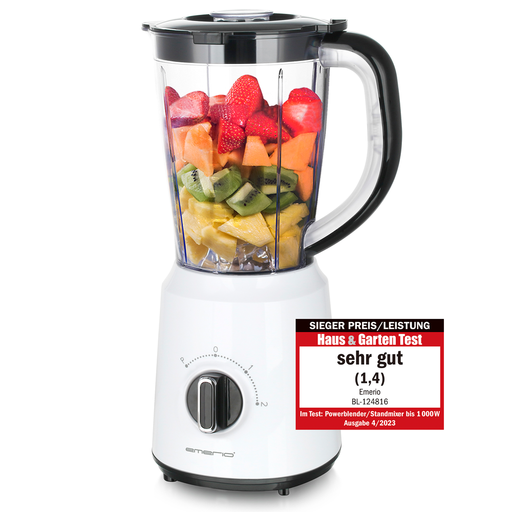 No image available
A jug blender to consider for making drinks to share, if you also want to crush ice.
1.5-litre capacity; 2 speeds; pulse function for crushing ice.
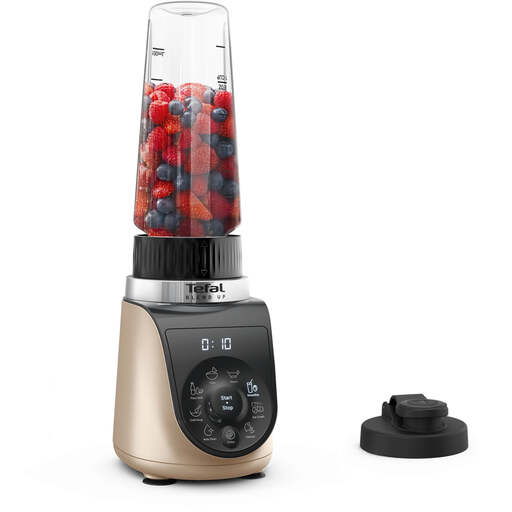 No image available
A personal smoothie blender to compare if you mainly make individual portions. If you’re making drinks for a shared meal, it’s worth checking how much you’ll need to make in each batch.
 No image available
A jug blender to consider if you want to make several portions and are thinking about how easy it is to clean after a meal.
1.5-litre working capacity; 3 speeds; pulse function; removable blades and dishwasher-safe parts.
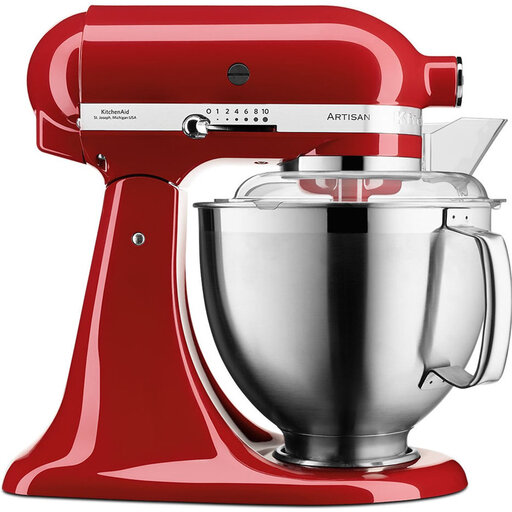 No image available
A jug blender to compare if you want to make drinks for everyone to share.
1.5-litre jug; 5 speeds; pulse function.
 No image available
A jug blender to compare if you want to make larger portions and crush ice too.
2.1-litre jug; ice crusher; BlendSense; 14 manual speeds.
Not necessarily. According to the Consumers’ Association’s buying advice, a standard blender can make smoothies. Choose extra features based on ingredients such as ice, and on how much you want to make in each batch.
The Netherlands Nutrition Centre advises keeping cut watermelon covered in the fridge and gives a storage life of 2 days. This is storage advice, not a blender feature.
This varies by model and part. Tefal lists a dishwasher-safe glass jug for the BL871D31; Bosch lists dishwasher-safe parts for the MMB6141B, but the blade isn’t removable. Follow the instructions for the exact model.
A paid-for extended warranty doesn’t replace your statutory rights. According to the Dutch Government, there’s no fixed statutory warranty period in the Netherlands and, in principle, you should contact the seller if there’s a fault. Check the terms of an extended warranty to see what additional cover it provides.
According to the Dutch Government, online purchases from a business often come with a 14-day cooling-off period. Check the seller’s information for the terms that apply to your purchase.
Electrical appliances placed on the Dutch market are subject to applicable European requirements. Ondernemersplein, the Dutch Government’s business information portal, says that after assessing the product against those requirements, the manufacturer must affix the required CE marking and draw up an EU declaration of conformity. This general rule does not, by itself, prove that a specific model complies.