
Making drinks for a group
You want to pour several glasses, so you compare the jug’s usable capacity. The Consumers’ Association highlights capacity as something to consider when choosing a blender.


If you’re making one drink and have limited storage space, a compact personal blender is a better fit. If you need several glasses, the jug’s usable capacity matters more. If you want to add ice, check that the manufacturer recommends it for the exact model and read the cleaning instructions. The Consumers’ Association reports that blenders can vary in how well they handle ice.
You want to pour several glasses, so you compare the jug’s usable capacity. The Consumers’ Association highlights capacity as something to consider when choosing a blender.
You have limited worktop or cupboard space and want a small cup that’s easy to fill and clean. Bosch and nutribullet describe compact models with cups for individual servings.
As well as fresh watermelon, you sometimes want to use ice cubes or frozen fruit. Check the manufacturer’s information for the exact model before using it this way.
Best for: usually making one serving and having limited space.
Trade-off: if you’re making several glasses in a row, you may need to blend in batches; check which cup is included.
Best for: pouring several drinks at once.
Trade-off: a larger jug takes up more room to store and clean.
| What to consider | What should you check? | Who should prioritise it? |
|---|---|---|
| Making enough drink at once | Compare the usable capacity, not just the jug’s total capacity. Philips lists 1 l usable capacity from 1.9 l total for the HR2041/00; Tefal gives 1.25 l and 1.9 l respectively for the BL5958. | I want to pour several glasses for a group without having to blend again. Around 40% of consumers prioritise making enough drink for several glasses. |
| One drink and limited space | Check the cup capacity and dimensions. Bosch lists a 0.6 l cup and dimensions of 367 × 122 × 126 mm for the MMB2111S; nutribullet lists a 700 ml cup for the NB603DG. | If I usually make one glass and have limited worktop space, a compact appliance matters more than a large jug. Around 30% of consumers prioritise single servings and limited space. |
| Ice or frozen fruit | Check whether the manufacturer mentions ice or frozen ingredients for the exact model, and follow the instructions. The Consumers’ Association reports varying results for ice in its blender tests. | I want to add ice cubes to my watermelon drink and know whether the model I choose is designed for this. Around 20% of consumers list processing ice as their top priority. |
| Cleaning the parts | Check which parts are dishwasher-safe and how to clean the blade. Bosch lists dishwasher-safe parts for the MMB2111S; for the NB603DG, nutribullet instructs you to wash the blades with soap and water and put the cups on the top rack. | In a holiday cottage, I want to clean the jug, cup and blade easily after use, even if there’s no dishwasher. Around 10% of consumers give ease of cleaning top priority. |
The stated total capacity may be greater than the usable capacity. Philips lists 1.9 l total and 1 l effective capacity for the HR2041/00; for the Tefal BL5958, the figures are 1.9 l and 1.25 l.
Compare the usable capacity and stick to the maximum fill level specified for the model.
The Consumers’ Association reports varying results for ice in its blender tests. A high wattage alone doesn’t tell you how well a blender handles ice.
Check the instructions for the exact model. If you’re mainly blending soft, fresh watermelon, ice-crushing ability doesn’t have to be a deciding factor.
Cleaning instructions can vary by part. For the nutribullet NB603DG, the manufacturer says to wash the blades with soap and water; the cups can go on the top rack of the dishwasher.
Before buying, read the instructions for the jug, cup, lid and blade, especially if your holiday cottage doesn’t have a dishwasher.
The HR2041/00 is a jug blender for comparing usable capacity and the features listed by Philips.
The MMB2111S is a compact cup blender; the MMB6141B is a separate model with a larger jug.
The Original 600 NB603DG is a personal blender with a 700 ml cup, according to the manufacturer.
The Blendforce 3 BL5958 is a jug blender with a glass jug.
These products range from compact models and jug blenders to a hand blender for watermelon drinks. Compare serving size, intended use with ice and cleaning instructions for each model.
 No image available
The blending jug and travel bottle offer different sizes for preparing drinks to enjoy on more than one occasion.
The product name lists a 1500 ml blending jug, a 600 ml travel bottle and use with ice.
 No image available
The jug capacity may suit you if you want to make several servings, and the product name mentions ice crushing.
The product name lists a 1.5 l jug and three speeds. The instructions require at least 300 ml of liquid; during heavy blending cycles, the motor must rest for 2 minutes after a maximum of 1 minute of use.
 No image available
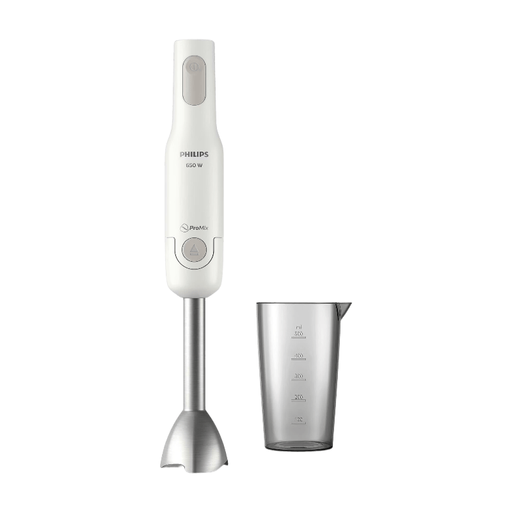
A hand blender is an option if you want to prepare the ingredients in a mixing cup instead of using a jug blender.
The product information states that this model isn’t designed to crush ice.
 No image available
This compact model may suit you if you’re looking for a blender for smaller servings and want to compare its suitability for ice.
The product name lists 0.6 Litre, 350 W and ice crushing.
 No image available
This jug blender may suit you if you want to make several glasses and usable capacity matters to you.
Philips lists 1 l effective capacity compared with a total jug capacity of 1.9 l, one speed setting and a pulse setting. The manufacturer mentions ice crushing; let the appliance cool down after a maximum of 2 minutes of continuous use, as stated in the product instructions.
Not necessarily: according to the Consumers’ Association, you can use an ordinary blender to make smoothies and purée. For ice, check that the exact model is suitable and read its instructions.
Don’t exceed the stated maximum fill level, make sure the jug is securely closed and follow the model’s instructions. The Consumers’ Association advises putting parts in the dishwasher only if the instructions allow it; clean the blades according to the cleaning instructions.
The Netherlands Nutrition Centre advises covering cut watermelon and storing it in the fridge. It recommends keeping opened watermelon in the fridge for 2 days.
Contact the seller. According to the Government of the Netherlands, there’s no fixed statutory warranty period in the Netherlands; what you can expect in terms of a product’s lifespan depends on factors including the product and the sales information. A manufacturer’s warranty may be available in addition.
Electrical equipment covered by EU rules must have a CE mark when it’s placed on the market. EUR-Lex explains the applicable rules and their scope; check the product information for the specific model.