
Small servings at home
You usually make one or a few glasses and want a cup that suits the amount, without needing a large jug.


For one or a few small servings of fresh watermelon drink, a compact jug blender or a smoothie blender with a to-go cup is a sensible choice. Decide whether you’ll pour your drink at home or take the cup with you. According to the Dutch Consumers’ Association, you can also make smoothies in a standard blender. If you want to add ice or frozen fruit, check that the exact model is suitable, as results with ice vary between blenders.
You usually make one or a few glasses and want a cup that suits the amount, without needing a large jug.
You want to blend directly in a sealable drinking cup, so check which cup and lid are actually included with the model you’re considering.
You sometimes want to add hard or frozen ingredients, so check whether the exact model is suitable.
For a small watermelon drink, the key considerations are serving size, cleaning, the texture you want and whether you’ll be adding hard ingredients.
| What to consider | What should you look for? | Who is this important for? |
|---|---|---|
| Serving size and type of cup | Check the usable capacity, how many cups are included and whether a drinking lid comes with it. Bosch lists a 0.6 l capacity for the MMB2111S; Tefal lists 400 ml and 700 ml bottles for the BL19H4F0. | If I usually make one or a few glasses, I want a cup that suits my serving size. Around 33% of consumers focus mainly on serving size and the type of cup. |
| Cleaning after use | Check whether each part is removable and dishwasher-safe. Philips lists dishwasher-safe parts for the HR2510/90; Tefal says the BL19H4F0 has removable blades and a self-cleaning setting. | When I often make a small batch, I want to know which parts I’ll need to clean afterwards. Cleaning is the top priority for around 27% of consumers. |
| Texture of your drink | Decide whether you want a blended drink with pulp or a clearer juice. The Dutch Consumers’ Association explains that a blender mixes fruit into the drink, whereas a centrifugal juicer separates the juice from the pulp. | If I want a smoother, clearer juice rather than a smoothie with pulp, the preparation method makes all the difference. Around 20% of consumers base their choice mainly on the texture they want. |
| Ice or frozen fruit | Check the manual and make sure the exact model is suitable for the ingredients you want to use. The Dutch Consumers’ Association cautions that results with ice vary; wattage alone is not a performance test. | If I regularly add ice or frozen fruit, I want to know whether my chosen model is designed for that. Around 20% of consumers give hard or frozen ingredients their highest priority. |
Wattage alone doesn’t tell you how well a blender will blend watermelon or ice. The Dutch Consumers’ Association points out that results with ice vary between blenders.
Start by choosing a model that suits your serving size and ingredients. If ice or frozen fruit matters to you, check whether the exact model is suitable and look for relevant test information.
A compact jug blender and a smoothie blender with a to-go cup aren’t the same thing. A cup you can take with you may save you from pouring your drink into another container, but the lid and seal also need cleaning.
Check which cup and lid are included with the exact model you’re buying.
If a drinking cup isn’t included, you may still need a separate cup.
A blender mixes the fruit into the drink; a centrifugal juicer separates the juice from the pulp. The result is a different texture.
Decide whether you want a blended drink or clearer juice, then choose the preparation method that suits you.
The Philips 3000 Series Mini HR2510/90 is a compact jug blender for making smoothies, sauces and more.
According to Bosch, the Bosch VitaPower Series 2 MMB2111S is a mini or to-go blender with a 0.6 l blending cup.
According to Tefal, the Tefal Blend Up BL19H4F0 comes with two bottles, one 400 ml and one 700 ml, and has several programmes.
According to nutribullet, the personal nutribullet Pro 900 NB904S lets you blend directly in a cup with a capacity of around 0.7 l.
This selection includes compact jug blenders and portable smoothie blenders for small batches at home or on the go.
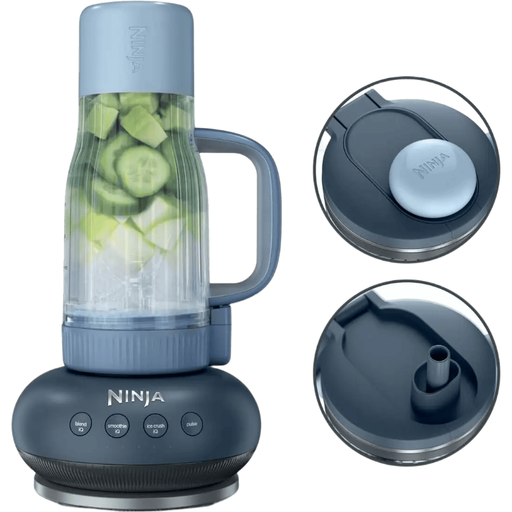 No image available
An option to consider if you want to blend in a travel cup and take your drink with you.
The product listing gives a capacity of 710 ml, 3 automatic programmes, ice-crushing capability and removable dishwasher-safe parts. According to the description, the lid is leakproof when properly secured and locked.
 No image available
An option if you want to take a small batch with you and also use a larger jug at home.
The product name lists a power rating of 800 W, a 600 ml travel bottle, a 1500 ml blending jug and a 300 ml chopper cup. The description says the parts are dishwasher-safe.
 No image available
The jug version suits small batches at home if you don’t need a drinking cup to take with you.
The product name lists a capacity of 0.6 l, a power rating of 350 W and ice-crushing capability. The product description lists two speed settings and removable dishwasher-safe parts.
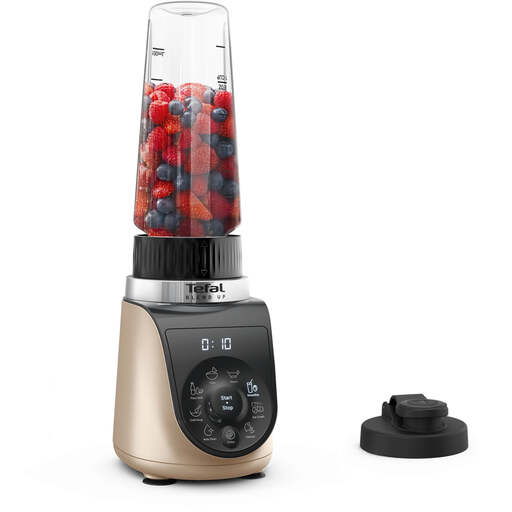 No image available
A personal smoothie blender to consider if you’re looking for a compact option.
The product name identifies this model as a personal smoothie blender.
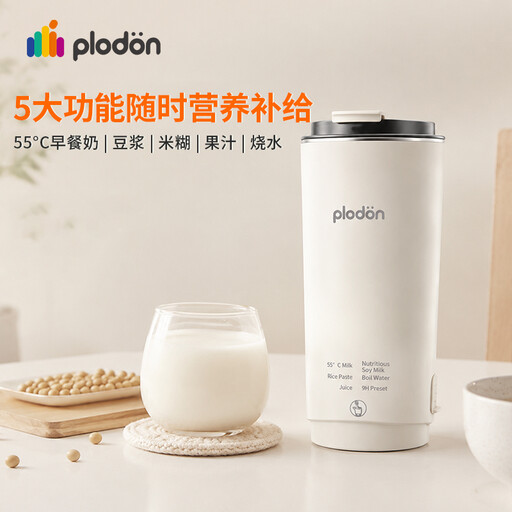 No image available
A different kind of option if you’re looking for a portable cup as well as the heating functions offered by this type of appliance.
The product name lists a capacity of 300 ml and a timer for setting the start time. The description mentions a juice function. According to the instructions, wait at least 30 minutes between cycles, keep the outside and base dry, and unplug the appliance before pouring out your drink.
Yes. According to the Dutch Consumers’ Association, you can make smoothies in a standard blender. The main difference with a smoothie blender is its smaller cup, which you can blend in and drink from or take with you.
Follow the manual for your exact model when cleaning the blade, cup, seal and lid. Philips lists dishwasher-safe parts for the HR2510/90; for the BL19H4F0, Tefal lists removable blades, dishwasher-safe bottles and a self-cleaning setting. This information doesn’t necessarily apply to other models or every part.
The Netherlands Nutrition Centre advises keeping cut watermelon in the fridge for two days. For the ‘smoothie, fruit’ category, it gives a fridge storage time of one to two days; this isn’t a shelf-life test for your specific recipe.
Contact the seller. According to the Dutch government, there is no fixed statutory guarantee period that applies to every product in the Netherlands. If a product is faulty, you may be entitled to a free repair, replacement or refund. Normal wear and tear and damage caused by misuse are treated differently.
According to the Netherlands Food and Consumer Product Safety Authority, CE marking is required for electrical products covered by the Commodities Act Decree on Electrical Equipment. The low-voltage rules mentioned apply to equipment with a rated AC voltage of 50 V to 1000 V; other product safety rules may apply to equipment outside their scope. CE marking is the manufacturer’s declaration, not independent approval of blending results or proof that an individual item has been checked here.