
Colleague in a quiet workspace
You want to cause as little disruption as possible to conversations or focused work while blending. So, consider noise separately from motor power.


If you usually make a single strawberry drink to take with you, a compact smoothie blender with a cup is generally the better choice. If you’re making drinks for several colleagues, a jug blender is more practical. Check each model individually to see whether it can handle ice or frozen strawberries, how its parts should be cleaned and whether its noise level is suitable for a shared workspace: wattage alone won’t tell you.
You want to cause as little disruption as possible to conversations or focused work while blending. So, consider noise separately from motor power.
You want to make one serving in a cup, take it with you and clean up quickly afterwards.
You regularly make drinks for colleagues and want a jug you can pour individual servings from.
Choose this option: if you usually make one serving and want to take it with you without decanting it.
Bear in mind: a small cup limits how much you can blend at a time; also check whether a leak-proof lid is included.
Choose this option: if you want to make drinks for several colleagues at once.
Bear in mind: a jug and any separate cups take up storage space and need cleaning; a larger capacity doesn’t automatically mean less noise.
| What to consider | What should you check? | Who should pay particular attention? |
|---|---|---|
| Noise during office hours | Look for a comparable test of the exact model; wattage isn’t a measure of noise. | If colleagues work nearby, you’ll want to know whether blending could disrupt conversations or concentration. Around 29% of consumers name noise as their top priority. |
| Cleaning and taking it with you | Check which parts are dishwasher-safe and whether a leak-proof lid is included. | If you’re taking one drink with you and want to clear up quickly in a shared kitchen, the cup and cleaning requirements matter. Around 29% of consumers put this at the top of their list. |
| Ice and frozen strawberries | Check the manual to see which ingredients, liquids and quantities are allowed. | If you want to blend cold ingredients, check that the exact model is suitable rather than relying on its wattage. Around 21% of consumers give this their highest priority. |
| Servings for colleagues | Compare the usable capacity with the number of servings you want to make. | If you’re making drinks for several colleagues at once, a jug may be more convenient than filling individual cups one at a time. Around 21% of consumers name serving size as their top priority. |
Motor power alone won’t tell you how loud a blender is or how well it processes ice. The Consumentenbond (Dutch Consumers’ Association) assesses smoothies and ice separately, among other things.
Check the instructions for the exact model and, if noise or ice performance matters, look for a relevant test of that feature.
The amount you can actually make may differ from the stated jug capacity. This matters if you want to make several servings.
Compare the stated working capacity with the servings you plan to make, and check how many cups are included with that version.
If you want to share drinks with colleagues, a personal cup may mean blending several times and doing more cleaning.
The Blend & Go 3000 Series HR2670/00 is designed as a compact option with a cup for taking drinks on the go.
According to the Dutch product page, the Pro 900 NB904CP is a personal blender with a 700 ml cup.
Braun says the PowerBlend 3 JB 3272 SI comes with a jug and two Smoothie2Go bottles.
According to the Consumentenbond, the Detect Blender Pro & Smoothie Maker TB301EU comes with a jug and a small blending cup, plus programmes for smoothies and ice, among other things.
The products below range from a hand blender and compact blenders to jug models, for making smoothies or cold drinks. Check the ingredients, serving size and cleaning instructions for each version to make sure they suit the way you plan to use it.
 No image available
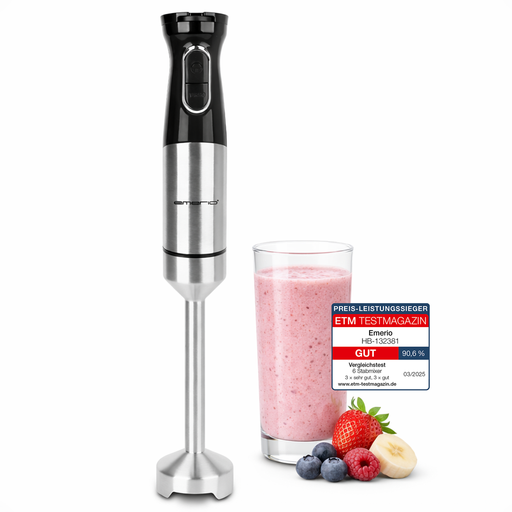
A hand blender for making smoothies with a detachable blending shaft.
The product information lists variable speed and a stainless-steel shaft.
The instructions limit continuous use to 1 minute, followed by a 1-minute rest.
 No image available
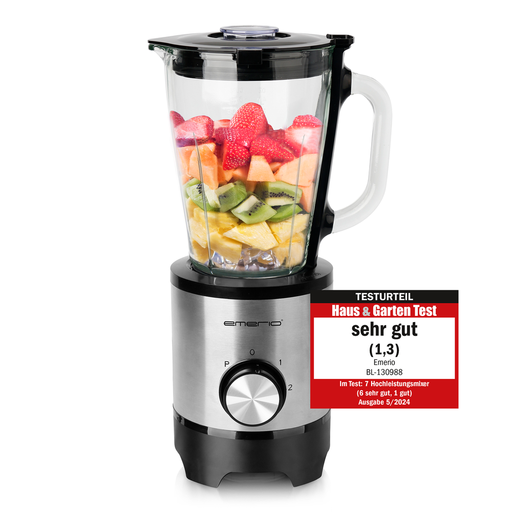
A jug blender for making smoothies or cold drinks for several people.
The product information lists an ice-crushing function, two speeds, a pulse function and a 1,5 l jug.
The product description says the glass jug, lid and blades are dishwasher-safe. The jug is described as heavy and fragile.
 No image available
A jug blender for making larger quantities, with an ice-crushing function.
The product title lists 600 W, a 1,5 l capacity, three speeds and ice crushing.
The instructions recommend no more than 1 minute of continuous use, followed by a 2-minute rest between heavy blending cycles.
 No image available
A compact blender for making smaller quantities, with an ice function.
The product information lists a 0,6 l capacity, 350 W and two speeds, including a setting for hard ingredients and ice.
The detachable parts are described as dishwasher-safe.
 No image available
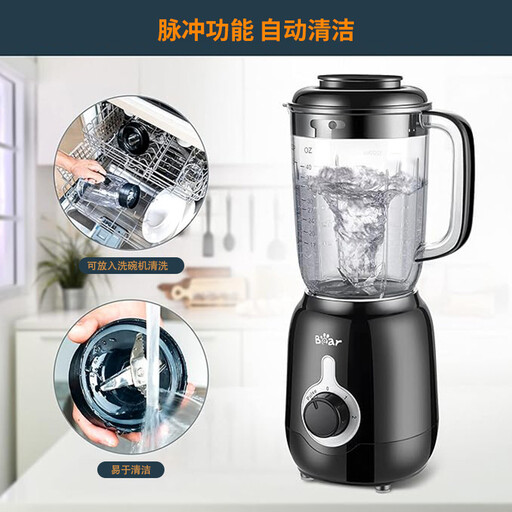
A jug blender for making a larger quantity and crushing ice in short pulses.
The product title lists a 1,2 l capacity, 500 W, two speeds and a pulse function.
The product information says to add at least 300 ml of liquid before use.
Don’t choose based on the product name or wattage alone. Check whether the exact model can handle ice or frozen fruit and, if available, look at a separate test for ice and smoothies.
Wash your hands before preparing the drink, rinse the strawberries under running water and use clean kitchen utensils. Clean the blender parts according to the model’s instructions.
According to the Netherlands Food and Consumer Product Safety Authority, CE marking is compulsory for electrical products. Check the marking on the specific appliance; the rule alone doesn’t confirm that a particular model meets the requirements.
The Netherlands Nutrition Centre recommends keeping an opened fruit smoothie in the fridge for 1–2 days. This advice doesn’t automatically apply to every homemade recipe, for example if it contains other ingredients; consider those ingredients separately.
If a product is faulty, Dutch statutory consumer protection may entitle you to a free repair, replacement or refund. According to the Dutch government, there is no fixed statutory guarantee period in the Netherlands; contact the retailer if you have a problem. This doesn’t necessarily cover damage caused by misuse or normal wear and tear.