
Vandaag of morgen in huis

Kwaliteit gegarandeerd

Welkomstaanbiedingen ontgrendelen: GRATIS bezorging | Tot 80% korting | Gratis 30 dagen JoyPlus-proefperiode
Download de app
A blender and a stand mixer may look similar at first glance, but they’re designed for different tasks. A blender purées smoothies, soups and sauces. A stand mixer with a mixing bowl is made for batters, dough and whipped cream. If you only look at the wattage or an attractive product photo, you could end up buying an appliance that isn’t right for everyday use.
A higher wattage doesn’t automatically mean that every ingredient will be processed more effectively. The shape of the jug, blades, drive system and maximum running time also play a part. A compact 250W smoothie blender may be suitable for soft fruit and small portions, but less practical for hard ingredients or larger quantities.
Motor power doesn’t tell the whole story with a stand mixer, either. Check the recommended dough capacity and whether a mixer with a dough hook is included.
For example, a 2-litre jug may have a recommended working capacity of 1.5 litres. The extra space helps prevent splashing and excess pressure. So don’t automatically fill it to the brim. Instructions are particularly important for hot liquids: some models can’t process liquids above a certain temperature.
An appliance that’s difficult to take apart is more likely to end up unused in the cupboard. Look for removable blades, a dishwasher-safe blender or accessories that are easy to clean by hand. Also check which parts are actually included. A stick blender, for example, may come with only a blending foot, while a hand blender with a chopper and whisk offers more ways to use it.
A basic blender is often enough for smoothies, sauces and soft vegetables. If you want to process ice, nuts or frozen fruit, look for a powerful blender, a pulse function and a clearly specified ice-crushing function. The product information should say what the appliance is suitable for; a marketing claim about “extra power” is no substitute for clear specifications.
Also check the maximum running time. The 600W ochama Multifunction Blender, for example, states that the motor can run continuously for a maximum of one minute, followed by a two-minute rest during demanding blending cycles. This makes it better suited to short preparations than to prolonged, continuous use.
A blender with a glass jug feels sturdy and is less likely to absorb odours or stains, but glass is heavier and can break. Check whether the jug is shatter-resistant and how it should be handled. Plastic or Tritan is often lighter, making it handy for everyday use and taking with you.
A stainless steel bowl is practical for dough and batter in a stand mixer. Alongside the capacity, check the recommended amount. According to the product information, the Monsga SM100 has a 6-litre bowl, but a recommended usable capacity of 5 litres. That difference matters when making large batches of dough.
Measure the space beneath your kitchen cupboards and check the height of a stand mixer with its head raised. A non-slip base or suction cups can help keep the appliance in place on the worktop, but always use it on a flat, dry surface.
Also look for:
A food processor is generally more practical for slicing, grating and chopping. A blender is better suited to liquid or smooth preparations. A food mixer can sometimes combine several functions, but it usually takes up more space.

Why it suits this type of user: The 500 ml capacity is practical for one smoothie or shake, and the cup can be used as a drinks bottle with a different lid.
The specifications state 250W, one speed and a limited capacity. So it’s clear from the outset that this model is mainly intended for small, simple preparations.
500ml Tritan cup, BPA-free according to the product information, non-slip base and removable dishwasher-safe parts.

Why it suits this type of user: This model is a good fit for households that regularly make smoothies, sauces or soups and value a roomy jug and easy cleaning.
The product information distinguishes the jug’s total capacity from its working capacity: 2 litres in total, with 1.5 litres recommended for use.
1000W motor, three speeds plus pulse, removable blades and dishwasher-safe parts according to Philips.

Why it suits this type of user: If you love baking bread, pizza, cakes or pastries, a stand mixer with a mixing bowl is more useful than a standalone blender.
The set lists a whisk, dough hook and mixing beater separately. It also specifies a recommended rest period and overheat protection.
6-litre stainless steel bowl, six speeds plus pulse, tilting head and non-slip suction cups.
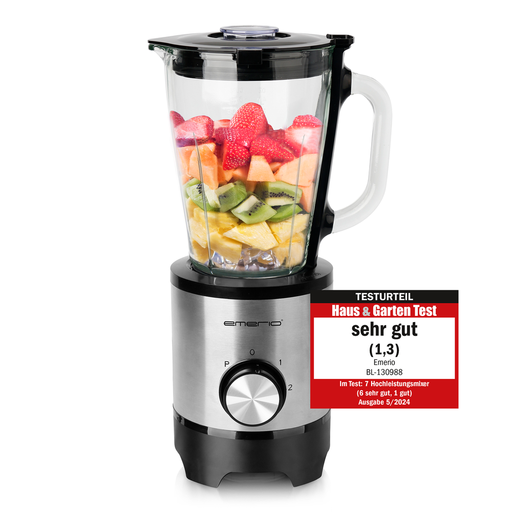
Why it suits this type of user: Handy for smoothies, dips and cold drinks when a glass jug and a dedicated ice function are important.
The specifications list two speeds, pulse and a separate ice-crushing function. They also clearly state that the glass jug is breakable and should be handled with care.
1.5-litre glass jug, four stainless steel blades, non-slip feet and a dishwasher-safe jug according to the product information.
We’ve put together a complete, up-to-date list of products that meet these strict selection criteria and the applicable European safety regulations.
Yes, a stick blender or hand blender is handy for soup, sauces and smaller portions. When using hot ingredients, check the temperature limit and use a suitable heatproof bowl. Never immerse the motor unit in liquid.
Its lifespan depends on how it’s used and cleaned, and whether you follow the maximum running time. Overloading it, using ingredients that are too hard and running it for too long without a break can put strain on the motor. Let the appliance cool down if the instructions say to, and replace any damaged jugs or accessories.
Electricity use depends on the wattage and how long you use the appliance. A 1000W appliance uses less energy when run for one minute than it does during prolonged use. Pulse functions and short preparation times can help prevent unnecessary running. So don’t look only at the maximum power; consider what you need the appliance for, too.
