
For making smoothies for one
If you usually make one fresh spinach smoothie, look for a cup that suits your portion and consider how much space the appliance will take up.


If you usually make one spinach smoothie, a compact personal blender with a cup suited to your portion is a practical choice. If you often make two portions at once, consider a jug blender. Wattage alone doesn’t tell you whether a blender is suitable for frozen fruit or ice, so check the manual and relevant tests for the exact model. Before buying, also check the product safety information and CE marking for the specific version.
If you usually make one fresh spinach smoothie, look for a cup that suits your portion and consider how much space the appliance will take up.
If you want to blend straight into a sealed cup and take it with you, check that the right drinking lid is included and find out how to clean the parts after use.
If you regularly use frozen fruit or ice, check which ingredients are allowed in the manual for the exact model; not every blender is suitable.
Choose this type if: you usually make one small portion and want to drink from the same cup or take it with you.
Bear in mind: you may need to blend twice to make two portions; a takeaway cup alone doesn’t mean the blender is suitable for ice or frozen fruit.
Choose this type if: you usually make enough for two people at once or want to use a jug for other recipes too.
Bear in mind: check the minimum quantity and cleaning instructions; a larger jug takes up space and doesn’t guarantee better results with ice.
| What to consider | What to check before buying | Who this matters most to |
|---|---|---|
| Portion size and space | Compare the usable capacity with your recipe, and measure the space for the appliance and any cups. | If I usually make one portion and have limited cupboard space, I don’t want an unnecessarily large jug. Around 33% of consumers prioritise a suitable portion size and storage space. |
| Cleaning and taking it with you | Check whether a drinking lid is included and which parts the manual says are dishwasher-safe. | For everyday use, I want as few loose parts as possible to wash by hand after my smoothie. Around 27% of consumers put cleaning and portability first. |
| Frozen fruit or ice | Check which ingredients and quantities the manual allows; if you regularly use ice, look for a relevant test of the model. | If I often make smoothies with frozen fruit or ice, I want to know whether the blender I choose is designed for it. Around 20% of consumers prioritise this suitability. |
| Cost and support | Compare exactly what’s included and check the model-specific information about parts and servicing. | If I want to use the appliance for a long time, I’ll factor in the accessories I need and the support available. Around 20% of consumers focus mainly on cost and support. |
A higher stated power rating doesn’t prove that a blender can handle ice or frozen fruit well. The Dutch Consumers’ Association assesses blending results separately from the stated power rating.
Check the manual for the exact model and, if you regularly use frozen ingredients, look for a relevant independent test.
The stated capacity doesn’t tell you how much you’re allowed to blend at once according to the instructions.
Compare your usual recipe with the model’s filling instructions, not just the stated cup capacity.
In the Netherlands, your statutory rights if a product is faulty are separate from any additional manufacturer’s warranty.
Keep your proof of purchase and contact the seller if something goes wrong. The Dutch Government explains that you’re entitled to a product that meets reasonable expectations.
The features listed apply to the product ranges and models described; they aren’t a general assessment of a brand or an indication of availability.
Philips describes the Blend & Go 3000 HR2670/01 as a compact blender with a drinking cup, a power rating of 350 W and two speed settings.
Bosch lists a 0.6 l blending cup and a 450 W motor for the VitaPower Serie 2 MMB2111S; the brand also positions this model for green smoothies.
According to the Dutch manufacturer’s website, the Original 600 NB603DG comes with a 600 W motor base and a 700 ml cup.
Tefal lists a power rating of 1000 W, eight programmes and 400 and 700 ml cups for the Blend Up BL19H4F0.
These product picks focus on compact blenders for smoothies, including small portions and cups for taking drinks on the go. Before buying, check the CE marking and product safety information for the exact model; a CE mark says nothing about blending performance.
 Image unavailable
This compact model may suit smoothies in smaller portions.
The product name lists a 0.6 l jug, 350 W and an ice-crushing function; check the manual for permitted ingredients and quantities.
Check which parts are dishwasher-safe.
 Image unavailable
The product information lists a cup and a drinking spout lid for taking your smoothie with you.
The stated power rating is 250 W and the cup has a capacity of 500 ml. Compare your recipe with the model’s filling instructions.
Check the manual to see which parts are dishwasher-safe.
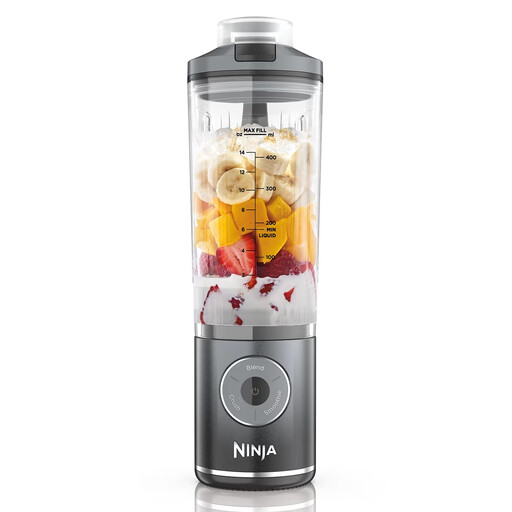 Image unavailable
This portable model may suit anyone who wants to blend small smoothies straight into a cup and take them on the go.
The product information lists USB charging and two 530 ml cups with leak-proof lids.
Check which parts are dishwasher-safe and which ingredients the manual allows.
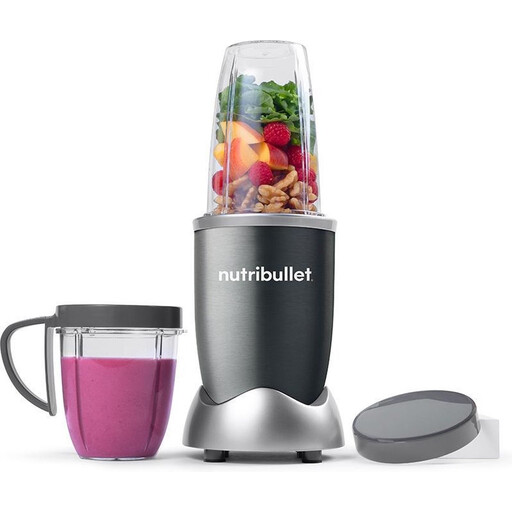 Image unavailable
The product information mentions spinach smoothies and a tall 700 ml cup; check the filling instructions if you want to make one or two portions.
Two drinking cups and a leak-proof lid are listed.
The motor base and blades aren’t dishwasher-safe; check the instructions for the other parts.
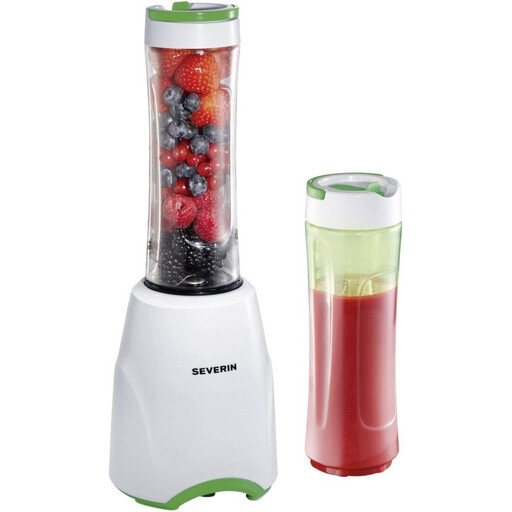 Image unavailable
The product information lists two cups, which may suit anyone who wants to make separate portions.
The stated power rating is 300 W and the capacity is 0.60 l.
The cups and parts are listed as dishwasher-safe; check the manual for details of the specific parts and permitted ingredients.
Not based on wattage alone. The Netherlands Nutrition Centre describes a green smoothie with spinach that is puréed using a stick blender or food processor. The Dutch Consumers’ Association assesses blending results separately from the stated power rating.
Wash raw vegetables under running water. The Netherlands Nutrition Centre says there’s no need to rewash pre-packed spinach that has already been washed. Follow the manual for your blender model, and don’t assume that the blade assembly or motor base is dishwasher-safe.
No, there’s no fixed statutory warranty period in the Netherlands. The Dutch Government says you’re entitled to a product that meets reasonable expectations. Report any fault to the seller; any additional manufacturer’s warranty is separate from your statutory rights.
Check the CE marking and the accompanying product information and instructions for the exact product. The Dutch Government states that electrical appliances offered for sale in the EU must carry a CE mark; this says nothing about blending performance. Check the marking and information for the specific version.