Which blender is right for you?

Traveller with limited kitchen space

If you want to take a blender with you and usually make one smoothie at a time, consider its size, cup and power supply requirements. The Consumers' Association describes the small blending cup on a smoothie blender as suitable for drinking from straight away or taking with you; Bosch lists a 0.6 l cup for the MMB2111S.

Fan of hearty green smoothies

If you use ingredients such as oats or frozen fruit alongside spinach, check that the blender is suitable for the complete mix. The Netherlands Nutrition Centre uses spinach, kiwi, soya drink and oats in a smoothie recipe; the Consumers' Association warns that harder pieces and frozen fruit can be more challenging for blenders.

Holiday group having breakfast together

If you want to make several smoothies at once, a jug with the right capacity will be more useful than a small drinking cup. The Consumers' Association distinguishes between a small smoothie or to-go cup and a standard blender jug.

What should you look for when choosing?

Compact blender with drinking cup

Best for: making one portion, taking up little space and drinking from the same cup or taking your smoothie with you.

Bear in mind: the cup limits how much you can make at once; lids and dishwasher-safe parts vary by model.

Standard blender with jug

Best for: making several portions at once or pouring out your smoothie.

Bear in mind: a larger jug takes up more space to store and clean.

Hand blender or food processor already in the kitchen

Best for: when the holiday cottage already has suitable appliances and a blending cup or bowl.

Bear in mind: you’ll need a suitable blending cup or bowl; the Netherlands Nutrition Centre recipe doesn’t compare appliance performance.

What to consider What to look for when buying Who should prioritise this?
Size and portability Compare the dimensions, cup capacity, to-go lid and power supply requirements of the exact model. If I have limited kitchen space and want to take the blender with me, I’ll prioritise a compact size and single-portion use. Around 33% of consumers say compactness is their main concern when buying.
Blending ingredients Decide on your recipe and check that the blender is suitable for harder or frozen ingredients; don’t judge the result by wattage alone. If I want to blend spinach with ingredients such as oats or frozen fruit, I need to know whether the appliance can handle the whole mix. Around 27% of consumers give ingredient processing top priority.
Number of portions Compare the usable filling capacity with the number of smoothies you want to make at once. If I’m making smoothies for several people at once, capacity per blend is the deciding factor for me. Around 20% of consumers say capacity for groups is their main concern when buying.
Cleaning Check the instruction manual to see which parts are dishwasher-safe and how to clean the blade unit. If I use the blender regularly during my stay, I want to know how much washing-up and maintenance it involves. Around 20% of consumers prioritise easy cleaning.

Things to look out for when buying

  • Assuming wattage predicts how smooth your smoothie will be

    Power alone doesn’t tell you how well a blender will mix ingredients. The Consumers' Association assesses blending results separately and notes that harder pieces and frozen fruit can be challenging ingredients for blenders.

    Choose a blender to suit your recipe and, if available, look for a test of the exact model you’re considering. Don’t treat a claim on a product page as an independent measurement.

  • Choosing a drinking cup without working out how many portions you need

    A small smoothie or to-go cup is designed for a different quantity and way of using it than a standard blender jug, as the Consumers' Association explains. If you’re making smoothies for several people, a small cup could mean extra blending and washing-up.

    First decide how many smoothies you usually make at once, then compare the usable capacity of the exact model.

  • Assuming the whole appliance is dishwasher-safe

    A dishwasher-safe claim may apply to individual parts, not necessarily the motor unit. A dishwasher may not be available in a holiday kitchen either.

    Check the manual for each cup, lid and blade part, and consider how you’ll clean them by hand.

  • Treating the manufacturer’s guarantee and your statutory rights as the same thing

    According to ACM ConsuWijzer, your statutory rights exist alongside any manufacturer’s guarantee; there isn’t one fixed statutory guarantee period that applies to every blender.

    First check your statutory rights with the retailer, then review the terms of any additional cover. An extra guarantee product may be an unnecessary expense.

Brands to consider

Bosch

The VitaPower Series 2 MMB2111S is a compact blender with a 0.6 l to-go cup.

  • Bosch lists 450 W, compact dimensions and dishwasher-safe parts for this model.
  • The cup capacity limits how much you can blend at once. Bosch’s description of the texture of green smoothies is a manufacturer’s claim, not an independent test result.

Nutribullet

According to Nutribullet, the Pro 900 NB910CP combines a personal blending cup with drinking accessories.

  • Nutribullet lists a 900 W motor, a 0.9 l cup and to-go lids for the NB910CP.
  • Check the exact model and accessories supplied: these specifications don’t automatically apply to other Pro 900 models.

Tefal

The compact Blend Up BL19H4F0 is designed for individual smoothies and offers several programmes.

  • Tefal lists 1000 W, 400 and 700 ml bottles, and cleaning features for this model.
  • The small bottles aren’t a substitute for a large jug if you want to make several portions at once. The stated blending performance and quiet setting are manufacturer’s claims.

Philips

The 3000 Series HR2041/00 is a standard blender with a jug, offering an alternative to personal drinking cups.

  • Philips confirms the model identity and lists separate parts for the jug and lid.
  • A jug needs more storage space and cleaning than a small drinking cup; choose according to the number of portions you want to make.

Blenders at Joybuy

This selection includes both blenders with a jug for several portions and compact models for making a personal smoothie.

Emerio BL-124816.7 blender with 1.5 l jug

Emerio BL-124816.7 blender, 1.5 l

The 1.5 l jug is designed for making several portions at once.

The product information lists two speeds, a pulse function, four stainless steel blades and removable dishwasher-safe parts.

Joybuy

ochama multifunctional blender, 600 W and 1.5 l jug

ochama Multifunction Blender, 600 W, 1.5 l

The 1.5 l jug is a good fit if you want to make smoothies for several people.

The product name lists three speeds and an ice-crushing function; these are product claims, not independent performance measurements. The instructions specify a minimum of 300 ml of liquid.

Joybuy
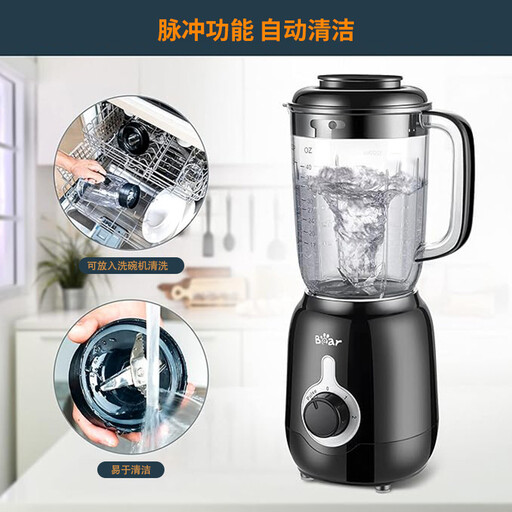
Bear LLJ-B12K1 blender with 1.2 l jug

Bear LLJ-B12K1 blender, 1.2 l, 500 W

The product information describes a 1.2 l jug for smoothies and larger quantities.

The product name lists two speeds, a pulse function and four stainless steel blades. The instructions say to add at least 300 ml of liquid.

Joybuy

Aigostar Marden BL-250 blender, 250 W and 500 ml

Aigostar Marden BL-250, 250 W, 500 ml

This model is designed for an individual smoothie to take with you.

The product information lists a 500 ml cup, a travel lid and removable dishwasher-safe parts. The product name mentions a glass jug; check which parts are included with this model.

Joybuy
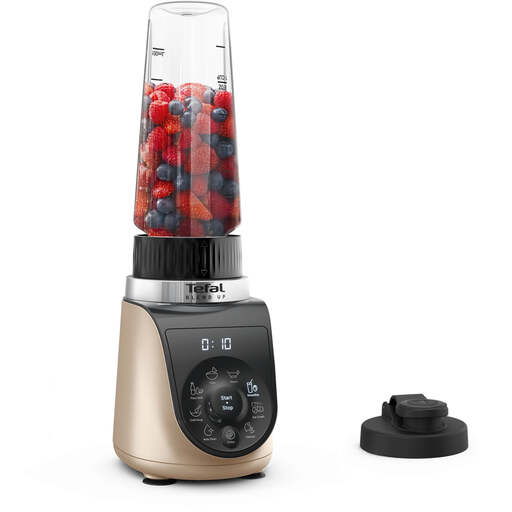
Tefal BL190A Blend Up personal smoothie blender

Tefal BL190A Blend Up Personal Smoothie Blender

The product name describes this model as a personal smoothie blender.

Check the capacity, accessories supplied and cleaning instructions for this model to make sure it suits your needs.

Joybuy

Frequently asked questions

Do you need a blender to make a spinach smoothie?

No, you can use a hand blender or food processor too. The Netherlands Nutrition Centre uses these appliances in a recipe for two people containing spinach, kiwi, soya drink and oats. If the holiday cottage already has suitable equipment, you may not need to bring an extra blender; the recipe doesn’t compare appliance performance.

What should you check before using a blender in a holiday cottage?

Check the power supply requirements for your model, the available socket and the instructions for use. The Netherlands Food and Consumer Product Safety Authority (NVWA) lists kitchen appliances as electrical equipment subject to statutory safety requirements; the rules that apply depend partly on the model and its power supply.

How should you handle fresh spinach safely?

Wash raw vegetables under running water, as the Netherlands Nutrition Centre advises. It recommends keeping opened raw spinach in the fridge for up to two days; this isn’t a storage period for a smoothie once it has been made.

Does a blender need a CE marking in the Netherlands?

A CE marking is required when the applicable harmonised EU rules specify one for the product. Your Europe explains that the manufacturer is responsible for compliance; CE isn’t an independent quality certificate. The rules depend on the specific model, so don’t assume that a mains-powered model is subject to exactly the same rules as a rechargeable one.

Do your statutory rights end when the manufacturer’s guarantee expires?

No. ACM ConsuWijzer makes it clear that statutory rights in the Netherlands exist alongside any manufacturer’s guarantee. The retailer is your point of contact if a product breaks sooner than you could reasonably expect under normal use; there isn’t one fixed statutory guarantee period for every blender.
