
If you usually make one smoothie
If you mainly make a banana smoothie for yourself after doing the shopping, a small blending cup may be more practical than a large jug. The Consumentenbond lists smoothies as one use for a standard blender.


For a single, simple banana smoothie, a compact blender or smoothie maker is a sensible choice. If you usually make several portions at once, a blender with a larger jug may suit you better. Don’t choose on wattage alone: check the usable capacity, whether a drinking cup is included, how easy it is to clean and, if you plan to use frozen fruit, whether the specific model is suitable for it.
If you mainly make a banana smoothie for yourself after doing the shopping, a small blending cup may be more practical than a large jug. The Consumentenbond lists smoothies as one use for a standard blender.
If you want to blend enough ingredients for several glasses in one go, compare the jug’s usable capacity. The Consumentenbond points out that blenders are used to prepare different quantities.
If you regularly add frozen fruit or ice, check whether the specific model is suitable for this. The Consumentenbond notes that not every blender can process ice or frozen fruit.
Start with the number of portions you usually make. Then consider whether portability or blending frozen ingredients is important to you.
| What to consider | What should you check? | Who is this important for? |
|---|---|---|
| Capacity for one portion | Check the type of blending cup and its maximum fill line; the stated capacity is not necessarily the recommended filling quantity. | If I usually make one fresh smoothie, I want a cup that suits a small portion. Around 40% of consumers give simple preparation for one person top priority. |
| Taking it with you and cleaning | Check whether a suitable drinking lid is included and read the cleaning instructions for each part. | If you like to take your smoothie with you in the same cup after visiting the market, pay particular attention to the cup and lid. Around 30% of consumers prioritise portability and easy cleaning. |
| Multiple portions | Compare the jug’s usable capacity with the batch size you want to make, and check which accessories are included with that version. | If I’m making several glasses at once, I want to know whether the whole batch will fit below the fill line. Around 20% of consumers make multiple portions per blend their top buying priority. |
| Frozen ingredients | Check the manual for the exact model to see whether frozen fruit or ice is suitable; wattage alone doesn’t tell you enough about the blending results. | If I often add frozen fruit or ice, I want to know whether my blender can handle it. Around 10% of consumers put suitability for frozen ingredients first. |
A higher wattage on its own doesn’t prove that a particular blender will make a smoother banana smoothie. The Consumentenbond assesses smoothie results separately and points out that power isn’t the whole story.
Start with how you plan to use it and the portion size. If information on blending quality is available, look for a test of the exact model.
Accessories can vary, even between models with similar product names. So don’t assume that every version comes with an extra cup or lid.
Compare the full model number and package contents before choosing a set.
If the second cup or lid you want isn’t included, you may need to buy one separately.
According to ACM ConsuWijzer, your statutory rights are separate from any voluntary guarantee offered by the manufacturer or seller.
Keep your proof of purchase and contact the seller if something goes wrong to discuss a solution under your statutory rights.
According to Philips, the Blend & Go HR2670/01 is a compact option with a portable cup.
According to nutribullet, the Original 600 NB603DG is designed for small portions.
According to Bosch, the VitaPower Serie 4 MMB6141B comes with a 1,5 l blending jug, making it a good option if you want to prepare larger quantities at once.
According to Tefal, the Perfectmix+ BL811D38 has programmes for smoothies, ice and cleaning.
This selection includes compact blenders and models with larger jugs for smoothies, depending on whether you want to take one portion with you or make several portions at once.
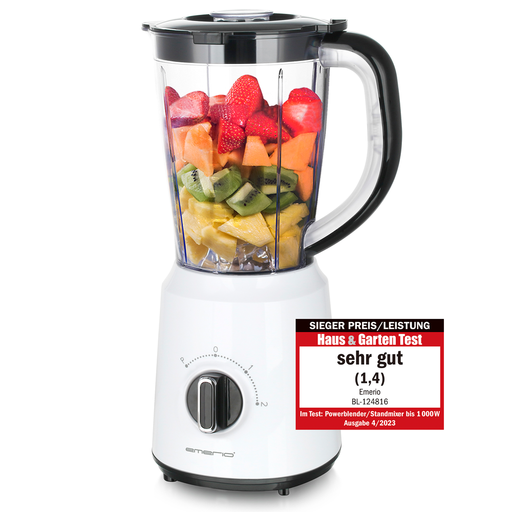 No image available
The stated jug capacity makes this a good option if you want to prepare several portions at once.
The product name states a capacity of 1,5 l and two speeds.
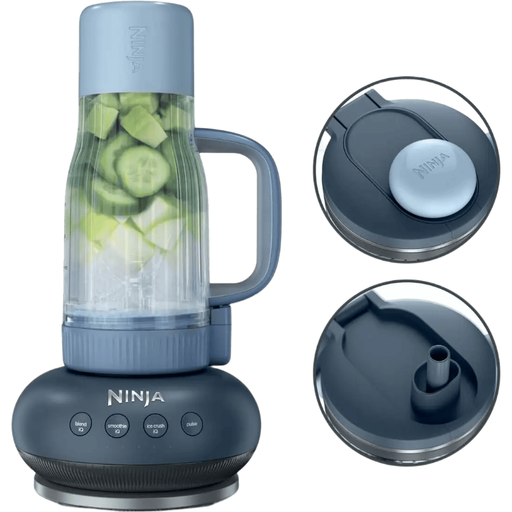 No image available
The stated travel cup is ideal if you want to take your smoothie with you in a drinking cup.
The product name lists three automatic programmes, ice-crushing functionality and dishwasher-safe parts.
 No image available
The product name lists both a travel bottle and a blending jug, making it suitable if you want to prepare different portion sizes.
The stated accessories include a 600 ml travel bottle, a 1500 ml blending jug and a 300 ml chopping cup.
 No image available
The product name describes a smoothie blender with a 1,5 l jug, suitable if you want to make several portions.
The product name lists three speeds and ice-crushing functionality.
 No image available
The stated 0,6 l capacity makes this a good option if you’re looking for a compact blender for a small portion.
The product name lists 350 W and ice-crushing functionality.
Not just for that: according to the Consumentenbond, you can make smoothies with a standard blender. If you also want to blend ice or frozen fruit, check the manual for the specific model; wattage alone won’t predict the result.
Follow the manual for your model, don’t fill the jug above the maximum line and make sure the lid is closed securely. The Consumentenbond advises removing the jug from the base before cleaning; check which detachable parts are dishwasher-safe.
The Voedingscentrum recommends keeping an opened fruit smoothie in the fridge for 1–2 days, and a smoothie made with fruit and dairy for 3–7 days. These are different storage categories, so take the ingredients and relevant guidance into account when storing a homemade smoothie.
Electrical appliances placed on the market in the Netherlands must comply with the relevant European requirements. Dutch government information refers to CE marking and an EU declaration of conformity, among other things; this general requirement doesn’t confirm that a specific product on sale complies.
Contact the seller about your statutory rights. ACM ConsuWijzer explains that the seller is responsible for providing an appropriate solution if a product is faulty; any voluntary manufacturer’s guarantee is separate.