
Anyone making a single shake at home
You make one serving at a time and want a blending cup that’s the right size, without an unnecessarily large jug. The Consumers' Association distinguishes between small smoothie blenders and standard blenders.


For a single chocolate milkshake at home, a compact blender with a suitably sized jug is often the simplest choice. A personal blender with a drinking cup is a better fit if you want to blend and drink from the same cup, or take your shake with you. If you use ice cubes, check separately whether the model is designed for them: according to the Consumers' Association, wattage alone doesn’t tell you enough about blending performance.
You make one serving at a time and want a blending cup that’s the right size, without an unnecessarily large jug. The Consumers' Association distinguishes between small smoothie blenders and standard blenders.
You sometimes use ice cubes or other hard ingredients. Check whether the manufacturer allows this for each model, as not every blender can crush ice.
You want to blend in the same cup, drink from it or take your shake with you. Check which cup and lid come with the model, and how to clean the parts.
First, check that all your ingredients will fit in the blending cup. Then choose between a jug for pouring and a drinking cup that you can blend in or take with you.
| What to consider | What should you check? | Who is this important for? |
|---|---|---|
| Suitable serving size | Compare the stated capacity with the amount of milk and ice cream you want to blend together. | If I’m making one shake, I want all the ingredients to fit in the cup without having to use a large jug. Around 36% of consumers prioritise a suitable serving size. |
| Ice and hard ingredients | Check the product information or manual to see whether the model can crush ice cubes and what restrictions apply. | If I add ice cubes or other hard ingredients, I want to know whether the blender is designed for them. Around 29% of consumers give top priority to processing ice or hard ingredients. |
| Cleaning | Check whether each part is suitable for hand-washing or the dishwasher; a dishwasher-safe cup doesn’t mean the motor base can go in the dishwasher too. | After making a shake with milk, I want to know which parts are easy to clean. Around 21% of consumers prioritise easy cleaning. |
| Cost and extra features | Compare the current price, included accessories and any features you actually want to use. | If I’m mainly making a simple shake, I don’t want to pay for features I probably won’t use. Around 14% of consumers focus mainly on cost in relation to the features. |
Wattage on its own doesn’t tell you how well a blender will mix ingredients. The Consumers' Association warns that wattage is far from the whole story when it comes to performance.
Start by thinking about your serving size and ingredients. If you want to use ice cubes, check the ice function separately.
A standard blender and a small smoothie blender suit different needs. Extra capacity isn’t necessarily useful when you’re making one shake.
Compare the capacity with your own recipe and consider whether you’ll also want to make several servings at once.
Cleaning instructions can vary between parts. For example, the blade assembly and cup of the nutribullet NB603DG need to be cleaned differently.
Check the instructions for each part of the specific model, both before you buy and before you use it.
The Dutch government explains that the Netherlands has no fixed statutory warranty period. What you can expect from a product depends, among other things, on the product and the information provided.
Report any problem to the seller and check what an additional manufacturer’s warranty offers beyond your legal rights.
The HR2510/90 is a compact blender with a small jug; the HR2620/40 is another model, supplied with a travel cup.
The Original 600 NB603DG is a personal blender supplied with a 700 ml cup.
The VitaPower Serie 2 MMB2111S is a mini blender with a 0,6 l blending cup and a To Go Bottle.
The Blend Up BL190AF0 is designed for anyone who wants to make other recipes and use automatic programmes as well as prepare shakes.
The Braun JB 3272 SI combines a blender jug with two 600 ml Smoothie2Go bottles.
These product picks are aimed at making a single shake, and include compact blenders, drinking cups and a hand blender with a blending cup.
 Image unavailable
A compact blender for making a single shake at home; check that the jug is large enough for all the ingredients in your recipe.
Capacity: 0,6 litre. Power: 350 W. The product name mentions ice crushing; check the user manual for the ingredients you can use.
 Image unavailable
A blender with a jug for mixing your shake and pouring it afterwards; check that the capacity suits your serving size.
Power: 250 W. Capacity: 500 ml. The product name specifies a glass jug.
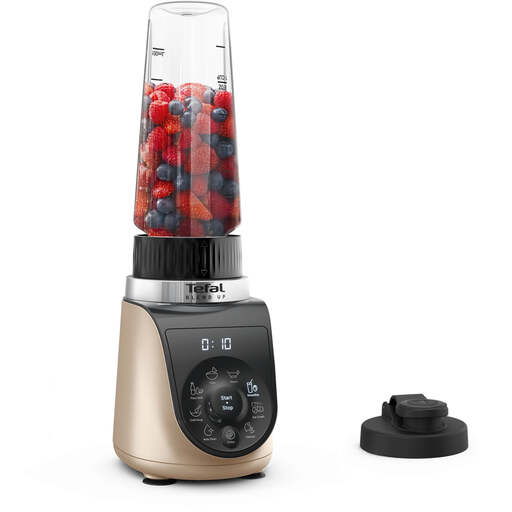 Image unavailable
A personal smoothie blender to consider if you’re looking for a compact model; check which cup and accessories are included.
 Image unavailable
A hand blender with a blending cup is an option if you’d rather blend in a separate cup; check that the supplied cup is suitable for your recipe.
Maximum power: 1200 W. The product name specifies 15000 rpm, a 700 ml cup and a 500 ml chopper. The description recommends running it for no more than one minute at a time, followed by a one-minute rest.
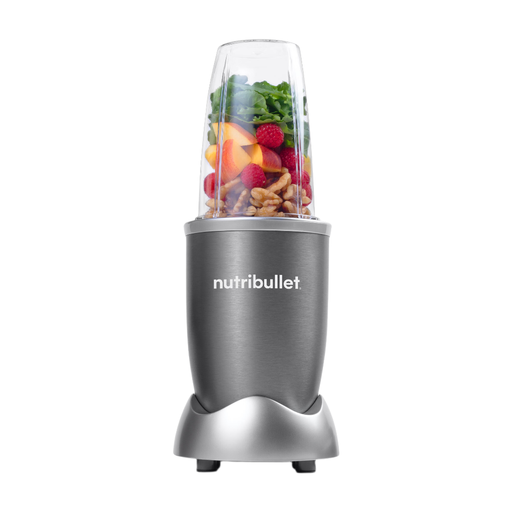 Image unavailable
A blender to consider for making a personal shake; before buying, check which cup comes with this model and whether its capacity suits your recipe.
Power: 600 W.
Only if you’re adding ice cubes do you need to check whether the model is designed for them. The Consumers' Association warns that not every blender can crush ice cubes, so check this feature separately from how well it handles a recipe with milk and soft ice cream.
Follow the instructions for each part rather than relying on a general claim about the appliance. For the nutribullet NB603DG, nutribullet advises cleaning the removed blade assembly with soap and water and putting the cup on the top rack of the dishwasher.
Put the milk back in the fridge promptly after use, at 4 °C, as advised by the Netherlands Nutrition Centre. This guidance for milk isn’t a specified storage period for a homemade milkshake.
Report any problem to the seller. According to the Dutch government, there’s no fixed statutory warranty period in the Netherlands: what you can expect from a product depends, among other things, on the product, its price and the information provided. A manufacturer’s warranty is separate from your legal rights.
Electrical equipment within the voltage range specified by the Netherlands Food and Consumer Product Safety Authority must meet requirements including those set out in the Low Voltage Directive. CE marking is only compulsory for products covered by harmonised EU rules, so check the product information for the specific model. The mark is a declaration by the manufacturer, not an independent quality rating.