Which blender suits your needs?

A compact smoothie maker for one

If you usually make one pineapple smoothie at a time, a compact blender with a cup you can drink from or take with you may suit your needs. The Consumers’ Association describes this as a feature of smoothie blenders and on-the-go blenders.

For smoothie lovers who use frozen fruit

If you also use frozen pineapple, check that the manufacturer specifies this for the exact model. A compact design or a stated wattage alone does not tell you how smoothly it will blend pineapple.

For making several portions

If you want to make smoothies for more than one person at a time, compare the jug’s usable capacity with the space the blender takes up and the washing-up it creates. The Consumers’ Association points out that a blender can usually take up more worktop space and require more washing-up.

What should you look for when choosing?

Compact blender with a travel cup

Suited to: making one portion most of the time and taking the cup with you.

Consider: the small capacity may mean blending again to make more portions; suitability for frozen fruit varies by model.

Mini blender with a small jug

Suited to: wanting a small blender that’s easy to store, and not needing to drink from the blending cup.

Consider: check the usable capacity and whether you have space for separate parts.

Blender with a standard jug

Suited to: making several portions at once and prioritising capacity over the smallest possible appliance.

Consider: a jug usually needs more space and cleaning; compare its usable capacity with the amount you typically make.

Hand blender

Suited to: using as little permanent worktop space as possible and mainly preparing small quantities.

Consider: according to the Consumers’ Association, the result may be less smooth, and a hand blender may struggle with hard ingredients.

What to consider What should you look for? Who should pay particular attention?
Space and storage Compare the height, width and depth of the blender when ready to use with the space you have available. Remember to allow for separate cups and lids, too. If I have limited worktop space, I want to know whether the blender will fit with the cup attached and where I can store the separate parts. This is a deciding factor for consumers who prioritise space-saving; around 36% of consumers put this need first.
Pineapple and texture Decide whether you’ll use fresh or frozen pineapple. For frozen fruit, look for an explicit mention for the exact model; wattage alone doesn’t tell you how smooth the result will be. When I use frozen pineapple, I want to know whether the model is designed for it and whether the texture will suit my preference. Around 29% of consumers prioritise processing pineapple and achieving their preferred texture.
Portion capacity Compare the usable blending capacity with the number of smoothies you make at a time; the jug’s maximum capacity is not always its effective capacity. If I want to make several portions at once, I weigh up the capacity against the space the jug takes up. Around 21% of consumers prioritise having enough capacity for each blending cycle.
Cleaning Check the manual to see which parts can be taken apart and are dishwasher-safe. If I make smoothies often, I don’t want to clean more separate parts than necessary after each use. This is the main concern for consumers who prioritise easy cleaning; around 14% of consumers put it first.

Common buying mistakes

  • Confusing maximum jug capacity with usable capacity

    The maximum capacity may be greater than the amount you can effectively blend. Philips lists a maximum capacity of 1.9 litres and a usable capacity of 1 litre for the HR2041/00.

    Compare the usable capacity with the number of smoothies you usually make at once.

    If the amount you want to make won’t fit in one go, you may need to blend another batch.

  • Assuming every small blender can handle frozen pineapple

    A compact design doesn’t automatically mean a blender can process frozen fruit. The Consumers’ Association notes that many budget blenders struggle with it; this isn’t a test result for every individual model.

    Check whether the manufacturer mentions frozen fruit for the exact model, and don’t treat this as a specific test with pineapple.

  • Measuring only the base

    The cup or jug sits on top of the appliance when it’s in use. So you’ll need space for the complete blender, not just the motor base.

    Measure the available space and clearance above it before choosing a model, including the room needed to fit the cup.

Brands to compare

Bosch

The VitaPower Serie 2 is a compact on-the-go option. Bosch Netherlands lists a 0.6-litre cup and dimensions of 367 × 122 × 126 mm for the MMB2111S.

  • Bosch says this model can be used to prepare recipes with frozen fruit, and that its parts are dishwasher-safe.
  • The specifications list one speed and no pulse function. This is not an independent test of how well it blends pineapple.

Philips

The models listed range from compact blenders to a blender with a standard jug, so you can compare different portion and storage needs.

  • Philips lists dishwasher-safe parts for the HR2510/90 and a usable capacity of 1 litre for the HR2041/00.
  • Philips’ claim about smooth blending does not prove that this model performs better than others with pineapple.

nutribullet

The Pro 900 is a personal-blender option. The Dutch product information for variant NB907MACL lists one large and one smaller cup.

  • For NB907MACL, the manufacturer lists a 900 W motor base and an ice-crushing function.
  • These specifications alone don’t show how well the model processes frozen pineapple.

Braun

The PowerBlend 3 JB3150 is a jug-blender option for anyone weighing up capacity against the worktop space available.

  • For the black JB301AI-JB3150BK, Braun lists a working capacity of 1.5 litres, a glass jug and variable speed with a pulse setting.
  • The listed dimensions are 400 × 200 mm and don’t include a separate third measurement, so check the full space you’ll need.

Compact blenders at Joybuy

This selection focuses on compact blenders for small portions and smoothies you may want to take with you.
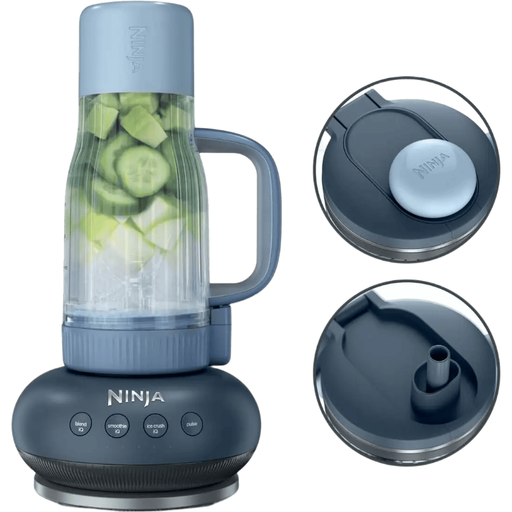
Ninja BlendBoss portable blender with removable travel cup

Ninja BlendBoss with removable travel cup, 710 ml, Cyberspace

The product description mentions a travel cup and processing frozen fruit; this is not a specific test with pineapple.

Capacity: 710 ml. Three automatic programmes and a pulse function; according to the product description, the removable parts are dishwasher-safe.

View at Joybuy

Philips 3000 Series Mini Blender HR2510/90

Philips 3000 Series Mini Blender HR2510/90, 0.6 litres, 350 W

The mini design and 0.6-litre capacity are suited to anyone who wants to blend small quantities.

The product name lists 350 W and ice crushing. The product description mentions two speeds, including a setting for hard ingredients and ice, as well as dishwasher-safe removable parts.

View at Joybuy

nutribullet Portable Personal Blender, white and beige

nutribullet Portable Personal Blender, 475 ml, white and beige

This portable model is designed for small portions and flexible use.

The product name lists a rechargeable battery, USB-C and 20 minutes of use. If you plan to use frozen pineapple, check whether the information for this exact model says it’s suitable.

View at Joybuy
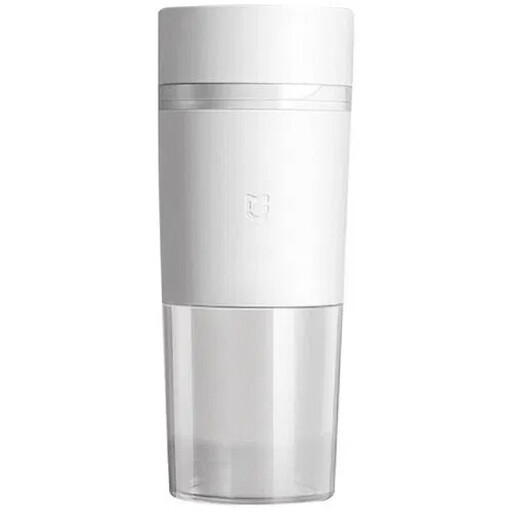
Xiaomi Portable Blender EU

Xiaomi Portable Blender EU

The portable blender is described as suitable for small portions of smoothies and shakes.

The product description lists a capacity of 400 ml, a rechargeable battery and USB-C. It doesn’t include an independent test of how well the blender mixes pineapple.

View at Joybuy
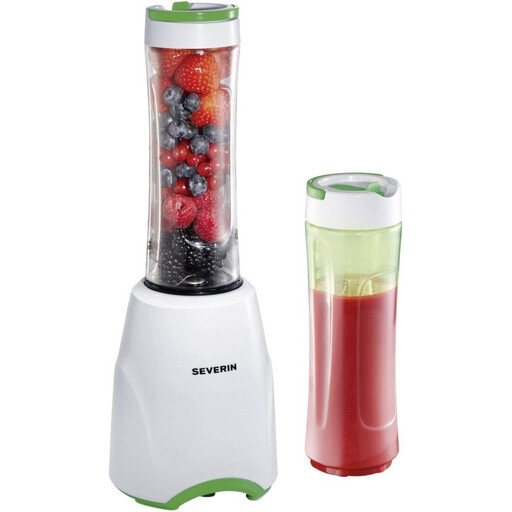
Severin SM 3735 Smoothie Maker Smoothie Mix & Go

Severin SM 3735 Smoothie Maker Smoothie Mix & Go

This blend-and-go model is designed to let you take your smoothie with you after blending.

The product description lists a capacity of 0.60 litres, two speeds, pulse operation and two removable cups. According to the description, the removable parts are dishwasher-safe.

View at Joybuy

Frequently asked questions

Does a blender for frozen pineapple mainly need a high wattage?

No. Don’t use wattage as your only selection criterion. Check whether the manufacturer mentions frozen fruit for the exact model. The Consumers’ Association assesses blenders on factors including whether pieces or lumps are left behind; this test information doesn’t give a separate result for pineapple for the models mentioned.

How should I prepare pineapple for a smoothie?

If you plan to freeze pineapple, remove the skin and tough core first, then cut the fruit into pieces, as advised by the Netherlands Nutrition Centre. When blending, follow the appliance’s maximum fill line and instructions for use.

Which blender parts can go in the dishwasher?

It depends on the model and the part. Bosch lists dishwasher-safe parts for the MMB2111S, and Philips does the same for the HR2510/90. Check the manual before cleaning a cup, lid or blade.

What can I do if my blender breaks sooner than expected?

In the Netherlands, the seller must resolve the issue if the product doesn’t perform as you could reasonably expect during normal use. According to ACM ConsuWijzer, this could mean a repair, replacement or refund; a manufacturer’s warranty doesn’t replace your statutory rights.

What safety rules apply to blenders in the Netherlands?

The EU Low Voltage Directive applies to electrical equipment designed for 50–1,000 V AC or 75–1,500 V DC. EUR-Lex and the European Commission describe requirements including conformity, CE marking and safety information. Check the documentation for the specific product; this doesn’t establish that any individual model on sale meets all the requirements.
