
Host serving several glasses
When you have guests, you want to pour out shakes in as few batches as possible. So focus on the jug's usable capacity; the Consumers' Association recommends considering what you plan to make when choosing a blender.


For shakes for several guests, a jug blender with plenty of usable capacity is generally more convenient than a small portable cup. If you use frozen pineapple or ice, check that the specific model is suitable: according to the Consumers' Association, not every blender can handle them. A small smoothie blender is better suited to making one portion at a time.
When you have guests, you want to pour out shakes in as few batches as possible. So focus on the jug's usable capacity; the Consumers' Association recommends considering what you plan to make when choosing a blender.
You use frozen pineapple or ice and want to know in advance whether your chosen model can handle it. The Consumers' Association warns that not every blender can process frozen fruit or ice cubes.
You mainly make shakes with fresh fruit and weigh up ease of cleaning and storage space against features you might rarely use. According to the Consumers' Association, a standard blender may be enough if you don't need any special features.
First decide how many glasses you want to make at once and whether frozen fruit or ice is a regular part of your recipe. Then consider cleaning, size and the features you actually need.
| What to consider | What should you look for? | Who is this important for? |
|---|---|---|
| Servings per blend | Compare the usable capacity, not just the jug's total capacity, with the number of guests and the size of your glasses. | If I want to pour several glasses at once when I have guests, I need to know how much shake each batch will make. Around 36% of consumers say servings per blend are their main buying concern. |
| Frozen fruit or ice | Check the instructions for the full model number; a high wattage alone doesn't prove that a blender can handle ice. | If frozen pineapple or ice is a regular ingredient, I want confirmation for the specific model. Around 29% of consumers prioritise suitability for frozen fruit or ice. |
| Cleaning | Check whether each component is removable and dishwasher-safe; the motor base is not a removable part. | After making fruit shakes, I want to be able to clean the jug and blade unit easily. Ease of cleaning is the main buying concern for around 21% of consumers. |
| Cost and storage space | Weigh up the size and features against how often you use the blender and whether you usually make a single serving or a jugful. | If I only use the blender occasionally, I don't want to give up space for features I don't need. Cost and storage space are the main considerations for around 14% of consumers. |
Total capacity and usable capacity can differ. For example, Tefal lists the Blendforce 3 BL5958F0 as having a total capacity of 1.9 litres and a usable capacity of 1.25 litres.
Compare the usable capacity with the number of guests and the size of your glasses.
The Consumers' Association warns that blenders vary in their suitability for frozen fruit or ice.
Check the instructions for the exact model before adding frozen pineapple or ice. If you only blend fresh fruit, you may not need this feature.
A personal blender has a small blending cup and, according to the Consumers' Association, is designed for a drink to enjoy straight away or take with you. If you're serving several guests, you may need to fill and blend it more often.
Choose a portable cup if individual servings matter more to you than pouring drinks for everyone from a jug in one go.
The Consumers' Association lists the HR3020/20 as a jug blender with a 1.5-litre capacity and 1000 W of power.
Braun lists the PowerBlend 3 JB3150 as having a glass jug with a working capacity of 1.5 litres.
Tefal lists the Blendforce 3 BL5958F0 as having a usable capacity of 1.25 litres.
Bosch lists the VitaPower Series 4 MMB6172S as having a 1.5-litre glass blending jug.
This Joybuy selection includes jug blenders for making shakes when you have guests: models whose product names mention ice crushing, as well as a standard jug blender.
 No image available
The jug capacity and listed ice-crushing function make this model worth comparing for shakes when you have guests; check that the capacity suits the number of portions you need.
The product name lists 1300 W, a 1.5 L jug, four Black Titanium blades and two speeds.
 No image available
The product name mentions ice crushing; check the manual for this specific model before using it with frozen pineapple or ice.
The product name lists a 1.9 L jug, ice crushing and 450 W of power.
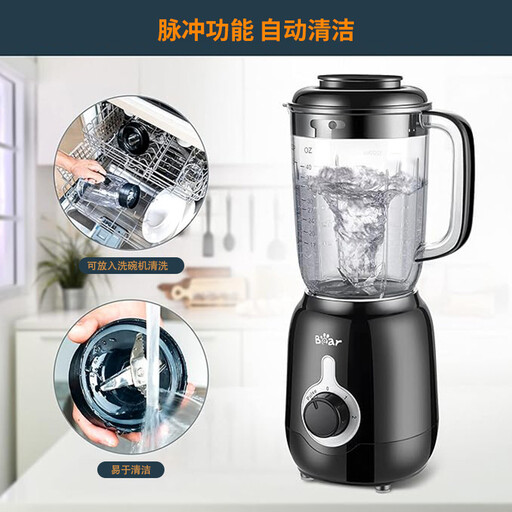 No image available
The product name lists an ice-crushing function; check the instructions for this model before using frozen pineapple or ice.
The product name lists a 1.2 L jug and 500 W of power.
 No image available
The listed jug capacity makes this model worth comparing for a batch of shakes; check the usable capacity if you're serving several guests.
The product name lists a 1.5 L jug.
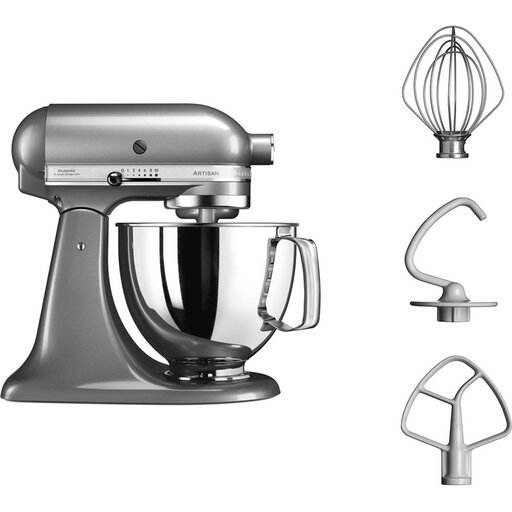 No image available
The product name mentions ice crushing; check the model instructions before using it with frozen pineapple or ice.
The product name lists a 1.4 L glass jug and five speeds.
Compare the model's usable capacity with the size of your glasses. Tefal lists the Blendforce 3 BL5958F0 as having a usable capacity of 1.25 litres, with a total jug capacity of 1.9 litres.
No. The Consumers' Association warns that not every blender can process frozen fruit or ice cubes. Check the instructions for the specific model before using these ingredients.
The Netherlands Nutrition Centre recommends storing cut pineapple in a sealed container in the fridge.
If a product is faulty, the seller must provide a solution, according to the Dutch government. There is no fixed statutory guarantee period in the Netherlands. For purchases covered by distance-selling rules, you generally have a 14-day cooling-off period; check the terms that apply to your purchase.
Harmonised CE rules may apply to electrical and electronic equipment, according to the European Commission. The manufacturer is responsible for meeting the applicable requirements and applying the marking; a CE marking is not a certificate issued by a central EU body. Check the documentation for the specific appliance.