
Colleague blending during working hours
You want to make one portion without disturbing your colleagues unnecessarily. So check the noise information for the exact model, and choose a suitable place and time to use the blender.


For making one kiwi smoothie at the office, the main things to consider are where you can blend, how much you want to make and how you’ll clean the cup and blades afterwards. A rechargeable blender works without a plug while blending; a mains-powered to-go model needs a fixed spot with access to power, while a larger jug makes most sense for several portions. A manufacturer’s claim about a quiet setting isn’t a comparable noise measurement, so also check whether blending is allowed in your shared space, and where.
You want to make one portion without disturbing your colleagues unnecessarily. So check the noise information for the exact model, and choose a suitable place and time to use the blender.
You make smoothies regularly and want to be able to clean the cup, lid and blades easily after use. Check which parts of your chosen model can be removed and how the manual says to clean them.
You want to take one portion with you or blend without access to a plug. Compare the cup capacity and closure with whether a charged battery or a power socket best suits the way you’ll use it.
First, decide where you’ll make your smoothie: at the office without a plug, by a power socket in a travel cup, or at home to take with you. Then consider portion size and cleaning. The word ‘quiet’ alone doesn’t tell you how much noise your colleagues will hear.
| What to consider | What should you check? | Who is this important for? |
|---|---|---|
| Noise at the office | Where available, look for a noise measurement for the exact model, taken under comparable conditions. Also find out where and when you’re allowed to blend. | If I blend during working hours, I want to avoid disturbing colleagues unnecessarily. Around 31% of consumers prioritise quiet use at the office. |
| Desired smoothie texture | Check whether your ingredients and portion size are suitable for the exact model, according to the manual. Ice or frozen fruit is different from fresh kiwi. | If I want a particular texture, I want to know whether the blender can handle my kiwi mix. Around 25% of consumers give blending results top priority. |
| Cleaning after use | Check each part to see whether it can be removed and whether the manual says it can be washed by hand or in the dishwasher. | If I want to tidy up quickly after blending, I want to know how to clean the cup, lid and blades. Around 25% of consumers put cleaning first. |
| Taking your portion with you | Compare the cup capacity and closure with the size of your portion. For a rechargeable model, check how and where you can charge it. | If I want to take my smoothie with me or make it somewhere without a power socket, cordless use is important to me. Around 19% of consumers make portability their top priority. |
A manufacturer may compare a quiet setting with the maximum setting on the same appliance. That doesn’t tell you how much noise your colleagues will hear in your workplace.
Where possible, look for independently measured noise data for the exact model under comparable conditions, and discuss where blending is allowed.
Blending a smoothie with fresh kiwi is a different task from crushing ice or blending frozen fruit. Wattage alone won’t tell you what results you’ll get.
Start with the ingredients you’ll actually use and, where available, check smoothie test results for the exact model. Consumentenbond assesses smoothie performance and ice crushing as separate test tasks.
This label may apply to the cup or certain removable parts, but not the motor base. For the Tefal Lightmix BL1C04, Tefal lists a dishwasher-safe cup and removable blades.
Check the manual to see which parts can be removed and how to clean each one. Take extra care with sharp blades.
A Joybuy product page for the Tefal Lightmix listed BL1C02, while the model reviewed was BL1C04. The Joybuy page also stated that BL1C02 was no longer available.
Check the full model number and version before treating a product as the same model.
The models listed show two ways to blend: the portable Lightmix BL1C04, with a 300 ml cup, and the Blend Up BL19H4F0, with travel cups.
The Portable NBP003NBL is a rechargeable blender with a 475 ml drinking cup, designed for a single portion.
The Blend & Go 3000 HR2670/00 is a compact mains-powered blender with a travel cup.
According to Braun, the PowerBlend 3 JB 3272 SI combines a glass jug with Smoothie2Go bottles, making it an option if you sometimes prepare more than one portion.
This selection includes compact mains-powered blenders and portable rechargeable models for making a smoothie at the office or on the go.
 No image available
A good fit if you’re looking for a compact blender for smoothies with soft fruit and want to be able to clean the parts after use.
The product information lists a 0.6 l jug, two speeds and removable, dishwasher-safe parts. Check the manual for instructions on cleaning each part.
 No image available
An option if you’re looking for a compact mains-powered blender for a single smoothie portion.
The product name lists 250 W and a 500 ml glass jug. Before use, check the manual to see which ingredients and fill levels are permitted.
 No image available
A good fit if you want to make a smoothie without a power socket while blending and take the cup with you.
The product information lists a rechargeable battery, USB-C charging, a 475 ml cup and a sealable drinking lid. Check the cleaning instructions for the removable parts.
 No image available
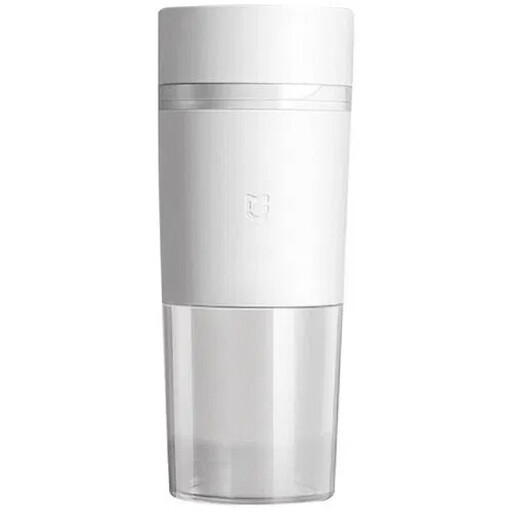
A good fit if you’re considering a portable model that lets you blend a smoothie without a cable.
The product information lists a 400 ml capacity, a rechargeable battery and USB-C charging. Check the instructions for permitted ingredients and cleaning guidance.
 No image available
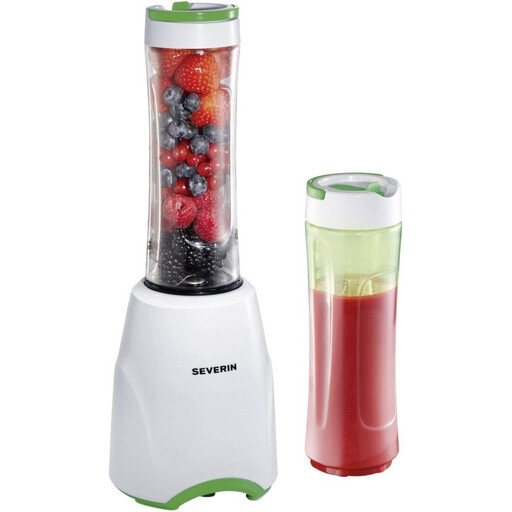
An option if you want to make smoothies straight into drinking cups and prepare more than one cup at a time.
The product information lists two 600 ml drinking cups and dishwasher-safe parts. Check the manual to see exactly which parts can go in the dishwasher.
No, not just because you’re using fresh kiwi. Ice and frozen fruit are different blending tasks from making a smoothie with fresh ingredients, as Consumentenbond also assesses them separately. Check that your recipe is suitable for the exact model according to the manual.
Follow the manual and treat the cup, lid, blades and motor base as separate parts. For the Lightmix BL1C04, Tefal lists removable blades and a dishwasher-safe cup; this doesn’t mean the motor base can go in the dishwasher.
According to ACM ConsuWijzer, the seller must resolve the issue free of charge if a product doesn’t do what you could reasonably expect, for example by repairing or replacing it. What applies in your case depends on the product and circumstances; a manufacturer’s guarantee is separate from your statutory rights.
Check whether the applicable product rules require CE marking and whether the parts that come into contact with the smoothie meet the requirements for food-contact materials. The NVWA explains the Dutch requirements for food-contact materials; the European Union states that CE marking is only compulsory for products covered by rules that require it. CE marking is a declaration by the manufacturer, not proof that each individual product has been independently tested.
Yes, a tightly sealed cup can help you blend outside the shared workspace. Store the drink in line with its ingredients and the relevant storage advice. For opened products in the ‘smoothie, fruit’ category, Voedingscentrum recommends keeping them in the fridge for 1–2 days; this doesn’t automatically apply to every homemade smoothie.