
Making thick, icy shakes
You use ice cubes or frozen ingredients and want to know whether your chosen model and attachment can handle them.


For a milkshake made with milk and malt powder, a small blending cup is handy if you usually make one portion and want to keep washing-up to a minimum. For several portions, a jug blender may be more practical. If you use ice cubes or frozen ingredients, check that the specific model and any attachments are suitable. In a shared workspace, it’s also worth considering noise levels, cleaning and keeping milk chilled.
You use ice cubes or frozen ingredients and want to know whether your chosen model and attachment can handle them.
You want to use as little worktop space as possible and be able to wash or take your own cup with you quickly.
You make shakes between other tasks and care about noise, keeping shared parts clean and storing milk safely.
Choose this if: you usually make one portion and want to drink from the cup or take it with you.
Bear in mind: a small cup is less suitable for making several portions at once.
Choose this if: you regularly make several portions at once or want to blend other liquid ingredients too.
Bear in mind: a jug takes up more storage and washing-up space than a single-serve cup.
Choose this if: you mainly make milkshakes and have a permanent spot for the appliance.
Bear in mind: the listed stirrers don’t show that the appliance can crush ice cubes.
Choose this if: you already have a suitable mixing beaker and want an appliance you can use for other recipes too.
Bear in mind: you may need a separate attachment for ice. An open beaker also needs careful handling to prevent splashing.
| What to consider | What to look for when buying | Who should pay particular attention? |
|---|---|---|
| Ingredients and blending results | Check which ingredients the specific model can handle and whether you need a separate attachment for ice. | If I want to use ice or frozen ingredients, I need to know whether the model I’ve chosen is suitable; around 26% of consumers prioritise the blending results they want. |
| Noise in the workplace | Look for a comparable noise measurement or rating for the specific model; wattage alone doesn’t tell you how noisy an appliance will be. | If I share the kitchen with colleagues, I want to avoid unnecessary disruption; around 21% of consumers prioritise low noise levels. |
| Cleaning after use | Compare which parts get dirty after making one shake and check the cleaning instructions for each part. | If several colleagues use the same cup or attachments, I want to be able to clean them properly after making my shake; around 21% of consumers prioritise easy cleaning. |
| Portion size | Compare the usable capacity with the number of portions you need and bear the maximum fill line in mind. | If I’m choosing between one shake for myself and portions for several colleagues, I want a cup or jug with the right capacity; around 16% of consumers base their choice mainly on portion size. |
| Milk and shared ingredients | Check that milk can be kept chilled, read ingredient labels and clean any shared parts. | If colleagues share ingredients and equipment, I need to consider chilled storage and possible allergens; around 16% of consumers prioritise safe shared use. |
The Consumentenbond (Dutch Consumers’ Association) lists ease of use and noise among the separate factors it considers when assessing blenders. In a shared workplace, it’s therefore sensible to consider these separately from power or cup size.
Power, suitability for ice and noise are different features. Without comparable noise information, you can’t identify the quietest model.
Check the permitted ingredients, the ice attachment and noise information for the specific model separately.
A sealed lid won’t keep the contents chilled. The Voedingscentrum (Netherlands Nutrition Centre) recommends setting your fridge to 4 °C and not leaving perishable foods such as milk out of the fridge for more than two hours.
Make sure you have suitable refrigeration for milk and follow the storage advice for your ingredients.
Cleaning instructions can vary from one part to another. This is especially important when colleagues use the same cup and attachments.
Check the manual to see which removable parts are dishwasher-safe. Don’t put the motor base in the dishwasher unless the manual expressly says you can.
The VitaPower MMB2111S mini blender is an example of a model with a 0,6 l blending cup for one portion.
The Bronwasser milkshake mixers are designed for blending shakes; series code 221495 is one listed variant.
The MultiQuick 5 Pro MQ55755M is a hand blender supplied with a measuring beaker and additional attachments.
The blender range includes several models; check which jug and accessories are included with each one.
These Joybuy products include hand blenders for use with a suitable separate beaker, jug blenders and a personal blender.
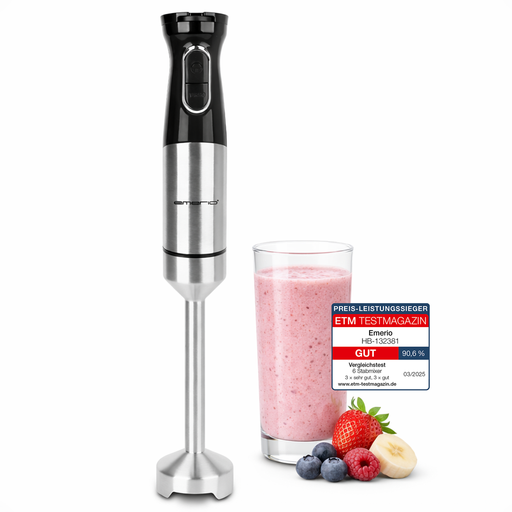 Image unavailable
An option for making a shake when you use a suitable separate beaker.
Variable speed; detachable stainless steel blending foot with two blades. The product description says to use it with a suitable separate beaker.
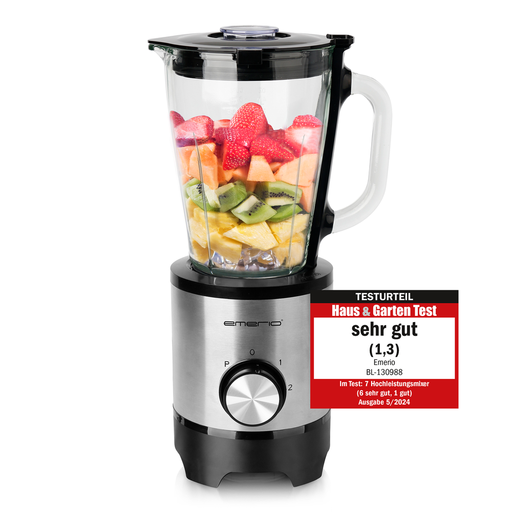 Image unavailable
The jug model is an option if you want to blend several portions or add ice to a shake.
The product description lists a separate ice-crushing function and says the jug, lid and blades are dishwasher-safe. The glass jug is heavy and breakable.
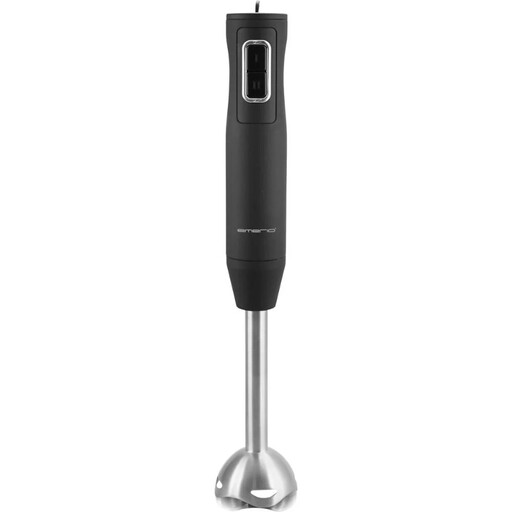 Image unavailable
The product description lists milkshakes as one use; use the blending foot with a suitable beaker.
Stainless steel blending foot and two speed settings. The product description says it has a compact design and is easy to clean.
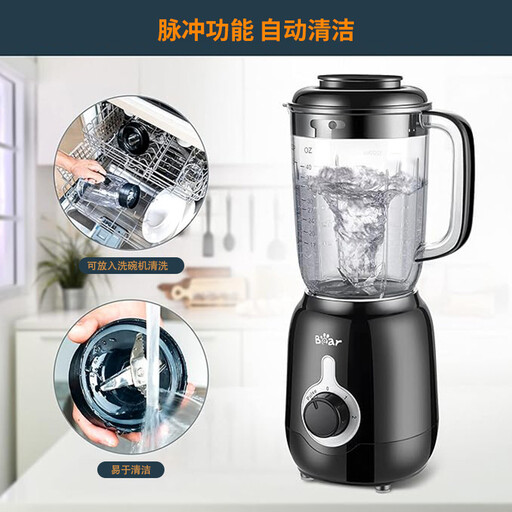 Image unavailable
A jug blender option for shakes, provided the quantity and minimum liquid fill suit your recipe.
The description lists a pulse function for ice, two speeds and four stainless steel blades. At least 300 ml of liquid is required for use.
 Image unavailable
A personal blender option for making your own shake in a 500 ml cup.
The product description lists interchangeable lids and removable parts that are dishwasher-safe.
A blend-to-go blender may suit a single portion. If you use ice cubes or frozen ingredients, check the manual for the specific model; not every small blender is suitable.
Choose a stable spot, stay within the maximum fill line and clean the parts you’ve used after blending. Check the manual to see which removable parts are dishwasher-safe; this doesn’t automatically apply to the motor base.
The Voedingscentrum (Netherlands Nutrition Centre) recommends setting your fridge to 4 °C and not leaving perishable foods such as milk out of the fridge for more than two hours. A sealed blending cup is not a substitute for refrigeration.
For a consumer purchase, Dutch statutory rights apply in addition to any manufacturer’s warranty. According to ACM ConsuWijzer, the seller must repair or replace a faulty product free of charge, or refund you, subject to the applicable conditions. A stated manufacturer’s warranty period doesn’t automatically limit those rights.
Read the labels on the malt powder, milk and other ingredients, and clean shared parts thoroughly before preparing anything for someone with an allergy. The NVWA describes a legal obligation for businesses selling food to consumers to provide allergen information; this doesn’t automatically mean that colleagues making a shake for one another privately are covered by that business obligation.