What should you look for when choosing?
First decide how many portions you’ll make and whether you’ll have power while blending. Then check the model’s capacity and cleaning instructions.
| What to consider |
What should you check? |
Who is this important for? |
| One compact portion |
Check the cup’s maximum capacity and whether a drinking lid is included with the version you’ve chosen. |
If I’m making one kiwi smoothie and have little worktop space, I’ll focus on a compact cup that suits my portion size. Around 33% of consumers put one compact portion at the top of their list. |
| Blending without a plug socket |
Check the charging connection, cup capacity and instructions for the ingredients you want to blend. |
If I want to blend somewhere without a usable plug socket, I’ll need to be able to charge the blender beforehand. Around 27% of consumers say blending without a plug socket is their top priority. |
| Several portions |
Compare the working capacity in litres with the number of portions, and check that the appliance will fit in the available space. |
If I’m making smoothies for several people at once, I’ll look for enough blending space per batch. Around 20% of consumers put several portions first. |
| Less washing-up |
Check the cleaning instructions for each part; dishwasher-safe does not automatically mean the whole appliance is suitable for the dishwasher. |
In a holiday cottage with limited cleaning space, I’ll want to know which parts are easy to clean. Around 20% of consumers put easy cleaning at the top of their list. |
Smoothie blenders at Joybuy
This selection focuses on compact blenders for individual smoothies, with both rechargeable and plug-in models.
 Image unavailable
Aigostar Marden BL-250 blender
The product description mentions a cup with a drinking lid, so you can take your smoothie with you.
250 W; 500 ml capacity.
View at Joybuy
 Image unavailable
Nutribullet Portable 475 ml Personal Blender, White Beige
This rechargeable model is designed for blending without a cord attached to the appliance; check the charging options beforehand.
Cup capacity: 0.48 l; USB-C charging; leakproof drinking lid, according to the product description.
View at Joybuy
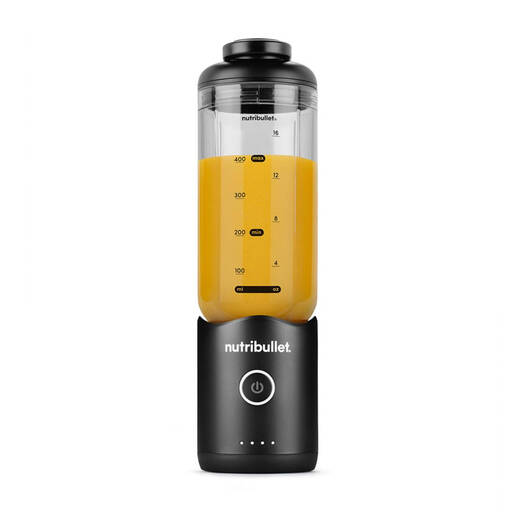 Image unavailable
Nutribullet Flex 590 ml Portable Blender, Black
A rechargeable personal blender for anyone who wants to make a smoothie portion without a plug socket while blending.
590 ml blending cup; USB-C charging; removable blade assembly, according to the product description.
View at Joybuy
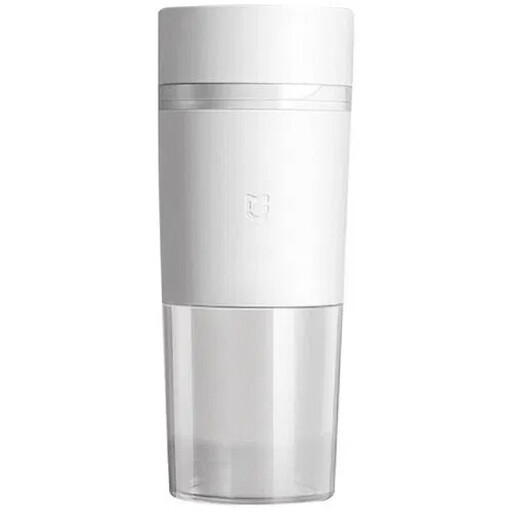 Image unavailable
Xiaomi Portable Blender EU
This rechargeable model could suit you if you don’t want to use a plug socket while blending.
Capacity: 400 ml; USB-C charging, according to the product description.
View at Joybuy
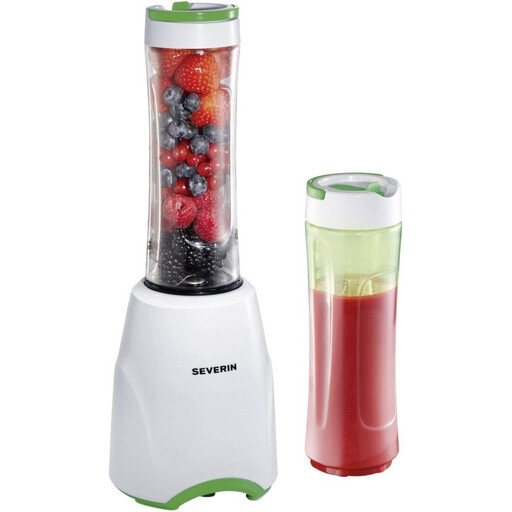 Image unavailable
Severin SM 3735 Smoothie Maker
The product description says you can blend in a cup and then take it with you using a lid.
Two removable drinking cups; dishwasher-safe parts, according to the product description.
View at Joybuy
Frequently asked questions
Can I use a standard blender to make a kiwi smoothie?
Yes. According to the Dutch Consumers’ Association, you can make smoothies in a standard blender. A smoothie blender often has a smaller cup that lets you make and take your drink with you. For a kiwi smoothie, the Netherlands Nutrition Centre recommends peeling the kiwi and cutting it into pieces.
How should I use and clean a blender in a holiday cottage?
Don’t fill the cup or jug above the marked maximum, and make sure it’s closed securely. Follow the manual for each part of your chosen model. The Dutch Consumers’ Association recommends cleaning the housing with a damp cloth and checking whether each part is dishwasher-safe.
How long can I keep leftover fruit smoothie?
For an opened fruit smoothie, the Netherlands Nutrition Centre recommends storing it in the fridge for 1–2 days and checking for signs of spoilage afterwards. Follow appropriate storage advice for other ingredients too; this isn’t a shelf-life claim for every homemade recipe.
What cooling-off period and guarantee apply to online purchases in the Netherlands?
For online purchases, you generally have up to 14 days after delivery to change your mind, subject to exceptions and conditions, according to ACM ConsuWijzer. The Dutch government states that there is no fixed statutory guarantee period covering all products in the Netherlands; if a product is faulty, contact the seller. The cooling-off period and your rights when a product is faulty are separate matters.
What product safety rules apply to blenders in the Netherlands?
The rules that apply depend on the product. The Netherlands Food and Consumer Product Safety Authority (NVWA) states that the Low Voltage Directive applies to electrical equipment with a rated AC voltage between 50 V and 1,000 V. Don’t assume that this threshold applies to every rechargeable blender; a CE mark also says nothing about blending performance.


