For a single latte made with chilled coffee and milk, start by considering cup capacity, storage space and cleaning. If you want to crush ice, only choose a model that explicitly lists this function for that exact model; a compact size or high wattage doesn’t prove it can do the job. A jug blender may offer a larger capacity and a stated ice function, but it takes up more space than a personal cup blender.
Who is this for?
Iced coffee drinker who crushes ice
If you regularly make lattes with crushed ice, an explicitly stated ice function for the exact model is particularly useful. The Consumers’ Association explains that results when blending ice can vary between blenders.
One-person household with limited space
If you make small portions and have limited storage space, you can weigh up the cup size against the type of ice preparation you want. The Consumers’ Association describes a small blending cup as a feature of a smoothie blender or personal blender.
Anyone who wants a quick tidy-up
If you often make drinks, check for each model which cup and blade components can be removed and are dishwasher-safe. Braun and Tefal list these features for specific models.
What should you look for when buying?
When choosing a blender for iced coffee in a small kitchen, the main considerations are whether you want to crush ice, how much space you have and how you want to clean the cup after use.
Personal blender with a drinking cup
Best for: blending one small portion and using the cup straight away or taking it with you.
Bear in mind: a small cup makes less drink at a time; check separately whether the exact model can handle your ice cubes.
Jug blender with a stated ice function
Best for: regularly crushing ice or making more than one portion at a time.
Bear in mind: the ice function is a manufacturer claim for a specific model, not a comparative hands-on test for iced coffee; also measure the storage space available.
| What to consider |
What to look for |
Who is this important for? |
| Crushing ice cubes |
Check the ice function and instructions for the exact model; don’t assume the results from the wattage. |
If I want to crush ice cubes for my latte, I check the stated function and instructions for the exact model. Around 36% of consumers give ice preparation top priority. |
| Worktop and cupboard space |
Measure the space for both the blender base and the cup or jug; compare the usable capacity too. |
In a small kitchen, I want to be able to store the blender base and cup without taking up too much room. Saving space is a priority for around 29% of consumers. |
| Cleaning |
Check for each version whether the blade unit can be removed and which parts are dishwasher-safe. |
If I make lattes often, I don’t want to have to wash lots of parts by hand afterwards. Easy cleaning is the main buying priority for around 21% of consumers. |
| Taking a portion with you |
Compare the cup capacity, lid and accessories for the exact version. |
For a single drink that I want to take with me straight away, I look for a cup with a suitable lid and enough capacity. Around 14% of consumers prioritise a portion they can take with them. |
Common buying mistakes
-
Confusing maximum jug capacity with usable capacity
Philips lists a maximum capacity of 1.9 l and a usable capacity of 1 l for the HR2041/00. These figures don’t mean the same thing when it comes to how much you can prepare at a time.
Compare the usable capacity and recommended fill line with the number of latte portions you make.
-
Assuming every small blender can crush ice cubes
The Consumers’ Association reports that some tested blenders only shave the ice or let it melt. A small drinking cup on its own tells you nothing about how well a blender handles ice.
Check the ice instructions for the exact model and, if available, a test of that specific model. If you only mix chilled coffee and milk, crushing ice may be less important.
-
Assuming a different cup or accessory set is the same package
Cups and accessories can vary between models and versions. Check the model number and box contents before choosing a version.
If the cup or lid you want isn’t included, you may need to buy it separately.
Brands to consider
Philips
The Philips HR2041/00 is a jug blender which Philips says can crush ice.
- Philips lists a pulse setting, 450 W and a usable capacity of 1 l for this model.
- The ice preparation claim comes from Philips; it isn’t an independent test score. A jug may be less suitable if you’re mainly looking for one small cup.
Braun
According to Braun, the PowerBlend 1 JB1051BK combines a jug, an included drinking bottle and an ice-crushing/pulse function.
- Braun lists a liquid capacity of 1.25 l, 600 W and removable, dishwasher-safe parts for this model.
- A jug, bottle and blades mean more separate parts to store than a version with just one cup. The ice-crushing results haven’t been independently compared here.
Tefal
The Mix&Move BL15FD30 is designed for small portions to take away; according to Tefal, the Blend Up BL19H4F0 offers more programmes and two cup sizes.
- Tefal lists two 0.6 l cups and removable blades for the Mix&Move. For the Blend Up, Tefal lists a self-cleaning setting.
- The stated product specification for the Mix&Move doesn’t confirm how well it handles ice; don’t attribute the Blend Up’s self-cleaning function to the Mix&Move.
nutribullet
The Original 600 NB606DG is a personal blender with two cup sizes for small portions.
- nutribullet lists a 600 W power base and 700 and 500 ml cups for this accessory set.
- The product information doesn’t include an independent comparison of how well this version crushes ice for a latte.
Joybuy products
This selection focuses on compact blenders for individual drinks, including models with a jug or a portable cup. If you want to crush ice cubes, check whether ice preparation is listed for the exact model.
 No image available
Philips 3000 Series Mini Blender HR2510/90 — 0,6 l, 350 W
The product name mentions ice crushing; the jug has a capacity of 0,6 l. This may suit a small portion, but check the instructions for the type of ice you want to use.
350 W.
View at Joybuy
 No image available
Aigostar Marden BL-250 — 250 W, 500 ml glass jug
The 500 ml glass jug is designed for a small portion. Check the manual for this model to see whether it can handle your ice cubes.
250 W; 500 ml glass jug.
View at Joybuy
 No image available
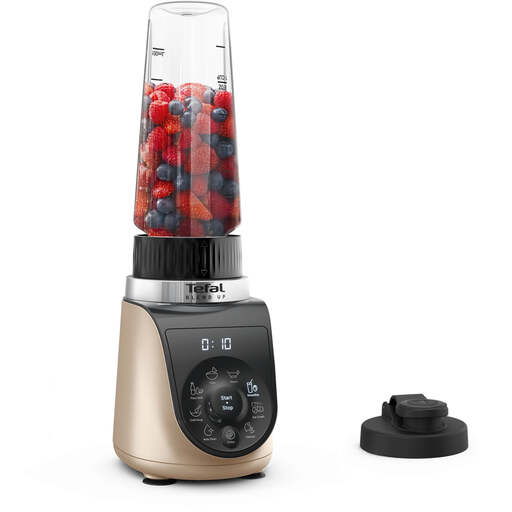
Tefal BL190A Blend Up Personal Smoothie Blender
The product name describes a personal smoothie blender. Check the cup capacity and ice instructions for this specific version before choosing it for a latte.
View at Joybuy
 No image available
nutribullet Portable — 475 ml, White Beige
This portable version is designed for individual drinks. The product name lists a rechargeable battery and a run time of 20 minutes; it needs to be charged before use.
475 ml; USB-C charging; stated run time of 20 minutes.
View at Joybuy
 No image available
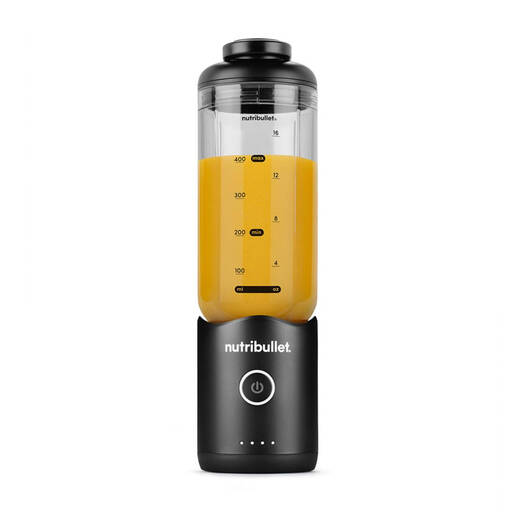
nutribullet Flex Portable Blender — 590 ml, black
According to the product name, this portable blender has a capacity of 590 ml and runs on a rechargeable battery. It needs to be charged before use; check the model-specific instructions if you want to blend ice.
590 ml; rechargeable battery.
View at Joybuy
Frequently asked questions
Is a high wattage enough to know whether my latte will have finely crushed ice?
No. The Consumers’ Association reports that some tested blenders only shave the ice or let it melt. Check the ice function and, if available, the test result for the exact model.
What should I check before use and when cleaning?
Follow the manual for the exact model for assembly, use and cleaning. Check which blades and cups can be removed and which parts are dishwasher-safe; this varies between versions.
In the Netherlands, am I only entitled to the manufacturer’s guarantee?
No. In the Netherlands, as well as any manufacturer’s guarantee, you’re entitled to a product that meets the expectations you’re entitled to have; if a product is faulty, the seller must provide a solution. The Dutch government states that there is no fixed statutory guarantee period; what you can expect depends, among other things, on the product and how it is used.
Does a CE logo prove that a blender crushes ice well?
No. For a blender that runs on mains electricity and is covered by the relevant EU rules, CE marking is the manufacturer’s declaration of conformity, not a quality mark. The Dutch government and EUR-Lex make clear that CE says nothing about how well the appliance crushes ice.


