Choose a personal blender if you usually make one iced coffee at a time; if you want to make several glasses at breakfast, a blender with a larger jug may be more practical. The Consumentenbond warns that wattage alone doesn’t tell you how well a blender processes ice, so check the instructions for the exact model. According to the NVWA, electrical appliances marketed in the Netherlands must carry the CE mark. The mark is a declaration by the manufacturer, not an independent assessment.
Who is this for?
Family who want iced coffee at the same time
Wants to pour several glasses at the same breakfast, so compares the blender jug’s capacity with the number of blending rounds needed. The Consumentenbond describes small blending cups as suitable for drinking straight away or taking with you.
Iced coffee fan who likes finely crushed ice
Wants to blend ice cubes and is therefore looking for clear instructions for the exact model. The Consumentenbond notes that not every blender can crush ice cubes.
Quick breakfast maker
Wants to wash as few separate parts as possible after breakfast. A cup you can use straight away may help; check which parts are removable or dishwasher-safe.
What should you look for when choosing?
The Consumentenbond points out that blenders vary in how they process ice. First choose one that suits the portions you need, then check the instructions for ice and cleaning each part.
Compact corded blender
Choose this if: you usually make one drink at a time and want to use the cup straight away.
Bear in mind: 600–700 ml cups may mean extra blending rounds if you’re making drinks for several family members. Bosch lists frozen ingredients for the MMB2111S, but this doesn’t confirm how many loose ice cubes the model can handle.
Portable rechargeable blender
Choose this if: taking it with you matters more than making drinks for the whole family in one go.
Bear in mind: nutribullet says the Flex NBP013BL can crush small quantities of ice and has a 590 ml cup.
Blender with a larger jug
Choose this if: you want to pour several glasses at breakfast. The Consumentenbond recommends a jug of 1.5 litres or more for larger quantities.
Bear in mind: a larger jug means more washing up and isn’t an individual takeaway cup; check the ice instructions for the exact model.
| What to consider |
What should you check? |
Who does this matter most to? |
| Processing ice cubes |
Check the instructions for the exact model to find out how much ice is allowed, whether you need to add liquid and how long you can use it for. Wattage isn’t proof of how well it handles ice. |
If I want to blend ice, I look for explicit instructions for my model. Around 36% of consumers put ice processing first. |
| Portions for the family |
Compare the usable capacity with the number of glasses you need and check the maximum fill level; the stated cup capacity isn’t necessarily the safe amount to blend at once. |
If everyone wants a glass at breakfast, I want to know how many rounds it will take. Around 29% of consumers give family-sized portions top priority. |
| Cleaning |
Check whether each cup, lid and blade unit is removable or dishwasher-safe. A claim about removable parts doesn’t automatically apply to the motor base. |
After a busy breakfast, I want to quickly find out which parts I need to wash. Easy cleaning is a top priority for around 21% of consumers. |
| Taking it with you |
Check whether a drinking lid is included and how the cup detaches from the motor; if it’s rechargeable, also check whether its capacity suits the number of drinks you want to make. |
If I want to take my drink with me, a drinking cup matters more than making several portions at once. Around 14% of consumers put portability first. |
Common buying mistakes
-
Choosing a blender for ice based on wattage alone
Wattage isn’t a model-specific test result for ice cubes. The Consumentenbond assesses blenders on factors including crushing performance; a general power rating doesn’t tell you how the model you choose will handle ice.
Look for ice instructions in the manual for the exact model and check independent test results if available. Don’t treat a manufacturer’s claim as an independent test result.
-
Mistaking cup capacity for a family-sized portion
A cup of around 0.6–0.7 litres and a 1.5-litre jug are designed for different portion needs. With a small cup, you may need to refill and blend again for each family member.
Decide how many glasses you want to pour at once and check the maximum fill level of the model you choose.
-
Confusing the manufacturer’s guarantee with your statutory rights
According to the Dutch government, there is no fixed statutory guarantee period in the Netherlands. A manufacturer’s guarantee or additional cover doesn’t replace your statutory rights if a product is faulty.
Read what additional cover includes and contact the seller if there’s a problem with a faulty product.
An additional cover plan may cost extra; compare what it offers alongside your statutory rights.
Brands to compare
Tefal
According to Tefal, the Blend Up BL190AF0 is a compact blender with a 700 ml bottle, 1000 W of power and a cleaning setting. It could suit you if you usually make one drink at a time.
- Tefal lists a removable blade and a dishwasher-safe bottle.
- The bottle isn’t a family-sized jug. Check the manual for the permitted amount of ice; the product information provided doesn’t specify a quantity.
Bosch
According to Bosch, the VitaPower Serie 2 MMB2111S has a 0.6-litre cup and a 450 W motor. Bosch lists recipes using frozen fruit.
- Bosch lists a takeaway cup and dishwasher-safe parts.
- The information about frozen fruit doesn’t confirm how many loose ice cubes it can handle. The smaller cup may mean extra rounds if you’re making drinks for the family.
nutribullet
nutribullet offers several models: the Original 600 NB603DG with a 700 ml cup and the portable Flex NBP013BL with a 590 ml cup.
- According to nutribullet, the Flex can crush small quantities of ice.
- The ice instructions apply to the Flex and don’t automatically apply to the Original 600. Either cup may mean extra rounds when making drinks for a family.
Philips
The Consumentenbond lists the Philips 5000 Series HR3020/20, with a 1.5-litre jug, as a larger-jug option for anyone who wants to blend more at once.
- A 1.5-litre jug offers a different portion size from an individual takeaway cup.
- Being listed in a comparison guide isn’t a publicly available model-specific assessment of how well it crushes ice. Check the instructions for this model for that information.
Blenders for larger portions
These Joybuy products are countertop and jug blenders for anyone who wants to make several glasses at breakfast. Check the ice instructions for each model before adding ice cubes.
 Image unavailable
Cecotec Power Black Titanium 1300Max
A jug blender for anyone who wants to make several glasses at breakfast; follow the manual for the permitted amount of ice.
1,300 W; 1.5 l jug; 2 speeds; ice-crush function; 4 Black Titanium blades.
View at Joybuy
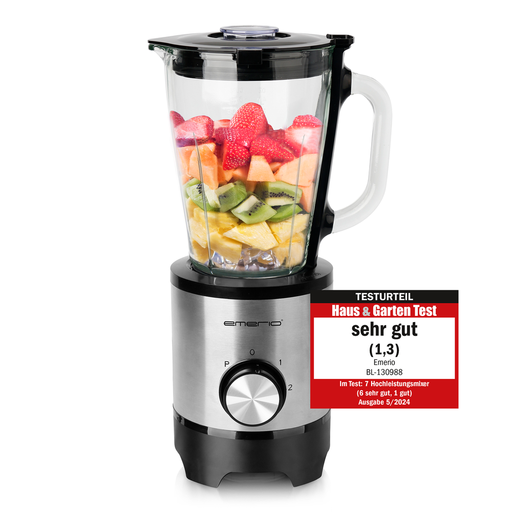 Image unavailable
Emerio BL-130988
A jug blender for anyone who wants to make several glasses; check the manual for this model before using ice cubes.
1.5 l glass jug; stainless steel finish, black/silver.
View at Joybuy
 Image unavailable
Tefal PerfectMix+ BL871A
This jug blender is an option if you want to pour several glasses; check the ice instructions for the exact model.
1,200 W; 1.5 l jug; Dune finish.
View at Joybuy
 Image unavailable
Philips HR3020/20
The larger jug may suit you if you’re making several breakfast drinks; check the manual for ice instructions and how to clean each part.
1,000 W; 1.5 l jug; dishwasher-safe parts according to the product name.
View at Joybuy
 Image unavailable
Ninja Detect Blender Pro TB301EU
This blender is included as an option for anyone who wants to make several drinks at breakfast; check the jug capacity and ice instructions for model TB301EU before choosing.
View at Joybuy
Frequently asked questions
Is a higher wattage enough to tell me whether my iced coffee will be smooth?
No, wattage alone doesn’t predict the result. The Consumentenbond assesses blenders on factors including crushing performance; also check the ice instructions for the exact model.
How should I clean the blender after making iced coffee with milk?
Follow the manual for the exact model when cleaning the cup, lid and blades. Tefal lists a removable blade and a dishwasher-safe bottle for the BL190AF0; this doesn’t tell you anything about the motor base or other models.
Should I keep iced coffee with milk chilled?
Yes. The Voedingscentrum advises keeping chilled dairy products in the fridge at 4 °C. This is food safety advice, not a feature of a blender.
Am I only entitled to a two-year statutory guarantee on a blender in the Netherlands?
No. According to the Dutch government, there is no fixed statutory guarantee period in the Netherlands; you’re entitled to a product that works properly, and the seller is your point of contact if it’s faulty. A manufacturer’s guarantee is an additional benefit.
Is CE marking compulsory for an electric blender in the Netherlands?
Yes, the NVWA says CE marking is compulsory for electrical products. The mark is a declaration by the manufacturer, not proof of an independent assessment or that an individual item which hasn’t been checked separately is compliant.


