
Iced chocolate with whole ice cubes
If you want to crush ice into your drink, check whether the instructions for the exact model allow this. The Consumentenbond notes that not every blender can crush ice cubes.


If you want to blend whole ice cubes into your chocolate drink, choose a blender whose instructions specifically allow ice to be processed. If you add the ice after blending, a simpler model may be enough. Also consider usable capacity, cleaning after shared use and noise in the workplace: according to the Consumentenbond, a higher wattage alone does not show how well a blender processes ice or how much noise it makes.
If you want to crush ice into your drink, check whether the instructions for the exact model allow this. The Consumentenbond notes that not every blender can crush ice cubes.
If several colleagues use the same blender, it’s important to have a cleaning routine that’s easy to follow. The Voedingscentrum recommends using clean utensils when preparing food and drinks.
For individual drinks, you could consider a personal blending cup; for several servings, the usable capacity of a jug matters. The Consumentenbond explains that a smoothie blender for taking on the go has a smaller blending cup. Noise is also worth considering if the blender will be used near workstations.
First decide whether whole ice cubes will go into the blender. Then choose a capacity and cleaning options to suit the number of users and where you’ll use the appliance.
| What to consider | What should you check? | Who is this important for? |
|---|---|---|
| Processing ice cubes | Check the instructions for the exact model to see which ingredients, quantities and methods are permitted for ice; don’t compare wattage alone. | If I want to blend whole ice cubes with the chocolate drink, the model must allow this use according to its instructions. Around 33% of consumers give ice processing top priority. |
| Cleaning between users | Check which parts that come into contact with the drink are easy to reach, which removable parts the manufacturer says are dishwasher-safe, and how cleaning after use will be managed. | If colleagues take turns using the blender, I want to know that the jug and other contact parts can be cleaned according to the instructions. Around 27% of consumers put cleaning at the top of their list. |
| Capacity and servings | Compare the usable blending capacity with the number of servings you want to make; a jug’s total capacity is not always its usable capacity. | If we’re making several drinks at once, I want to know whether the usable capacity is sufficient; for individual drinks, a personal cup may be more convenient. Around 20% of consumers give serving size top priority. |
| Noise near workstations | Look for an independent noise assessment of the exact model and consider where and when the blender will be used. | If the kitchen is close to occupied workstations, I want to know in advance how much noise the appliance makes. Around 20% of consumers prioritise reducing noise disturbance. |
A motor specification alone doesn’t tell you how well a blender processes ice or how much noise it makes. The Consumentenbond assesses ice processing and noise as separate parts of its tests.
Check the instructions for processing ice and, if noise matters, look for an assessment of the exact model you’re considering.
The product information for the Tefal Perfectmix+ BL811D38 gives both 1.5 litres and 2 litres. The product information for the Philips HR3020/20 lists a total capacity of 2 litres and a usable capacity of 1.5 litres.
Check the usable capacity of the version you’re buying, especially if you want to make several servings at once.
A programme doesn’t remove the need for users to follow the cleaning instructions for parts that come into contact with the drink.
Follow the model’s instructions and agree who will clean the appliance after use in a shared kitchen.
According to ACM ConsuWijzer, consumer protection does not automatically apply to a contract used mainly or exclusively for business purposes.
Before buying, check who the purchaser is, how the appliance will be used and which sales and warranty terms apply.
Tefal offers jug blenders in the Netherlands, including the Perfectmix+ BL811D38 for preparing drinks to share.
The 5000 Series HR3020/20 is a jug blender to consider for a shared kitchen.
The Pro 900 NB910S is a personal blender with a 900 ml cup, according to nutribullet; this version may suit you if you’re comparing options for individual servings.
The PowerBlend 9 JB 9040 is a jug blender to consider if you want to compare programmes such as ice crush.
This selection focuses on jug blenders whose product information mentions ice crushing, for drinks you can share with colleagues. If you want to use whole ice cubes, always check the instructions for the exact version.
 Image unavailable
The product information describes a jug for preparing drinks for several people and an Ice Crush function.
1300 W, 1.5-litre jug, four Black Titanium blades and two speeds.
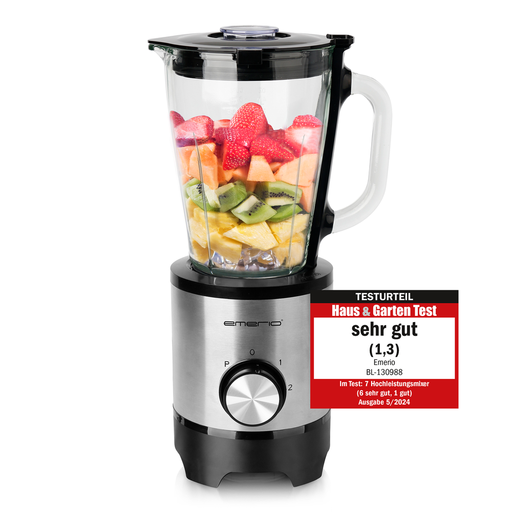 Image unavailable
The product information lists an ice-crushing function and a glass jug for larger batches.
1.5-litre jug, two speeds and a pulse function; the jug is described as heavy and breakable. The product information warns against using hot liquids above 60 °C.
 Image unavailable
The product information mentions ice crushing and a 1.5-litre jug for drinks to share.
600 W, three speeds and a design that can be taken apart for cleaning. According to the product information, the motor should rest for 2 minutes between heavy blending cycles after a maximum of 1 minute of use.
 Image unavailable
The product information lists an ice crusher and a 2.1-litre jug for larger batches.
The description lists 14 manual speeds and BlendSense technology.
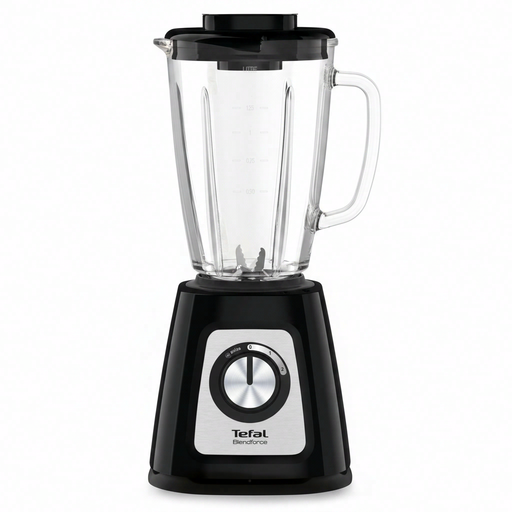 Image unavailable
The product information lists an ice-crushing setting for cold drinks.
1.25-litre jug, two speeds, a pulse function and, according to the product information, dishwasher-safe parts.
No. The Consumentenbond notes that not every blender can crush ice cubes. Check the instructions for the exact model and follow the permitted method; wattage alone doesn’t tell you.
Clean the parts that came into contact with the drink according to the model’s instructions, and leave the blender clean for the next user. A cleaning setting doesn’t replace the instructions for the blade, seal and removable parts.
Not automatically. ACM ConsuWijzer explains that consumer protection does not automatically apply to a contract used mainly or exclusively for business purposes. Before buying, check who the purchaser is and what the appliance will be used for.
Parts that come into contact with food must comply with the applicable Dutch and European rules for food contact materials, as explained by the NVWA and the European Commission. For electrical equipment covered by low-voltage regulations, the NVWA describes safety requirements and CE marking. This does not in itself confirm that a specific model on offer complies with the rules.
No. The Voedingscentrum lists milk and nuts as allergens. Discuss the ingredients used and the jug’s previous use, and don’t promise that a blender is allergen-free just because it has a cleaning programme.