
Anyone who wants to crush ice for mocha
You want to blend ice cubes for one or more frozen mochas. First, check that ice crushing is listed for the exact model, then choose a cup or jug that suits the number of servings you need.


Choose a blender that explicitly lists an ice-crushing function for the exact model; a high wattage alone is no proof that it can crush ice. A personal blender is suited to making one drink at a time, while a jug blender may be more practical for several servings if you have enough space. Consider noise and cleaning separately: an ice function tells you nothing about how loud a blender is in an office.
You want to blend ice cubes for one or more frozen mochas. First, check that ice crushing is listed for the exact model, then choose a cup or jug that suits the number of servings you need.
You share an office with colleagues who are working or on calls, so noise matters. A stated ice-crushing function or motor power is not a noise measurement; compare noise separately.
After making a drink, you want to be able to clean the removable parts in accordance with the model's instructions. Also check whether the capacity suits one drink or several servings at a time.
First, check that the exact model has an ice-crushing function. Then weigh up serving size and cleaning, and consider noise separately if you’ll be using it in a shared workspace.
| What to consider | What should you look for? | Who should pay particular attention? |
|---|---|---|
| Blending ice | Check that an ice-crushing function is listed for the exact model, and read the instructions on ingredients and maximum filling levels. | If I want to blend ice cubes for a frozen mocha, I don’t want to rely on wattage alone. Around 31% of consumers put ice-crushing ability ahead of other buying priorities. |
| Noise during working hours | Look for a noise rating for the exact model, and consider where and when the blender will be used. | In a shared workspace, I want to take noise into account without assuming that an ice function says anything about noise levels. Around 25% of consumers prioritise noise. |
| Cleaning after use | Check which parts can be removed and which, according to the model's instructions, are dishwasher-safe. | If several colleagues use the blender, I want to know which parts need cleaning after making a drink. Around 25% of consumers put ease of cleaning first. |
| Capacity per blend | Compare the stated usable capacity with the number of servings and the storage space available. | A personal cup may be enough for one drink, while a jug may be more suitable for several servings. Around 19% of consumers make serving size their top priority. |
Not every blender can crush ice cubes, so you can’t assume it will make the frozen drink you want.
Check that the exact model explicitly lists an ice function, and read its instructions.
How removable parts are cleaned varies by model; a programme does not automatically replace the instructions for the jug, lid and blade.
Read the manual and, if the blender is shared, agree who will clean it after use.
When the blender is shared, cleaning the jug, lid and blades separately can take extra time.
Noise and ice-crushing ability are separate considerations when choosing a blender; motor power doesn’t tell you how loud it will be in the office.
Look for a noise rating for the specific model, rather than trying to infer its noise level from the wattage.
The Pro 900 NB904CP is a personal blender for anyone who mainly makes one drink at a time. The manufacturer lists a 700 ml cup and says it is suitable for crushing ice.
The Perfectmix+ BL811D38 is a jug blender worth comparing if you want to make several servings and an ice programme matters to you.
The 5000 Series HR3020/20 is a model to include when comparing jugs with a stated capacity of 1.5 l.
The PowerBlend 3 JB 3100 WH may be worth considering if ease of dismantling and cleaning are important priorities.
The BN750EU is a 2-in-1 option to compare if you’re considering both a jug and a cup.
This Joybuy selection includes blenders with a listed ice function, from compact personal models to jugs for larger servings. Also check the model instructions for use and cleaning.
 No image available
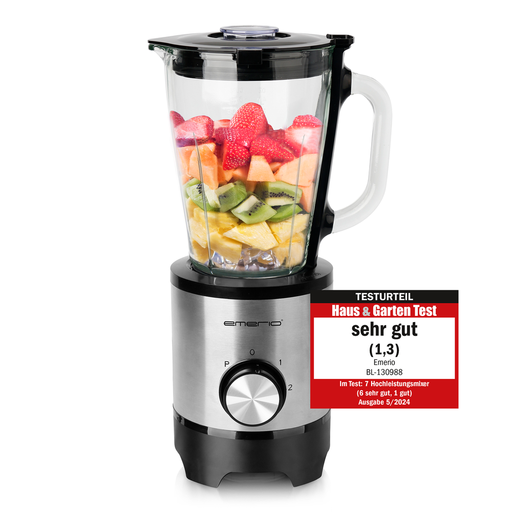
The product information lists Ice Crush and a 1.5 l jug, making it an option for anyone who wants to blend ice and prepare more than one serving.
Listed: 1300 W, two speeds and four blades.
 No image available
The product information lists an ice setting and dishwasher-safe parts, so you can consider both ice crushing and cleaning.
Listed: 1.5 l glass jug, two speeds and a pulse function. The jug is described as heavy and breakable.
 No image available
The product title lists ice crushing, and the description mentions easy dismantling and cleaning—useful considerations for a shared kitchen.
Listed: three speeds. For heavy blending cycles, the product information advises against using the appliance for more than one minute at a time.
 No image available
This mini blender may suit a single drink; the product information lists ice crushing and dishwasher-safe removable parts.
Listed: 0.6 l and 350 W. According to the product information, setting 2 is intended for hard ingredients and ice.
 No image available
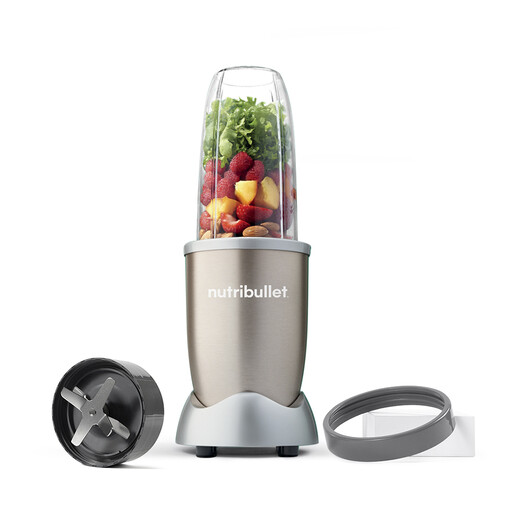
The product information mentions ice cubes and frozen ingredients, making it suitable for anyone who wants to prepare a personal serving.
Listed: 700 ml cup and pulse function. The instructions warn against using hot ingredients or liquids above 21 °C, and say to add liquid first.
No. Don’t use wattage as your only deciding factor. The Consumers’ Association notes that not every blender can crush ice cubes; check the ice function and instructions for the exact model.
Place the appliance on a stable surface, close the lid and fit the jug according to the instructions. Don’t fill it above the stated maximum capacity, and check the cleaning instructions for each part.
The Netherlands Nutrition Centre advises keeping perishable dairy chilled and setting the fridge to 4 °C. Don’t leave milk out of the fridge for more than 2 hours. This is food-safety advice, not a blender specification.
For a consumer purchase in the Netherlands, you can contact the seller to resolve problems with the product, according to the Dutch government. There is no fixed statutory guarantee period in the Netherlands. If your employer bought the blender, the relevant business purchase terms should be assessed separately.
The relevant Dutch and European product safety rules apply to electrical appliances. Business.gov.nl explains CE marking and the EU declaration of conformity for appliances covered by the requirements. For appliances with an alternating voltage of 50 to 1000 V, electrical safety falls under the European Commission’s Low Voltage Directive. Don’t assume that a specific product complies with the rules based only on a listing in an online shop.