
Vandaag of morgen in huis

Kwaliteit gegarandeerd

Welkomstaanbiedingen ontgrendelen: GRATIS bezorging | Tot 80% korting | Gratis 30 dagen JoyPlus-proefperiode
Download de app
A blender and food mixer may look like similar appliances at first glance, but they are designed for different tasks. A blender makes liquid preparations such as smoothies, sauces and soups. A hand mixer or stand mixer is intended for batters, whipped cream and dough.
Choosing the wrong appliance often results in a model that is too small, difficult to clean or unsuitable for your recipes. So don’t focus solely on high wattage or a long list of accessories. The design, capacity and operating time are just as important.
A blender with a powerful motor sounds appealing, but wattage does not tell you everything about the final result. The shape of the jug, the blades, the drive system and the recommended maximum operating time are also important.
For example, a 1,000-watt motor is practical for larger quantities and harder ingredients, but it is not automatically suitable for kneading bread dough for long periods. With a hand blender rated at 800 watts or more, you should also check the recommended operating and cooling times.
A 2-litre jug may have a maximum capacity of 2 litres, while the recommended operating capacity is lower. The Philips HR3020/20, for example, has a 2-litre jug but a stated working capacity of 1.5 litres. This difference matters when you are making smoothies for several people.
For one person, a small smoothie maker or portable blender may be more convenient. A large countertop blender would take up unnecessary space and could be more difficult to store.
With a blender featuring dishwasher-safe parts, usually only the removable components are suitable for the dishwasher. The motor base must not be immersed in water. With stand mixers, some metal attachments may actually need to be washed by hand according to the instructions.
So check which parts are removable and what temperature is permitted. For example, the ROUNY hand blender states that dishwasher-safe accessories must be washed below 60 °C. The instruction manual should always be followed.
Always compare the power with the task at hand. According to the product specifications, the Ninja Detect Blender Pro has a 1,200-watt motor, a 2.1-litre jug and 14 manual speed settings. This makes it suitable for larger portions and different textures.
A hand blender such as the Braun MQ10.201MWH has 450 watts, one speed and a 350 ml chopper. This is a simpler set-up for smoothies, desserts and sauces. More speed settings are not automatically necessary if you mainly prepare simple recipes.
Also pay attention to the cooling time. The ROUNY has a recommended cycle of up to one minute, followed by one minute of rest. According to the safety information, the Honinst stand mixer may run continuously for a maximum of ten minutes when handling heavy yeast dough, after which the motor must cool down.
Measure the available worktop space and check the height beneath your kitchen cupboards. A stand mixer with a 5- or 6-litre bowl is practical for larger quantities, but takes up more space than a hand mixer.
For stability, non-slip feet or suction cups are useful. With a stand mixer, a tilting head and lockable bowl also help you attach accessories safely. Use the stated maximum quantity of dough; a large bowl does not mean you can always fill it completely.
Consider which accessories you will actually use. A whisk, beater and dough hook are sufficient for many home bakers. A chopper and measuring jug make a hand blender more versatile, but they also require additional storage space.
Also check whether the blades or blending shafts can be removed. Sharp blades must be cleaned carefully, while the motor unit should only be wiped with a slightly damp cloth.
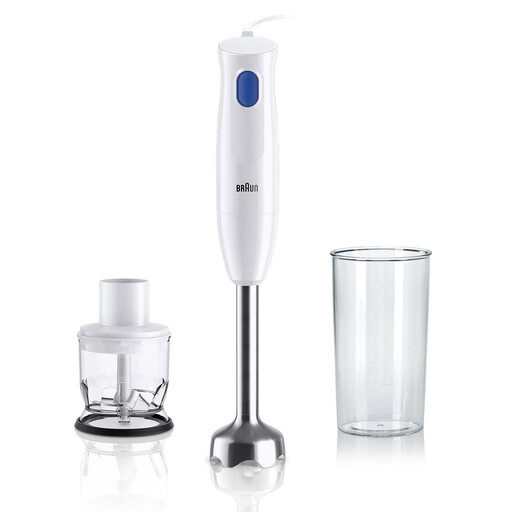
Why it suits this profile: A compact hand blender for smoothies, sauces and desserts, without a large appliance taking up space on the worktop.
The specifications are clear: one speed, 450 watts and a 600 ml measuring jug. This means you are not paying for features you may never use.
450 watts, EasyTwist accessories and a 350 ml chopper.

Why it suits this profile: Suitable for households that regularly prepare larger portions of smoothies, soups or sauces.
The product information states both the total jug capacity of 2 litres and the working capacity of 1.5 litres. This makes planning portions easier.
1,000 watts, three speeds plus pulse setting, and removable blades.
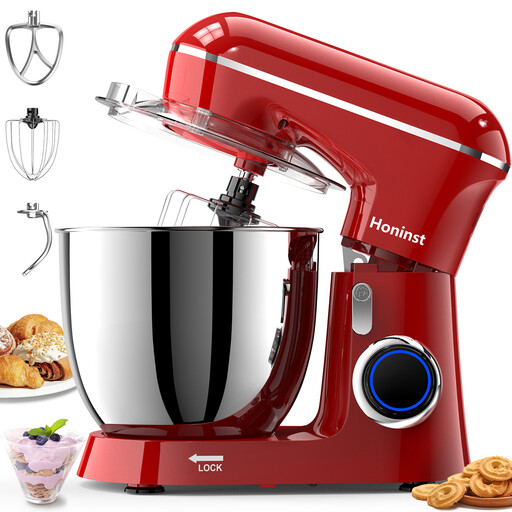
Why it suits this profile: For home bakers who often make batter, whipped cream or dough and want to keep both hands free.
The safety information specifies a maximum running time of ten minutes for heavy yeast dough, followed by a mandatory cooling period. This makes the operating limits clear from the outset.
6.5-quart bowl, 10 speeds, whisk, dough hook and beater.
We have put together a complete, up-to-date list of products that fully meet these strict selection criteria and the applicable European safety regulations.
A hand blender is practical when you want to purée soup directly in the pan. A countertop blender is better suited to larger quantities or when you want to make a smooth smoothie. For hot preparations, always check the temperature limit in the manual. The Philips HR3020/20, for example, states that ingredients must not be hotter than 80 °C.
Its lifespan depends on the workload, cleaning and following the instructions. Do not run the motor for longer than specified, do not overfill the bowl and allow the appliance to cool down when instructed. Many of the products mentioned come with a statutory minimum two-year guarantee within the EU, but additional terms and conditions are set out by the retailer and manufacturer.
Energy consumption depends on the power rating and operating time. In theory, a 1,000-watt appliance uses approximately 0.17 kWh when running for ten minutes. In practice, blenders often run for less time. So don’t look only at wattage; also consider preparation time, portion size and ease of cleaning.
