
Families who want to serve everyone at once
You’d rather make all the portions for the meal in one batch, so clearly stated usable capacity is especially important.


A standard jug blender may be all you need for smooth strawberry milkshakes, as long as its usable capacity is large enough for the portions you want to make at once. If you often use frozen strawberries or ice, check the instructions for the exact model and compare how easy it is to clean. A higher wattage alone doesn’t guarantee better results. For example, Philips lists the HR2041/00 as having a usable capacity of 1 litre and a maximum capacity of 1.9 litres.
You’d rather make all the portions for the meal in one batch, so clearly stated usable capacity is especially important.
You regularly make cold shakes with frozen strawberries or ice and want to check that the blender is suitable, rather than comparing wattage alone.
You use your blender often, so you pay particular attention to how easy it is to take apart and clean the jug, lid and blades.
Start with the amount you want to make at once and the ingredients you use. Then compare the controls and the parts you’ll need to clean after each use.
Choose this if: you mainly blend soft strawberries with milk and the usable capacity suits your portions.
Trade-off: a large maximum jug capacity doesn’t necessarily mean you can blend that amount in one go.
Choose this if: you want more usable capacity or regularly use frozen ingredients. Check the manual for guidance on your ingredients and quantities.
Trade-off: manufacturer details about power or blending performance aren’t the same as a head-to-head milkshake test. Also consider the jug material and how easy it is to clean.
Choose this if: making one portion at a time and drinking straight from the same cup matters more than serving everyone at once.
Trade-off: a small blending cup may mean you need to make several batches for a family meal.
| What to consider | What should you check? | Who is this important to? |
|---|---|---|
| Portions per batch | Compare the amount you want to make with the stated usable or working capacity, not just the maximum capacity. | If I want to serve everyone at once, the capacity needs to suit the total amount. Around 36% of consumers prioritise making one batch for the whole family. |
| Frozen strawberries or ice | Check the instructions for the exact model and, where possible, compare independent test results for that preparation. Consumentenbond warns that wattage alone doesn’t tell you everything. | If I want to use frozen fruit or ice, I want to know whether the model is designed for it. Around 29% of consumers prioritise blending frozen ingredients. |
| Ease of cleaning | Check the manual to see which parts can be taken apart and which are dishwasher-safe according to the instructions. | If I use the blender regularly, I want to clean the jug and blades without unnecessary hassle. Around 21% of consumers make ease of cleaning their top priority. |
| Only the features you need | First work out your portions and ingredients, then compare the features that suit the way you’ll use the blender. | If I mainly make strawberry milkshakes with soft fruit, I don’t want to pay for features I won’t use. Around 14% of consumers prioritise avoiding unnecessary features. |
According to Philips, the Philips HR2041/00 has a maximum capacity of 1.9 litres but a usable capacity of 1 litre. If you look only at the maximum capacity, you may need to make extra batches for family-sized portions.
Compare the usable capacity with the amount you want to serve in one go.
Wattage on its own doesn’t tell you how well a blender will mix a milkshake. Consumentenbond assesses blending performance separately from wattage.
Check which ingredients the exact model can handle and, where available, look at a relevant independent test.
An on-the-go blender with a small blending cup is designed for one portion at a time, so you may need to make several batches for a family meal.
Choose this type only if making one portion at a time suits the way you’ll use it.
These brands offer reference points for different jug capacities, materials and uses. Their inclusion doesn’t indicate that a specific model is available.
The HR2041/00 is a jug blender worth comparing if you’re looking for straightforward controls and its usable capacity suits your portions.
The PowerBlend 3 JB3150 is worth comparing if you’re looking for a glass jug and a stated working capacity of 1.5 litres.
The VitaPower MMB6141B is a jug blender worth comparing if you often use frozen ingredients and want a plastic jug.
Tefal offers compact blenders and jug blenders. Compare the version with the portions and ingredients you want to prepare.
These jug blenders are options to compare for family-sized portions. For each model, check that the stated capacity suits the amount you want to make in one go.
 No image available
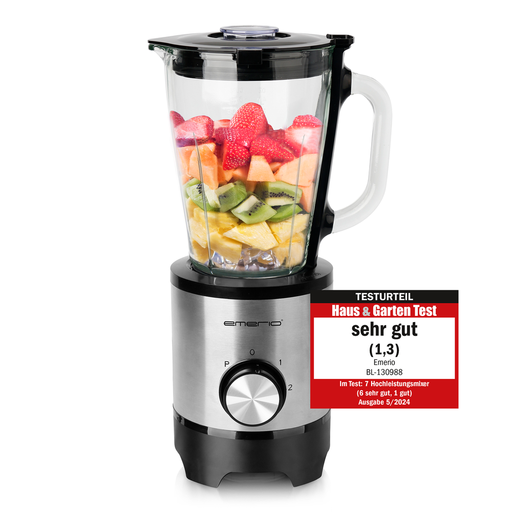
An option to compare if you’re looking for a jug blender for family-sized portions and want to be able to crush ice.
The product name lists 1300 W, a 1.5-litre jug, two speeds, four Black Titanium blades and an ice-crushing function.
 No image available
An option to compare if a glass jug and room for several portions are important to you.
The product name lists a 1.5-litre glass jug and a stainless steel finish.
 No image available
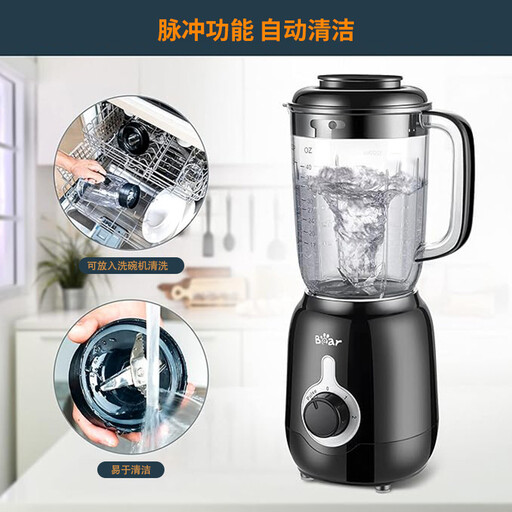
An option to compare if you’re looking for a jug blender that can crush ice.
The product name lists 600 W, a 1.5-litre jug, three speed settings and an ice-crushing function.
 No image available
An option to compare if you’re looking for a countertop blender for shakes and smoothies.
The product name lists 500 W, a 1.2-litre jug, two speeds, a pulse function and four stainless steel blades.
 No image available
An option to compare if you’re looking for a jug blender for family-sized preparations.
The product name lists a 1.5-litre jug, 1000 W and dishwasher-safe parts.
Check the amount you actually want to blend. Philips lists the HR2041/00 as having a maximum capacity of 1.9 litres and a usable capacity of 1 litre; these figures aren’t interchangeable.
Don’t assume so: check the instructions for the exact model to see whether it can handle frozen ingredients or ice. Consumentenbond says power blenders are useful for tougher jobs, but also points out that wattage alone doesn’t tell you everything.
Keep dairy products chilled and don’t leave the milkshake out of the fridge for long. Voedingscentrum recommends keeping your fridge at 4 °C and not leaving perishable food and drink out of the fridge for more than 2 hours; after that, throw it away.
Contact the retailer if the product doesn’t do what you could reasonably expect during normal use. ACM ConsuWijzer states that your statutory guarantee applies in addition to any manufacturer’s guarantee, so a stated manufacturer’s guarantee period isn’t automatically the limit of your statutory rights.
Dutch government information refers to European safety requirements, CE marking and an EU declaration of conformity for electrical appliances. This describes requirements for placing products on the market; it doesn’t prove that a particular blender on offer meets every requirement.