
Holidaymaker making one smoothie
You want to save worktop space and perhaps drink your smoothie straight from the blending cup. The Consumers’ Association describes this as a feature of a personal blender.


If you’re making one smoothie and have a plug socket nearby, a compact blender with a drinking cup is a practical choice. For several servings, a jug blender is a better fit. Choose a rechargeable model mainly if there’s no socket where you’ll be preparing your smoothie, and bear the cup capacity and charging requirements in mind. The Consumers’ Association describes a personal blender as a small blending cup in which you can make and take your smoothie with you. Remove the stones from the dates, as directed in Yuice.nl’s recipe, and check the manual for ingredient and cleaning guidance.
You want to save worktop space and perhaps drink your smoothie straight from the blending cup. The Consumers’ Association describes this as a feature of a personal blender.
You want enough usable capacity to avoid blending a fresh batch for each person. Philips lists an effective capacity of 1 l for the HR2041/00.
You want to blend somewhere without mains power, and are happy to factor in charging and a smaller cup. Tefal describes the Lightmix BL1C0430 as rechargeable, with a 300 ml cup.
First, decide where you’ll be blending and how many servings you want to make. Then compare the usable capacity and cleaning options.
| What to consider | What should you look for? | Who is this important for? |
|---|---|---|
| Desired texture | Remove the stones from the dates and check the manual to see which ingredients and quantities are suitable. | If I want a smooth smoothie, I check how to prepare the dates and what my blender can process according to its manual. Around 36% of consumers put texture first. |
| Taking it with you and power | Compare the dimensions and cup capacity, and check the cord length or charging method, as well as the available power supply. | If I have limited luggage space or want to blend without a plug socket, I focus on size and power supply. Around 29% of consumers prioritise portability. |
| Cleaning | Check which parts can be removed, must be cleaned by hand or are dishwasher-safe. | If I’m using the blender in a temporary kitchen, I want to know how to clean the cup, lid and blades. Around 21% of consumers put ease of cleaning first. |
| Serving size | Compare the effective capacity with your recipe and the number of servings; the jug’s maximum capacity isn’t always its effective capacity. | If I’m making smoothies for several people, I want enough usable capacity to reduce the need for extra blending rounds. Around 14% of consumers prioritise making several servings. |
For the Philips HR2041/00, Philips lists a maximum jug capacity of 1,9 l and an effective capacity of 1 l. Plan your servings based on the effective capacity and the model’s fill markings.
Check these figures before estimating how many smoothies you can make in one go.
A rechargeable model is most useful if you want to blend somewhere without a plug socket. According to Tefal, the Lightmix BL1C0430 has a 300 ml cup, so bear this capacity in mind when planning your servings.
First, decide whether you really need a rechargeable battery, and follow the model-specific instructions for filling and blending.
Paying for an extended warranty doesn’t automatically give you extra rights. The Dutch government distinguishes between statutory guarantees and additional warranties.
Compare the terms and only pay for cover when it’s clear what extra protection it provides.
The VitaPower Serie 2 MMB2111S is a mains-powered personal blender with a 0,6 l cup.
According to nutribullet, the Original 600 NB603B is a personal blender with mains power and a 700 ml cup.
The 3000 Series HR2041/00 is a jug blender for anyone who wants to make more than one small cup.
According to Tefal, the Lightmix BL1C0430 is a rechargeable blender for small batches when you don’t have a plug socket while blending.
This selection of Joybuy products includes hand and jug blenders, compact models with drinking cups, and a rechargeable option for making a smoothie in a holiday cottage.
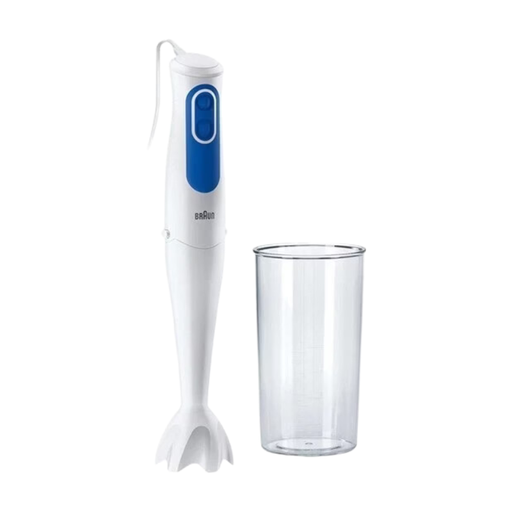 No image available
This hand blender comes with a measuring beaker and is a good option for making a small batch if you want to clean the separate parts after use.
Power: 700 W. Two speeds. Measuring beaker: 600 ml. Removable dishwasher-safe parts. Use continuously for a maximum of one minute; the appliance then switches off automatically.
 No image available
This compact jug blender is a good option for making a small batch, with a choice of speeds to suit different ingredients.
Capacity: 0,6 l. Power: 350 W. Two speeds and a pulse function. The product description recommends speed 2 for hard ingredients and ice; check the manual for your recipe.
 No image available
The cup with a drinking spout could be a good fit if you want to make a smoothie and take it with you.
Power: 250 W. Cup: 500 ml. The product description lists a lid with a drinking spout and removable dishwasher-safe parts.
 No image available
This rechargeable personal blender is a good option if there’s no plug socket where you’ll be preparing your smoothie.
Cup: 475 ml with a drinking lid. Rechargeable via USB-C. Weight: 717 g. The blender needs to be charged.
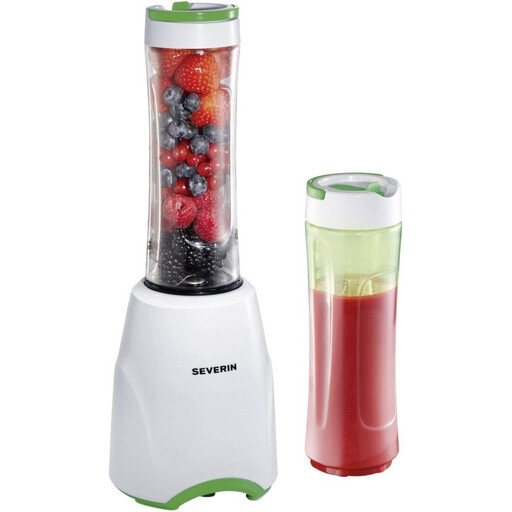 No image available
This smoothie maker comes with two drinking cups, making it a good option if you want to prepare smoothies to take with you.
Power: 300 W. Capacity: 0,60 l. The product description lists two dishwasher-safe Tritan drinking cups.
Yes, use pitted dates. Yuice.nl’s date smoothie recipe uses pitted dates; also check your blender’s manual for guidance on the other ingredients.
Don’t assume so: which parts are dishwasher-safe varies by model. Bosch lists dishwasher-safe parts for the MMB2111S, while Tefal lists a dishwasher-safe cup for the BL1C0430. Check the manual for each part and clean the motor base as instructed.
Plan your servings using the effective capacity of the exact model. Philips lists an effective capacity of 1 l and a maximum jug capacity of 1,9 l for the HR2041/00.
No. According to the Dutch government, there’s no fixed statutory guarantee period in the Netherlands. You’re entitled to a product that works as it should, and if it doesn’t, the seller is your point of contact. Any manufacturer’s guarantee is separate from this.
The rules that apply depend in part on the type of appliance and the product regulations in force. The Netherlands Food and Consumer Product Safety Authority explains that electrical products must meet the relevant safety requirements; a product advert alone can’t tell you whether a particular item has been checked.