
Making lunch for several people
You want to make cold tomato soup for guests without having to blend it in unnecessary extra batches. Compare the jug’s usable capacity with the quantity in your recipe.


For cold tomato soup for several lunch guests, choose a jug blender with a usable capacity that suits your recipe; a personal blender may be more practical for a single small portion. As well as capacity, compare how easy the jug, lid and blades are to clean. You don’t need a heating function for cold soup, but do check the instructions for the specific model and the applicable requirements for electrical appliances and materials that come into contact with food.
You want to make cold tomato soup for guests without having to blend it in unnecessary extra batches. Compare the jug’s usable capacity with the quantity in your recipe.
You’re mainly interested in puréeing tomatoes and other raw ingredients, and want to be able to adjust the texture rather than use a heating programme.
You usually make a small portion and are weighing up a compact cup against the larger capacity of a jug blender.
First, work out how much soup you usually make at a time, then consider the controls and how easy it is to clean. You don’t need to prioritise a heating function for a dish that’s served cold.
| What to consider | What to look for when buying | Who will find this most important? |
|---|---|---|
| Portions per batch | Compare the volume of your recipe with the usable capacity and fill markings of the specific model. | When I’m making soup for guests, I want to purée enough in one go without having to store an unnecessarily large jug. Around 33% of consumers give top priority to capacity for several portions. |
| Desired texture | Check the speed or pulse controls and, where possible, look for a puréeing test for the specific model. | If I want to decide the texture of my soup, I look at how I can adjust the blending. Around 27% of consumers put control over texture first. |
| Cleaning | Check the manual to see which parts can be removed and which are dishwasher-safe. | After lunch, I want to be able to thoroughly remove tomato residue from the jug and lid, and around the blades. Around 27% of consumers give ease of cleaning top priority. |
| Storage space | Compare the dimensions and cup capacity with your usual portion size and the space available in your cupboard. | If I usually make soup just for myself, I don’t want to store a large jug that I rarely need. Around 13% of consumers choose storage space as their main consideration. |
The maximum usable quantity depends on the fill markings and instructions for the specific blender. Overfilling may mean you have to purée the soup in several batches.
Compare the stated usable capacity and fill markings with the volume of your recipe.
A smaller usable capacity may mean extra blending and cleaning.
Uit Paulines Keuken’s gazpacho recipe is served cold, so you don’t need a heating function to make it.
If you’re only making cold soup, prioritise capacity, blending performance and ease of cleaning. If you’d like to make hot soup later, check that the manufacturer says the specific jug is suitable.
A cup of around 700 ml, as stated by the manufacturer for the nutribullet Pro NB904CP, may be less practical if you want to make several portions at once.
First estimate the quantity in your recipe and compare it with the cup’s capacity. If you’re cooking for guests, bear in mind that you may need to blend in several batches.
Making several batches also means cleaning the cup and parts more often.
The PowerBlend 3 JB3150 is a jug blender worth comparing if ease of cleaning matters to you, or if you might also use the blender for hot soup later.
The VitaPower Serie 4 MMB6172S is a jug blender worth comparing for making lunch for a larger group.
The Pro NB904CP is a personal blender worth comparing if you usually make one small portion and want something compact to store.
The 5000 Series HR3020/20 is a jug blender worth comparing if you want to make several portions.
These product choices are aimed at making cold tomato soup, ranging from jugs for several portions to compact options for smaller quantities.
 No image available
The 1,500 ml jug is an option worth comparing for a lunch with several portions.
The product name lists a 600 ml travel bottle and a 300 ml chopper cup; the description mentions two speeds, a pulse setting and dishwasher-safe parts.
 No image available
The 1.5 l jug makes this model an option worth comparing for several lunch portions.
The description lists three speeds and removable parts for cleaning. According to the product information, it can run continuously for a maximum of one minute; after heavy blending cycles, let the appliance rest for two minutes.
 No image available
The stated usable capacity of 1.5 l makes this model worth comparing for several portions.
The product description lists speed control, a pulse setting, an Auto-Clean programme and a dishwasher-safe glass jug.
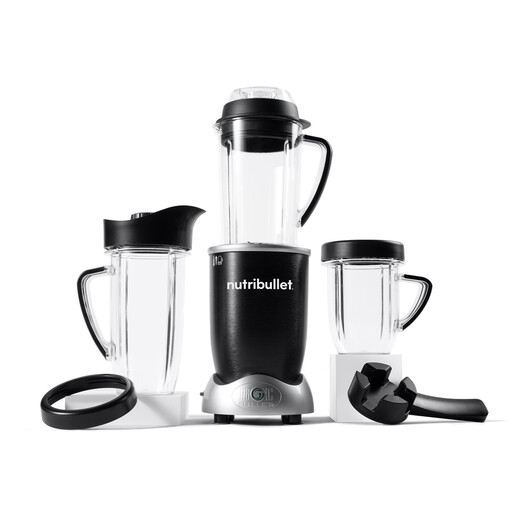 No image available
The product description mentions blending cold and hot ingredients and a soup-making programme; check the instructions for the specific jug and temperature.
According to the product name, the set includes heat-resistant cups. The description states that the base unit and blade aren’t dishwasher-safe.
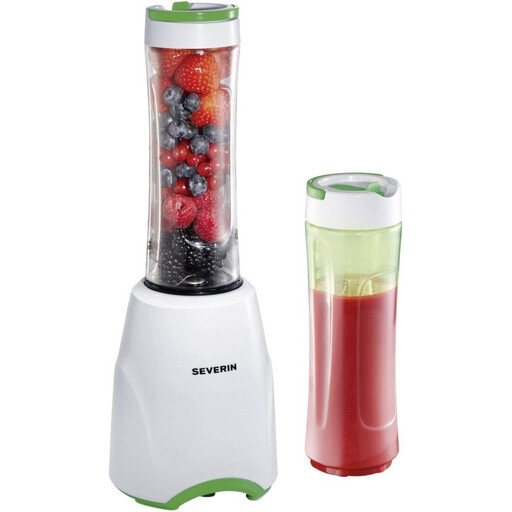 No image available
With a stated capacity of 0.60 l, this is an option worth comparing for a small portion; you may need to blend in several batches when making soup for guests.
The product information lists two speeds, a pulse setting and dishwasher-safe parts.
No, not for a recipe where raw ingredients are served cold. Uit Paulines Keuken’s gazpacho recipe is one example of this kind of cold dish. If you’d like to make hot soup later, follow the temperature and filling instructions for the specific jug.
Compare the volume of your recipe with the usable capacity and fill markings of the specific jug. For example, Consumentenbond lists a 1.5 l jug for the Philips HR3020/20; the total capacity alone doesn’t tell you how much you can purée at once according to the instructions.
Check the manual for the specific model to see which parts can be removed and are dishwasher-safe. Unplug the appliance before removing parts or cleaning the blades, and keep your hands out of the jug while it’s rotating.
Applicable product safety requirements and CE rules apply to electrical household appliances; parts that come into contact with food must meet the relevant Dutch and European requirements for food contact materials. The NVWA explains the rules for food contact materials, and RVO notes that CE marking is not an independent guarantee of safety. Check the requirements for the specific model.
Voedingscentrum advises covering leftovers and putting them in the fridge within two hours, keeping the fridge at 4 °C and storing leftovers in the fridge for no more than two days.