
A group on holiday
If you want to make or serve milkshakes for several people, you’ll benefit most from a jug with enough usable capacity. For example, Philips lists a usable capacity of 1 l for the HR2041/00.


If you usually make one milkshake, a compact blender with a drinking cup is a good fit for that serving size; for several glasses, a jug blender with enough usable capacity is more practical. If you want to add ice cubes, check that the manufacturer recommends this for the exact model, and consider storage space and cleaning instructions too.
If you want to make or serve milkshakes for several people, you’ll benefit most from a jug with enough usable capacity. For example, Philips lists a usable capacity of 1 l for the HR2041/00.
If you want to blend ice cubes, it’s worth checking the instructions for the specific model. Which? warns that not every blender can crush ice cubes.
A compact blending cup may suit a single serving and limited space in your holiday cottage. Bosch lists a 0.6 l cup for the MMB2111S.
Choose based on the quantity you’ll blend at a time, the ingredients and the space you have in your holiday cottage.
| What to consider | What to look for | Who is this important for? |
|---|---|---|
| Several servings at a time | Compare the usable capacity, not just the jug’s maximum capacity. For the HR2041/00, Philips lists a usable capacity of 1 l and a maximum capacity of 1.9 l. | If I’m making shakes for a group, I want to blend less often. Around 33% of consumers prefer enough capacity for several servings. |
| Blending ice cubes | Check whether the manufacturer mentions ice cubes for the exact model. According to Which?, not every blender can crush ice cubes. | If my recipe includes ice cubes, I want to know whether the model I choose is suitable. Around 25% of consumers prioritise ice-crushing capability. |
| One compact serving | Check the cup capacity and the dimensions of the appliance and cup. Bosch lists a 0.6 l capacity for the MMB2111S; nutribullet supplies a 700 ml cup with the NB603DG. | If I usually make one shake and have limited cupboard space, I’m looking for a suitably compact size. Around 25% of consumers mainly choose a blender for single servings and limited storage space. |
| Cleaning after use | Check the cleaning instructions for each part. nutribullet provides separate instructions for the blade assembly and cups of the NB603DG. | If I want to clean the blender quickly after making a milkshake, I want to know which parts need cleaning separately. Around 17% of consumers mainly value easy cleaning. |
A jug’s maximum capacity isn’t always the amount you can actually prepare at once. Philips lists a maximum capacity of 1.9 l and a usable capacity of 1 l for the HR2041/00.
Compare the usable filling capacity with the amount you want to serve at a time.
If the usable capacity is too small for your group, you may need to blend several batches.
Wattage alone doesn’t tell you whether a specific model can process ice cubes. Which? points out that this varies between blenders.
Check the instructions for ice cubes using the full model number.
Cleaning instructions can vary from one part to another. The nutribullet NB603DG, for example, has separate instructions for the blade assembly and cups.
Before cleaning, check the instructions for the cup, lid and blade individually.
The 3000 Series HR2041/00 is a jug blender for serving shakes.
The VitaPower MMB2111S is a personal blender with a 0.6 l blending cup.
The Original 600 NB603DG comes with a 700 ml cup.
Tefal describes a range that includes compact models, on-the-go blenders and jug blenders.
These Joybuy products range from blenders with a drinking cup or jug to a hand blender. Compare the serving size, stated ice-crushing function and cleaning instructions with what you need in your holiday cottage.
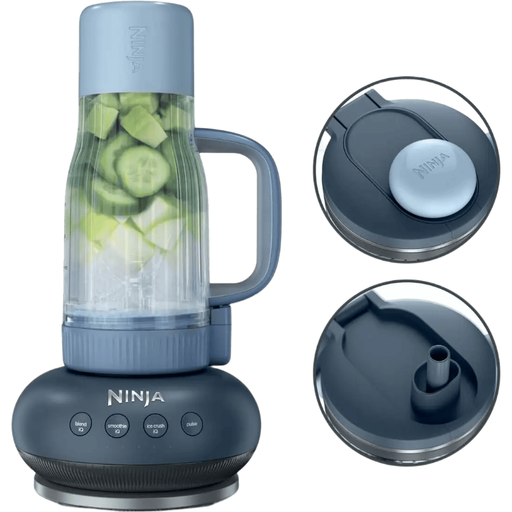 No image available
A drinking-cup blender for making and taking a single shake; the product name mentions an ice-crushing function.
710 ml drinking cup; three automatic programmes; removable parts described as dishwasher-safe in the product description.
Securely lock the drinking lid to prevent spills when carrying it.
 No image available
Worth considering if you want a jug for several servings as well as a bottle for a single serving.
1,500 ml blending jug and 600 ml travel bottle; the product description mentions a pulse function, ice crushing and dishwasher-safe parts.
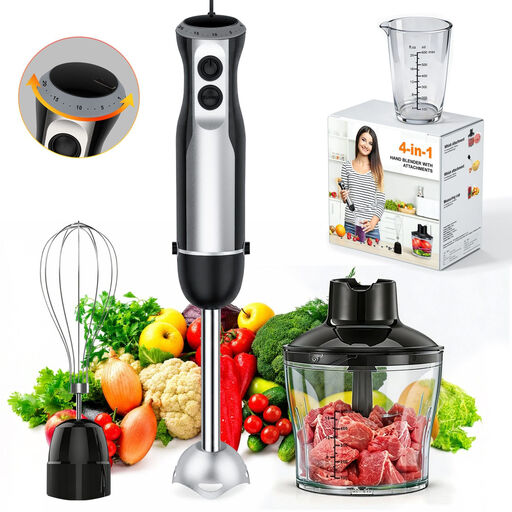 No image available
The product title lists smoothies as one use; check whether a hand blender is right for your recipe and the beaker you want to use.
According to the product title, this model has 20 speeds and a turbo function. The product description lists a 600 ml measuring beaker and dishwasher-safe attachments.
 No image available
A jug blender to consider if you want to make several servings; the product title also mentions an ice-crushing function.
1.5 l jug and three speeds. The instructions specify a minimum of 300 ml of liquid and recommend no more than one minute of continuous use, with a two-minute rest between heavy blending cycles.
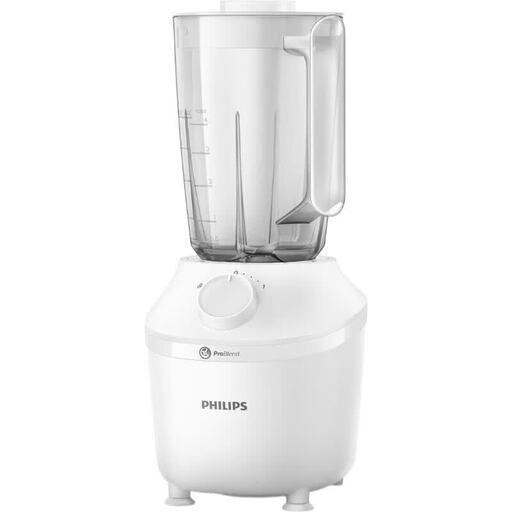 No image available
A jug blender to consider if you want to serve several shakes; Philips lists ice crushing as a feature of this model.
Usable capacity 1.0 l and maximum capacity 1.9 l; 450 W, one speed and a pulse function.
The instructions limit continuous use to two minutes and recommend letting the blender cool between uses.
Choose based on how much you want to make at a time: a small blending cup suits a single serving, while a jug can be handy for several glasses. Compare the model’s usable capacity with your preferred serving size.
No, not every blender can crush ice cubes. Check the instructions for the exact model; Philips lists this function for the HR2041/00.
Clean the blender after use and check the instructions for each part before putting anything in the dishwasher. For example, the instructions for a cup may differ from those for a blade assembly.
The Netherlands Nutrition Centre recommends keeping fresh milk products in the fridge at 4 °C. Take dairy out of the fridge just before use and put it straight back afterwards.
Online purchases from a business generally come with a 14-day cooling-off period. You’re also entitled to a product that meets the terms of the agreement; if there’s a fault, contact the seller. There is no fixed statutory guarantee period in the Netherlands.