
Vandaag of morgen in huis

Kwaliteit gegarandeerd

Welkomstaanbiedingen ontgrendelen: GRATIS bezorging | Tot 80% korting | Gratis 30 dagen JoyPlus-proefperiode
Download de app
Buying a blender may seem straightforward until you start comparing power, capacity, materials and features. A compact model can be ideal for making a single smoothie, while a countertop blender with a glass jug may be better suited to soups, sauces or larger batches. Marketing terms such as “high speed” or “professional” do not always tell you what you actually need in practice.
When choosing, pay particular attention to these three common pitfalls:
For soft ingredients such as banana, yoghurt and soft fruit, a smoothie blender with a modest motor is often sufficient. For frozen fruit, nuts, hard vegetables or ice, a powerful blender with several speed settings is more practical.
Do not just look at the wattage. Some product descriptions state the rotational speed instead. The Ariete 5830C, for example, is specified at 17,000 revolutions per minute, while the Fritel BL 3890 reaches up to 24,000 revolutions per minute according to the product information. These are verifiable product specifications, but on their own they do not indicate how smooth every preparation will be. The shape of the jug and the design of the blades also make a difference.
A blender with a pulse function delivers short, powerful bursts. This is useful for loosening ingredients or controlling the texture of a dip, pesto or cocktail more precisely. For ice, a separate ice-crush function is a useful extra, but always follow the quantities and instructions in the manual.
For one person, a personal blender with a cup of around 500 to 700 ml can be practical. You mix your drink directly in a cup and can take it with you to the office, the gym or on the go.
For families or multiple portions, a countertop blender with around 1 to 1.5 litres of usable capacity makes more sense. If you want to prepare soup, sauces and cold drinks, check that the jug is suitable for hot ingredients. A blender with a glass jug can be useful if you want to reduce odours and staining caused by ingredients. Glass is heavier than plastic, however, and can break if dropped.
Watch out for conflicting information. The Ariete 5830C is described as having a 1.5-litre capacity in the product name, while the technical specification states a capacity of 1 litre. Before buying, it is advisable to rely on the technical details and check the current product page.
A dishwasher-safe blender can save time, but check exactly which parts are dishwasher-safe. With some models, this applies only to the jug, lid or removable blades. The motor base should never be submerged in water.
Also check for:
A blender for smoothies and soup should also suit the way you prepare food. If necessary, allow hot ingredients to cool first and only use a jug that is suitable for this purpose.

Why it suits this profile: The 500 ml capacity is suitable for an individual smoothie or shake. The cup comes with a drinking lid, making it practical for use on the go.
The product information clearly states 250 W, one speed and a capacity of 500 ml. This tells you in advance that the model is designed for simple everyday use.
500 ml cup, drinking lid, BPA-free Tritan and dishwasher-safe removable parts.

Why it suits this profile: This model combines a glass jug, 1200 W motor, touchscreen controls and automatic programmes for smoothies, crushing ice and cleaning.
The stated usable capacity is 1.5 litres within a 2-litre jug. This makes the difference between total and practical capacity clearer.
Heat-resistant glass jug, three automatic programmes, pulse function and dishwasher-safe jug.
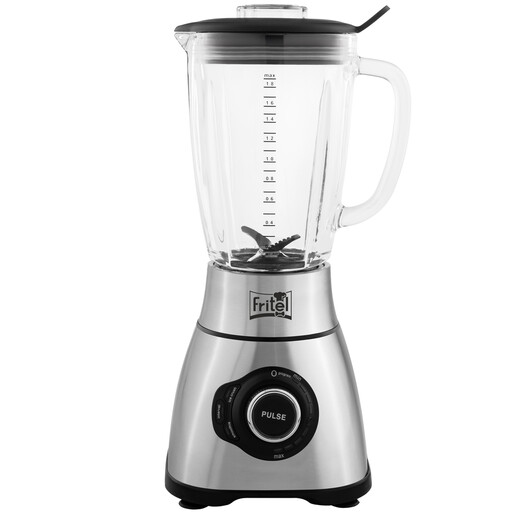
Why it suits this profile: The 1.8-litre glass jug, nine speed settings and programmes for ice crush, smoothies and interval blending are suitable for larger quantities and a wide range of recipes.
The functions are clearly specified in the product details. You can therefore choose based on the programmes, capacity and cleaning requirements rather than on a marketing term alone.
1.8-litre glass jug, nine speed settings, pulse function and dishwasher-safe jug, lid and refill cap.
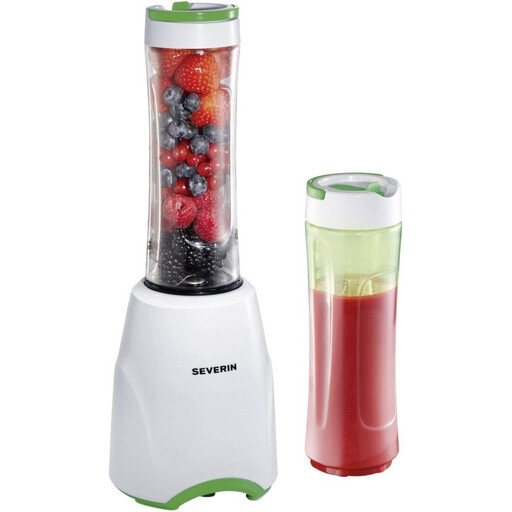
Why it suits this profile: The two 0.6-litre cups are designed for smoothies, milkshakes and sports drinks that you want to take with you straight away.
Its intended use is clearly defined: this is not a model for large quantities of soup, but a compact smoothie solution with two speeds.
300 W, two removable cups, pulse operation and dishwasher-safe parts.
We have put together a complete, up-to-date list of products that fully meet these strict selection criteria and the applicable European safety regulations.
Choose a model with sufficient usable capacity, several speed settings and a jug that the manufacturer states is suitable for hot preparations. A glass jug can be practical, but always check the temperature limits and filling instructions. For small portions, a personal blender is generally more suitable than a large countertop blender.
Lower power is often sufficient for soft smoothies. If you regularly process ice, frozen fruit, nuts or hard vegetables, look for a model with more power, several speed settings and a pulse or ice-crush function. Also compare the rotational speed, blades and recommended operating time.
Energy consumption depends on the motor power and the duration of each use. A short smoothie cycle generally uses less energy than prolonged blending. Other important factors affecting the total cost of ownership include replaceable parts, ease of cleaning and the warranty terms. Before buying, check which parts are available and which cleaning method the manufacturer recommends.
