
Vandaag of morgen in huis

Kwaliteit gegarandeerd

Welkomstaanbiedingen ontgrendelen: GRATIS bezorging | Tot 80% korting | Gratis 30 dagen JoyPlus-proefperiode
Download de app
Buying a blender sounds simple until you have to choose between a jug blender, stick blender, hand blender, hand mixer or food processor. Marketing often emphasises high wattages, lots of accessories or terms such as “professional”. However, these features do not automatically mean that an appliance is right for your recipes.
The most common buying mistakes come down to three pitfalls:
Start by considering the preparations you actually make.
If you mainly make smoothies, you do not always need a powerful blender with a large jug. For bread dough or large quantities of batter, buying a mixer makes more sense than buying a blender.
The stated power is a technical indication, not a guarantee for every preparation. A 650 W hand blender, for example, is suitable for everyday puréeing and blending, while a 1000 W model may offer more reserve when handling thicker mixtures. According to Braun's product information, the MQ50051M has a 1000 W motor and 21 speeds.
Also check:
Various hand blenders have a limited operating time per session. This is relevant if you want to prepare several portions one after another.
A blender with a measuring cup of 600 ml is well suited to one smoothie or a small quantity of sauce. A 1.25-litre jug is more convenient for several portions of soup or drinks. Bear in mind the difference between the total capacity and the maximum permitted filling level.
Also measure the available space in your kitchen cupboard or on your worktop. A compact blender is easier to store, while a food processor with a 5-litre bowl takes up considerably more room. Check the cable length, weight and the stability of the feet too.
A metal blending foot can be practical for puréeing in a pan, but always follow the instructions regarding temperature and use. According to the product description, a splash guard helps to limit splashes; it will not prevent mess caused by overfilling or using too high a speed.
Check which parts are removable and dishwasher-safe. The motor unit must not be immersed in water. If you are buying a blender with accessories, check that the whisk, chopper, measuring cup and blending foot are actually included. Sometimes additional accessories are only available separately.
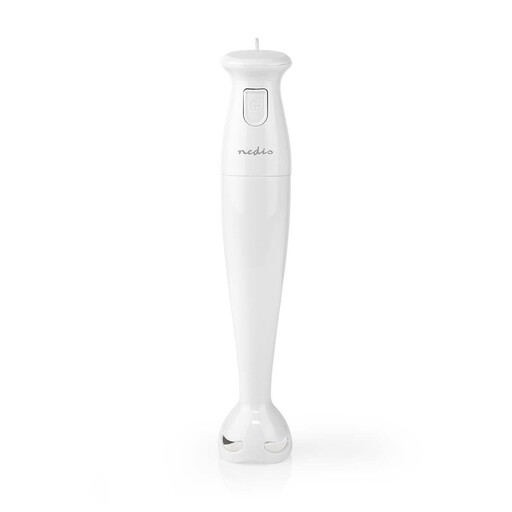
Why it suits this profile: This straightforward model is designed for basic tasks such as making purée, sauce and milkshakes. It has one speed and takes up very little storage space.
The specifications are clear: 150 W, one speed, no chopper and no measuring cup. This means you do not pay for accessories you will not use.
Compact design, one-button operation and a 1-metre cable.
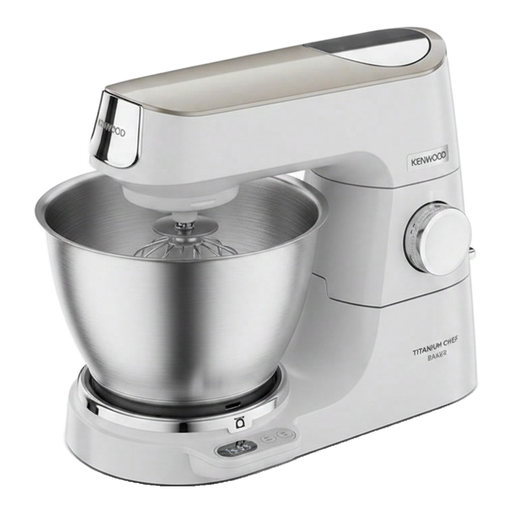
Why it suits this profile: For home cooks and baking enthusiasts who regularly make dough, cake batter or meringue, this food processor provides a fixed bowl and multiple attachments.
This is clearly a baking-focused choice rather than a smoothie blender. The included dough hook, whisk and K-beater are suitable for different types of batter and dough.
1200 W, 5-litre stainless-steel bowl, built-in scales and variable speed with pulse function.
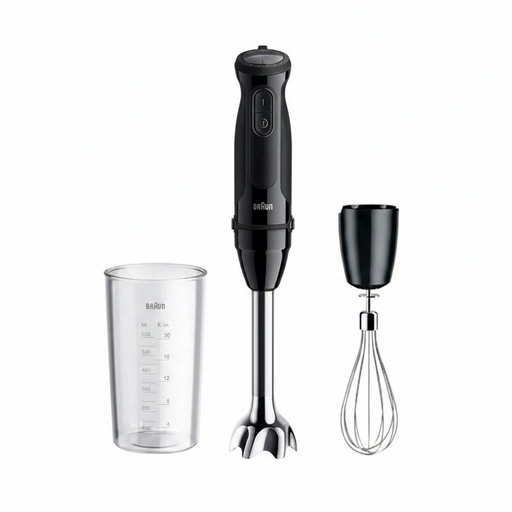
Why it suits this profile: This model is designed for users who regularly purée, whisk and chop and want control over the speed.
The product information lists 21 speeds and variable control. This means you are not limited to choosing between simply on or off for every preparation.
1000 W, 21 speeds, whisk and chopping attachments, and dishwasher-safe parts according to the product description.
We have put together a complete, up-to-date list of products that fully meet these strict selection criteria and the applicable European safety regulations.
This is possible with some models, but you must follow the temperature limit and usage instructions. The Philips HR2531/00, for example, specifies a limit of 80 °C. If in doubt, allow the soup to cool first and keep the blending foot fully beneath the surface to limit splashing.
The lifespan depends on frequency of use, maintenance, overloading and proper cleaning. Do not use the appliance continuously for longer than specified, do not process ingredients that the model is not designed to handle, and check the blades, cable and housing regularly. According to the product information, many of the products mentioned in this overview come with a statutory warranty of at least two years.
Consumption depends on both the wattage and the operating time. A 1000 W appliance running for one minute theoretically uses around 0.017 kWh. A lower-powered model that runs for much longer may use a similar amount for the same preparation. Therefore, consider the power, preparation time, capacity and the quantity you make each time.
