
Vandaag of morgen in huis

Kwaliteit gegarandeerd

Welkomstaanbiedingen ontgrendelen: GRATIS bezorging | Tot 80% korting | Gratis 30 dagen JoyPlus-proefperiode
Download de app
Buying a blender sounds simple until you have to choose between a countertop blender, smoothie blender, hand blender or portable blender. Manufacturers often highlight high wattages, sharp blades and clever programmes, but those figures do not tell the whole story. The right choice depends mainly on what you prepare, how many people you are preparing it for and how often you use the appliance.
Higher power can help with hard ingredients, but it does not, by itself, indicate how finely or evenly a blender works. The shape of the jug, blade design, speed and available programmes also play a role. A 250- or 350-watt mini blender may be suitable for soft fruit and a daily smoothie, but less practical for large quantities or prolonged use.
A blender with a 1.5-litre jug is not always suitable for filling it completely. The maximum fill line and instructions determine how much you can process safely. For one person, a capacity of 400 to 600 ml is often sufficient. For a family, a blender with a large jug of around 1.2 to 2.1 litres is more convenient.
Blade parts that become stuck, hard-to-reach edges and accessories that cannot go in the dishwasher make daily use less enjoyable. Also check the recommended maximum running time. Some compact models need to cool down after around one minute of use. A powerful blender is therefore not automatically suitable for prolonged preparation.
For smoothies, shakes and soft vegetables, a compact model is often sufficient. If you want to process frozen fruit, nuts or ice, it is worth paying attention to:
According to a brand’s own research, certain blade designs may blend faster or more finely. Treat such claims as the brand’s product information and compare them with the verifiable specifications.
A glass jug is heat-resistant on models specifically designed for this purpose, but always check the manual before blending hot liquids. Not every blender is suitable for soup or other hot preparations. A Tritan or plastic cup is often lighter and more practical for use on the go.
Pay attention to the following points:
A removable base, dishwasher-safe parts and a simple control button save time. Blades remain sharp even when the appliance is switched off. Unplug the appliance before assembly, disassembly and cleaning. Never immerse the motor base in water.
For baby food, a small food processor or blender can be useful for puréeing portions. Only use ingredients and temperatures permitted according to the manual. A blender is not a substitute for professional nutritional advice.

Why it suits this profile: The 500 ml capacity is practical for a smoothie or shake for one person. According to the product description, the cup can be taken with you using the drinking lid.
The specifications are clear: 250 watts, one speed and a 500 ml capacity. This prevents you from paying for features you do not use, but makes the model less suitable for tough ingredients.
500 ml Tritan cup, stainless steel blades, non-slip base and dishwasher-safe removable parts according to the product information.

Why it suits this profile: This countertop model combines 1,200 watts, a glass jug and automatic programmes for households that regularly make smoothies, cold preparations or larger portions.
According to the description, the usable capacity is 1.5 litres within a 2-litre jug. This makes the difference between total and usable capacity clear.
1,200 watts, three automatic programmes, touchscreen, pulse function and a heat-resistant glass jug according to the product details.

Why it suits this profile: The 2.1-litre jug is designed for larger portions. The 14 manual speeds and programmes give you plenty of flexibility for different preparations.
The product information lists both the total jug capacity and a 700 ml cup. This helps you choose the right size for family portions or individual drinks.
1,200 watts, 2.1-litre jug, 14 manual speeds, four programmes and a BlendSense function specified by the brand.
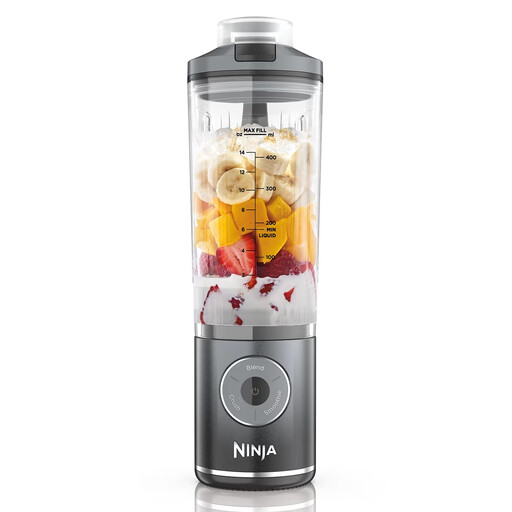
Why it suits this profile: For a smoothie after exercise, at the office or while spending a day outdoors, a blender with a rechargeable battery is more practical than an appliance with a mains cable.
Portability comes with a limited capacity of 2 x 530 ml and 150 watts. This makes its usage limits clearer than those of a large countertop blender.
Rechargeable battery via USB, leak-proof lid design, two 530 ml Tritan cups and dishwasher-safe parts according to the product description.
We have put together a complete, up-to-date list of products that fully meet these strict selection criteria and the applicable European safety regulations.
For one smoothie, a smoothie blender or mini blender of around 400 to 600 ml is practical. When blending frozen fruit, check the stated suitability for hard ingredients and whether it has a pulse function. For several people, a larger jug is more convenient.
No. Only use hot liquids when the manufacturer expressly permits this. Check the maximum temperature, the jug and the instructions. A hand blender or stick blender may be more practical for soup in a suitable pan, provided you follow the safety instructions.
Consumption depends on the power and operating time. A 1,200-watt model running for one minute theoretically uses more energy than a 350-watt model, but actual consumption depends on the load and the programme. Short use and fully switching the appliance off afterwards help to limit unnecessary electricity consumption.
