
Vandaag of morgen in huis

Kwaliteit gegarandeerd

Welkomstaanbiedingen ontgrendelen: GRATIS bezorging | Tot 80% korting | Gratis 30 dagen JoyPlus-proefperiode
Download de app
A blender can be useful every day for smoothies, shakes, soups, sauces and dips. However, it is not advisable to focus solely on the highest wattage or a striking marketing term. A compact smoothie blender may be more practical for one person than a large kitchen blender. Conversely, a blender to go may not be sufficient if you want to make soup or several portions of smoothie for the whole family.
As a Joybuy Product Recommendation Officer, I filter the most important product specifications and usage scenarios. This helps you see which features genuinely matter and which purchasing pitfalls are best avoided.
A 600W blender is not automatically unsuitable for smoothies, while a 1000W blender or 1700W blender is not necessary for every user. The wattage tells you something about the motor, but the blade design, jug capacity and recommended usage time also matter.
A powerful blender with a large jug is particularly suitable for hard ingredients, larger quantities and regular use. For soft vegetables, fruit and protein shakes, a compact smoothie maker with 600W to 900W may be sufficient.
A 1.5-litre jug does not always hold 1.5 litres of ingredients while blending. Leave some space to reduce splashing and pressure build-up. For a blender for smoothies for one or two people, a 600 to 900 ml cup is often practical. Families will get more use from a blender with a glass or plastic jug of around 1.25 litres or more.
Also check whether the cups have drinking lids. This is what makes a blender to go genuinely useful for commuting or the gym.
Dried-on residue around the blades makes a blender less convenient for everyday use. So check whether removable parts are dishwasher-safe and whether the blade can be removed easily. The motor base should never be immersed in water.
Also look for a safety lock, a stable base and clear instructions for hot liquids. Not every blender is suitable for hot soup. Always follow the instructions for the specific model.
Use the wattage as one part of your comparison:
Higher power can also mean more noise, greater weight and higher electricity consumption per use. Choose based on your recipes, not just a large number on the packaging.
A blender with a glass jug is sturdy and less likely to absorb odours, but it is heavier and can break if knocked hard. Plastic or Tritan is lighter and more convenient for a blender to go. For plastic, look for a BPA-free label, but also check the maximum temperature.
For one person, 600 to 900 ml is usually sufficient. For soup, sauces or several smoothies at once, 1.25 litres or more is more practical. A blender with an ice-crushing function can be useful for cold drinks, but check that the manufacturer explicitly supports this.
A pulse function gives you extra control over the texture. Automatic programmes can be useful, but they are not essential. More important features include:
With a smoothie maker without buttons, operation is often as simple as twisting the cup into place. This is convenient, but it usually also means you have less control over different speeds.
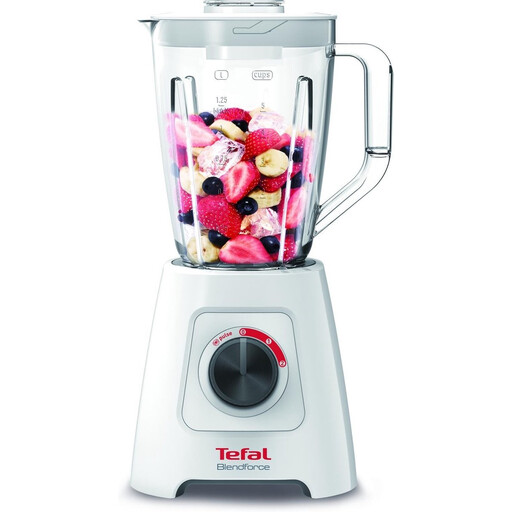
Why it suits this profile: The 1.25-litre capacity and simple dial are well suited to everyday use for smoothies, soups and sauces.
The product specifications state 600W and a maximum blending time of 3 minutes. This makes both the power and usage time clear.
1.25-litre capacity, Smart Lock safety feature and a split blade holder for easier cleaning.

Why it suits this profile: The glass jug, 1200W motor and automatic programmes are ideal for users who value versatility and a robust build.
The stated usable capacity of 1.5 litres means you are not relying solely on a larger theoretical jug capacity.
Heat-resistant glass jug, 3 automatic programmes, pulse function and dishwasher-safe jug.
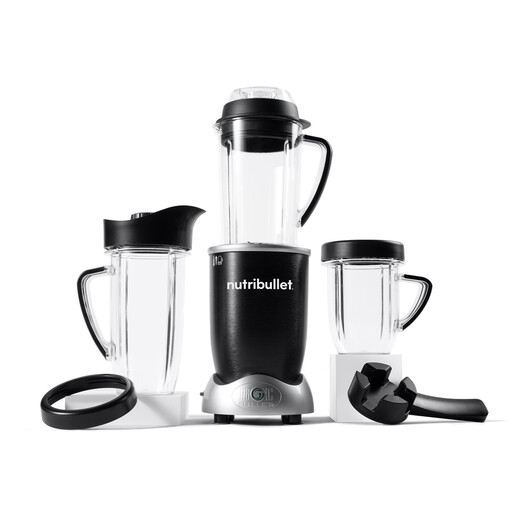
Why it suits this profile: This model is designed for users who frequently process hard ingredients, ice, soups and sauces.
The product specifications mention a vented lid and a separate soup programme. Always use hot ingredients in accordance with the instructions.
1700W power, 1.3-litre capacity and accessories for hot and cold preparations.
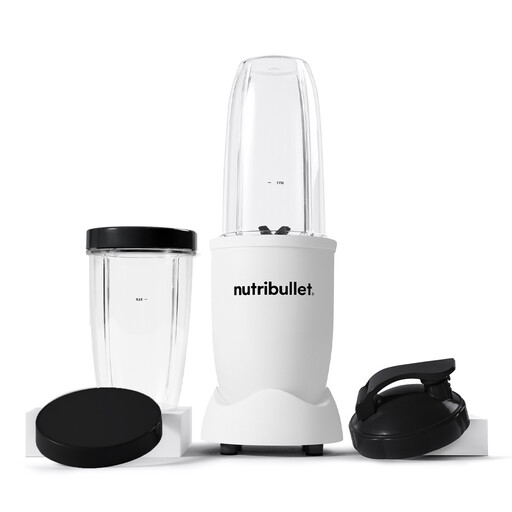
Why it suits this profile: The two 900 ml cups with travel lids are practical for anyone who likes to take their smoothie with them.
The capacity and supplied lids are clearly specified, so you do not have to buy separate drinking cups afterwards.
900W power, 2 x 900 ml cups, travel lids and dishwasher-safe parts.
We have put together a complete, up-to-date list of products that fully meet these strict selection criteria and the applicable European safety regulations.
Choose a hand blender if you want to purée soup directly in the pan or have limited storage space. A set with a whisk and mini chopper is suitable for sauces, whipped cream and small quantities. A traditional kitchen blender is more convenient for several portions and cold drinks. A smoothie blender with a drinking cup is ideal for everyday use by one person.
Bear in mind that product names do not always mean the same thing. Check the technical specifications: capacity, power, blade material, programmes and accessories matter more than the term ‘professional blender’.
For soft smoothies and shakes, 600W is often suitable. For ice, nuts and frozen fruit, 900W to 1200W can provide more power in reserve. A 1700W model is mainly relevant for intensive use and hard ingredients. Also check the maximum blending time.
No. Only use hot liquids when the manufacturer permits this and when the jug, lid and ventilation are suitable. According to the product information for some models, a vented lid is included; this is not a general guarantee for every appliance.
Consumption depends on the power and operating time. A 1000W appliance running for one minute theoretically uses around 0.017 kWh. In practice, the recipe, blending time and number of batches determine total consumption. Cleaning, blade wear and any replacement parts also form part of the running costs.
