
Vandaag of morgen in huis

Kwaliteit gegarandeerd

Welkomstaanbiedingen ontgrendelen: GRATIS bezorging | Tot 80% korting | Gratis 30 dagen JoyPlus-proefperiode
Download de app
Buying a blender might seem straightforward, until you realise how much models can differ in power, capacity, materials and controls. A compact personal blender can be handy if you live alone, while a family may be better off with a countertop blender and a generous jug. And a powerful blender isn’t automatically suited to every task.
Watch out for these common pitfalls:
Power gives you an indication of electricity consumption and motor strength, but it isn’t a complete measure of quality. An 800-watt blender may be enough for smoothies, sauces and light soups. A higher power rating can come in handy for frozen fruit, nuts or crushing ice.
Also look at:
A brand’s own research may suggest that certain blade or blending technologies produce smoother results. Treat these claims as product information from the brand, and focus on checking the specific features.
A blender with a glass jug is less prone to discolouration and tends to absorb fewer odours than plastic. Glass is heavier, though, and can break if dropped or knocked hard. So check that the jug locks securely onto the motor base.
Be aware of the difference between:
A large-capacity blender of around 1.5 to 2 litres is a good choice for families and making multiple portions. If you live alone, a personal blender with a 500 to 700 ml cup is often more practical and quicker to clean.
A dishwasher-safe blender is especially handy if the jug, lid and removable blade parts can go in the dishwasher. The motor base should never be put in water. Also check whether:
Take extra care when blending hot soup. Not every model is suitable for hot liquids. Let ingredients cool if the manual advises you to, and don’t fill the jug above the marked limit.

Why it suits this profile: The 500 ml capacity is ideal for individual smoothies and shakes. You can use the cup with a drinking lid when you’re on the go.
Its compact capacity means you won’t end up buying a large jug for small portions. Just don’t expect the performance of a powerful blender: it has a power rating of 250 W.
500 ml Tritan cup, one speed, stainless steel blades and dishwasher-safe removable parts.
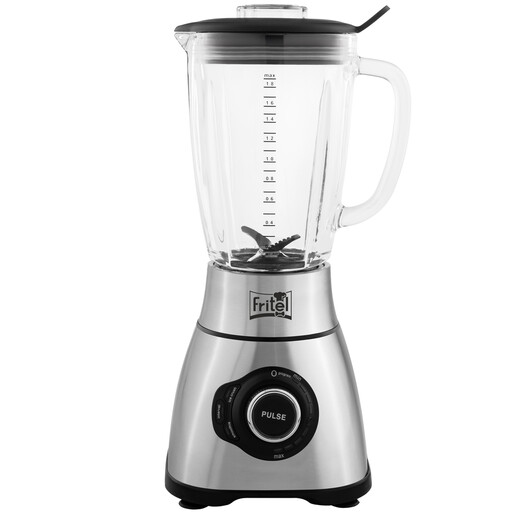
Why it suits this profile: This model combines a large glass jug with pre-set programmes for tasks including making smoothies and crushing ice.
The product description lists more than just the power rating: it also mentions a pulse function, a removable blade assembly, and a dishwasher-safe jug and lid.
1.8-litre glass jug, three programmes, pulse function and automatic shut-off after 10 minutes, according to the product information.

Why it suits this profile: The 2-litre jug has a working capacity of 1.5 litres, making it suitable for preparing multiple portions of smoothies, soups and sauces.
The working capacity is clearly stated, so you don’t have to treat the jug’s total capacity as the maximum fill level.
1000 W motor, three speeds plus pulse, removable blades and dishwasher-safe removable parts.

Why it suits this profile: According to the product information, the glass jug is suitable for both cold and hot ingredients, with a stated working capacity of 1.5 litres.
The features are clearly described: automatic programmes, manual speed control, a pulse function and a cleaning programme.
1200 W, glass jug, six stainless steel blades, ice-crushing function and a dishwasher-safe jug, according to the product description.
We’ve put together a complete, up-to-date list of products that meet these strict selection criteria and the applicable European safety regulations.
Choose a countertop blender with enough working capacity, several speeds and a pulse function. Always check whether the model can handle hot liquids. A glass jug can be handy, but follow the maximum temperature and fill limit given in the instruction manual.
For soft smoothies and sauces, 250 to 800 watts may be enough. If you regularly want to blend frozen fruit, nuts or ice, look for a model with 1000 watts or more. Always consider the wattage alongside the blades, speed settings and motor protection.
Electricity consumption depends on the power rating and how long you use the blender. A 1000-watt blender running for five minutes theoretically uses around 0.083 kWh. In practice, blending programmes are often shorter. Clean the jug straight after use, and only put parts in the dishwasher if they’re suitable for it.
