
Vandaag of morgen in huis

Kwaliteit gegarandeerd

Welkomstaanbiedingen ontgrendelen: GRATIS bezorging | Tot 80% korting | Gratis 30 dagen JoyPlus-proefperiode
Download de app
A blender may seem simple at first glance: add the ingredients, press a button and you’re done. Yet many purchases end up disappointing. A model may have enough power for soft vegetables, for example, but struggle with ice. Or the jug may be large enough for the whole family, but difficult to clean.
If you’re looking for a blender for smoothies, shakes, soups, sauces or baby food, it’s worth looking beyond wattage or an attractive product name. Below, we explain which specifications matter, which marketing claims to assess critically and which type of blender best suits your needs.
A higher wattage may indicate a powerful motor, but it doesn’t give you the full picture of performance. Blade design, jug shape, maximum operating time and speed control all play a part. A compact personal blender rated at 300 to 900 watts may be suitable for smoothies, while regular use with ice, nuts or hard vegetables demands more from the motor and blades.
Also pay attention to the difference between watts and revolutions per minute. A stated speed, such as 22,000 revolutions per minute, tells you how quickly the blades move. It doesn’t directly guarantee a smooth result.
A 1.5 or 2-litre jug may sound appealing, but you can’t always fill it to the brim. Hot preparations need extra room for steam and movement. So check the maximum or usable capacity in the specifications.
For one person, a personal blender with a cup of around 600 to 700 ml is often practical. For a household, a jug blender with a capacity of 1 to 1.5 litres, or a larger model, makes more sense. If you want to prepare soup or sauce, always check the instructions for hot liquids.
Dried-on smoothie, nut butter or sauce around the blades can make everyday use less enjoyable. Look for an easy-to-clean blender with removable parts, a dishwasher-safe jug or an automatic cleaning programme.
Sharp blades must be removed and cleaned carefully. The motor base must not be immersed in water. Also check that the lid locks securely before you start.
A compact model is often enough for simple smoothies made with soft fruit. If you also want to process frozen fruit, seeds or ice, look for a powerful blender with multiple speeds, a pulse function and a clearly described ice-crushing function.
A blender with a pulse function delivers short bursts at full power. This is useful for controlling the texture or loosening ingredients. Automatic programmes can make the blender easier to use, but manual speed settings give you more control when preparing pesto, hummus or a thick sauce, for example.
A glass blender is generally scratch-resistant and less likely to absorb odours or colours. On the other hand, glass is heavier and can break if dropped. Tritan is a type of plastic used for cups and jugs in various models. Check whether the material is BPA-free according to the product information and whether the part is dishwasher-safe.
For hot preparations, the instruction manual is particularly important. A jug described as resistant to temperature changes is not automatically suitable for boiling-hot liquids. Where necessary, allow ingredients to cool first and follow the maximum fill line.
A blender to go or smoothie maker with a drinking cup is suitable if you want to blend and take your drink with you in the same cup. This reduces washing-up and is practical for the office, school or the gym. The capacity is usually smaller than that of a jug blender, so these models are less suitable for preparing several portions at once.
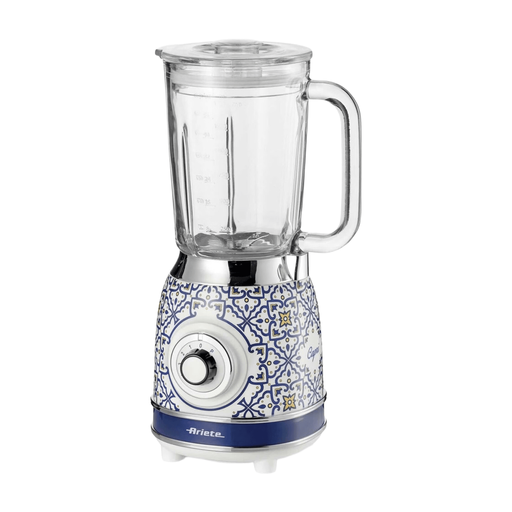
Why it suits this profile: This model has a glass jug, four stainless-steel blades, a pulse function and an ice-crushing function. This makes it suitable for everyday tasks such as smoothies, soups and sauces.
The product information lists both 1.5 litres in the name and a 1-litre capacity. So check which usable capacity applies to your needs before buying.
Glass jug, removable blades and a non-slip base; the stated warranty period is 2 years.

Why it suits this profile: The product description mentions a touchscreen, three automatic programmes, a pulse function and a glass jug with 1.5 litres of usable capacity.
The smoothie, ice-crushing and cleaning settings make the functions clear, rather than simply promising a high motor power.
1200 watts, a glass jug and an Auto-Clean programme according to the product information.

Why it suits this profile: The 2.1-litre jug, 700 ml cup, 14 manual speeds and automatic programmes are designed for different portion sizes and preparations.
The automatic detection and separate manual speeds provide more information about how the blender works than simply calling it a ‘high-speed blender’.
1200 watts, a 2.1-litre jug and a 700 ml cup; suitable for ice according to the product description.
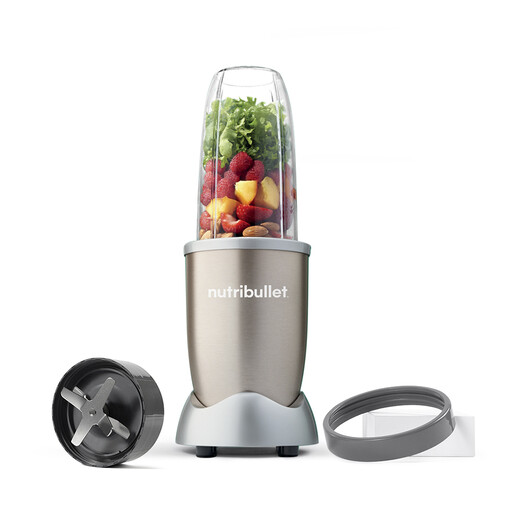
Why it suits this profile: The 700 ml cup is designed for a single serving. You blend directly in the cup and can then use the drinking ring when you’re out and about.
The limited capacity means you won’t buy a large jug blender solely for individual smoothies. However, note that the instructions state that hot or carbonated ingredients are not permitted.
900 watts, a 700 ml BPA- and BPS-free Tritan cup and dishwasher-safe parts according to the product details.
We’ve put together a complete, up-to-date list of products that fully meet these strict selection criteria and the applicable European safety regulations.
A compact model is often sufficient for soft smoothies. For frozen fruit, ice, nuts or thick sauces, a more powerful motor with a suitable blade design is more practical. Don’t look only at wattage; also consider the pulse function, revolutions per minute, operating time and explicit suitability for ice.
No. Not every blender is suitable for hot liquids. Check the instruction manual for the maximum temperature, fill level and ventilation requirements. If in doubt, allow the soup to cool first. A glass jug with thermal properties may be suitable according to the product description, but always follow the manufacturer’s instructions.
Its lifespan depends on how often it is used, the ingredients, cleaning and whether you follow the maximum operating time. A model that processes ice and hard ingredients every day is put under more strain than a smoothie maker used occasionally for soft fruit. Also check the warranty terms, availability of spare parts and how the jug and blades can be replaced.
