
Vandaag of morgen in huis

Kwaliteit gegarandeerd

Welkomstaanbiedingen ontgrendelen: GRATIS bezorging | Tot 80% korting | Gratis 30 dagen JoyPlus-proefperiode
Download de app
A blender may seem simple to choose at first glance. Yet many households buy a model that no longer meets their needs after just a few weeks. A small cup is inconvenient for family-sized portions, a cordless blender is not always suitable for hard ingredients, and a high wattage does not automatically guarantee better blending results.
As a Joybuy Product Recommendation Officer, I filter product information based on practical considerations. Below, you’ll find what to look for in a smoothie blender, mini blender, hand blender or multifunctional model.
A powerful blender is often associated with a high wattage. This is relevant, but it is not the only factor. The shape of the jug, blade design, capacity and available programmes also affect how the blender performs. A 350 W model may be suitable for soft fruit, while ice cubes or hard vegetables require you to look more closely at the stated functions and usage limitations.
Also pay attention to the difference between nominal power and the maximum claimed power. Check which value is listed in the technical specifications.
A blender with a 400 to 600 ml cup is ideal for one smoothie or shake. For several people, a jug of around 1.2 to 1.5 litres is more practical. An overfilled jug can also make it harder to blend the ingredients properly. Always follow the maximum fill line and the instructions in the manual.
Dried-on smoothie, nut butter or soup residue around the blades can make daily use less convenient. So check whether the parts can be removed and whether they are dishwasher-safe. Make sure you know exactly which parts can go in the dishwasher: the motor base and plug should not be put in it.
A blender with accessories can also be useful if you want to chop, whisk or prepare sauces. Only buy these accessories if you are genuinely going to use them.
For smoothies made with soft fruit, a compact model is often sufficient. If you regularly process frozen ingredients, ice or hard vegetables, it is better to look for a model with a clearly stated ice-crushing function, pulse setting or several speed settings.
The motor speed can provide an additional indication, but always compare the full product specifications. According to the product description, the Nutribullet Portable has a speed of 17,000 revolutions per minute, for example; the manufacturer links this to smoothies and shakes, not to every possible ingredient.
A glass jug is sturdy and generally absorbs fewer odours, but it is heavier. Tritan and other plastic materials are lighter and often suitable for use on the go. Check whether the material that comes into contact with food is described as BPA-free. A BPA-free blender is a practical choice if you drink from the cup every day, but this alone says nothing about its power or lifespan.
Look for a safety lock, non-slip feet and protection against overheating. Also check the maximum operating time. Some compact models, for example, may run for a maximum of one minute at a time, after which they need a break.
Do not use hot liquids in a personal blender that is not designed for them. Pressure can build up and cause the lid to come loose. The product descriptions of various models also warn never to immerse the motor base in water.

Why it suits this profile: The 500 ml capacity is suitable for a single smoothie or shake. According to the product description, the cup can be used as a bottle with an additional drinking lid.
The product information clearly states 250 W, 500 ml and one speed setting. This means you know in advance that the model is primarily intended for simple, individual portions.
BPA-free Tritan cup, drinking lid, stainless steel blades and dishwasher-safe removable parts.
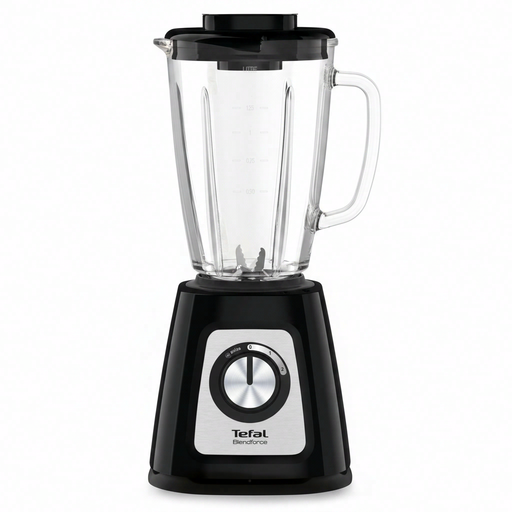
Why it suits this profile: This jug blender combines a 1.25-litre jug with 800 W, two speed settings, a pulse setting and a separate ice-crushing mode.
The functions are clearly specified. You therefore do not have to rely solely on a general claim that this is a powerful blender.
Glass jug, 1.25-litre capacity, ice-crushing mode, safety lock and dishwasher-safe parts.

Why it suits this profile: This hand blender is designed for anyone who wants to chop and whisk as well as blend. The set includes a blending shaft, whisk, food chopper and measuring jug.
The product information states a maximum operating time of one minute, followed by a one-minute rest period. This helps prevent overloading during prolonged use.
Up to 1200 W, variable speed control, 700 ml cup and 500 ml food chopper; according to the description, the accessories are dishwasher-safe below 60 °C.
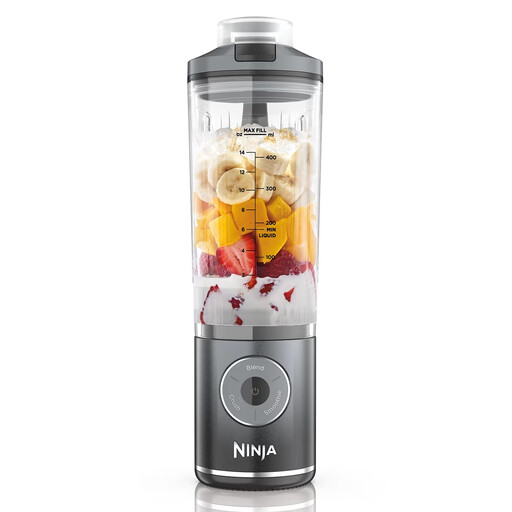
Why it suits this profile: This cordless blender has a rechargeable battery, USB charging, two 530 ml cups and a leak-proof drinking lid.
Its portability is supported by specific features: a battery, USB cable, compact design and leak-proof closure. However, always check the maximum fill line and instructions for use with hard ingredients.
150 W motor, two BPA-free Tritan cups of 530 ml and dishwasher-safe parts according to the product description.
We have put together a complete, up-to-date list of products that fully meet these strict selection criteria and the applicable European safety regulations.
For one person, a mini blender or personal blender with a capacity of around 400 to 600 ml is practical. If you also want to process ice, frozen fruit or hard vegetables, look for a clearly stated ice-crushing function, pulse setting and suitable usage instructions. A smoothie blender does not automatically need to have a large jug.
No. A stick blender or hand blender is used directly in a pan, bowl or measuring jug. This is useful for soup, sauce, purée and baby food. A jug blender works with a closed jug and is often more practical for larger quantities and cold drinks.
Its lifespan depends on how often it is used, the load, cleaning and correct assembly. Do not run the appliance for longer than specified in the manual, avoid overloading it and clean removable parts after use. When buying, also check the warranty and the statutory minimum two-year guarantee within the EU.
