
Vandaag of morgen in huis

Kwaliteit gegarandeerd

Welkomstaanbiedingen ontgrendelen: GRATIS bezorging | Tot 80% korting | Gratis 30 dagen JoyPlus-proefperiode
Download de app
A blender may seem simple at first glance: add the ingredients, press a button and you’re done. Yet many households buy a model that doesn’t suit the way they use it. A compact smoothie blender can be handy for one person, but may struggle with soup for the whole family. A powerful blender can handle a lot, but takes up more space and often requires extra cleaning.
As a Joybuy Product Recommendation Officer, I filter product information based on practical considerations. Below, you’ll find what to look for when buying a blender, which marketing claims to take with a pinch of salt and which models suit different usage scenarios.
A higher wattage does not automatically mean that every recipe will turn out better. The power needs to match the capacity, blades, programmes and recommended operating time. A 250 W blender may be suitable for soft ingredients and small portions. For ice, frozen fruit or hard vegetables, a more powerful model is generally the logical choice, provided the instructions allow this type of use.
Also check the maximum running time. Some models must not run for longer than one minute at a time. This is important when blending thick mixtures or preparing several portions.
A 1.5-litre jug cannot always safely blend 1.5 litres of ingredients at once. The maximum fill line is the one to follow. For one smoothie, 300 to 700 ml is often practical. Families are more likely to need a jug of around 1.5 to 2.1 litres.
A blender to go or portable blender is useful when you’re out and about, but usually has a smaller capacity and a less powerful motor. So check whether you mainly make individual smoothies or also want to prepare sauces, soups and larger quantities.
A blender with accessories may look appealing, but a whisk, chopper or extra cup is only valuable if you actually use those functions. A hand blender, also known as a stick blender, is often more flexible for soup, baby food and sauces. A traditional blender is more practical for larger quantities of smoothies or iced drinks.
Also check which parts are dishwasher-safe. The motor unit must never be immersed in water.
Look beyond wattage and consider the intended use:
According to the product description, the Philips 3000 Series Mini Blender has 350 W, two speeds and a pulse function. According to the product specifications, the Ninja Detect Blender Pro has a 1200W motor, a 2.1-litre jug and fourteen manual speeds.
A BPA-free blender uses materials for food-contact components for which no BPA is mentioned in the product information. Always check whether this applies to the cup, jug and accessories. Tritan is used in various personal blenders. According to the product details, the Ninja Blast BC251EUGY has two 530 ml BPA-free Tritan cups.
For use on the go, a secure drinking lid, low weight and a rechargeable battery are more important than a large number of speeds. A portable blender with USB charging is practical at the office or in the gym, but is not intended to replace a large kitchen blender.
Look out for the following:
Hot liquids can create pressure inside a sealed cup. Only use a model that is explicitly suitable for this and follow the instructions. Blades are sharp; unplug the appliance or disconnect the battery before changing or cleaning parts.

Why it suits this profile: The 500 ml capacity and 250 W power are well suited to simple smoothies and shakes for one person.
The specifications clearly state one speed, a 500 ml capacity and 250 W power. This means you don’t pay for features you may not need.
500 ml cup, BPA-free Tritan according to the product description, drinking lid and dishwasher-safe removable parts.
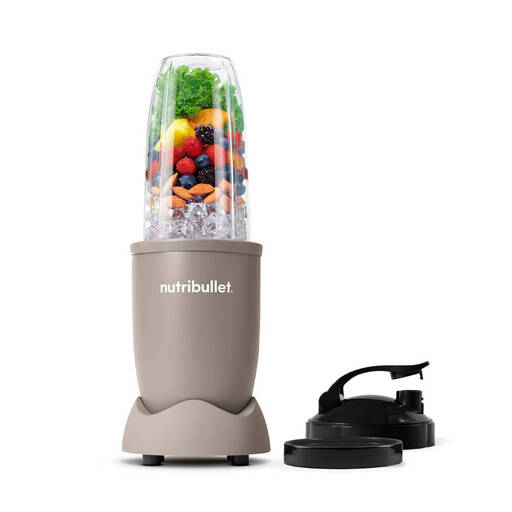
Why it suits this profile: The 900W motor, 700 ml cup and pulse function provide control for smoothies, sauces, pesto and certain hard ingredients.
The power is paired with a clearly stated capacity and a specified maximum operating time of one minute per cycle.
900 W, 700 ml BPA- and BPS-free Tritan cup according to the product information, pulse function and dishwasher-safe accessories.

Why it suits this profile: The large jug is suitable for families or users who prepare multiple portions, thick mixtures and iced drinks.
The product information states both the 2.1-litre jug capacity and the filling and safety warnings. Always check the MAX line in the instructions.
1200 W, 2.1-litre jug, fourteen manual speeds and, according to the product description, an ice-crushing function.
We’ve put together a complete, up-to-date list of products that fully meet these strict selection criteria and the applicable European safety regulations.
Its lifespan depends on how often it is used, how it is cleaned and the demands placed on it. Do not run the motor for longer than stated in the instructions and avoid overfilling the cups. Regularly check the blades, lid and cable for damage. In the European Union, consumers are entitled to at least the statutory guarantee under the applicable rules; many of the models mentioned also list a two-year manufacturer’s warranty.
Electricity consumption depends on the power and operating time. A 600 W appliance running for one minute theoretically uses 0.01 kWh. In practice, standby consumption and several blending cycles are more significant than one short preparation. A battery-powered blender uses electricity while charging, whereas a corded model draws power directly from the mains.
Only if the manufacturer explicitly permits it. Hot liquid can build up pressure inside a sealed cup. Allow the soup to cool first or use a suitable hand blender in accordance with the safety instructions. Never immerse the motor unit in water and keep your hands and kitchen utensils away from moving blades.
